
Pietra preziosa
Calcite
Calcite is calcium carbonate in its clearest form: the stuff of limestone, chalk and marble. The tradition pairs it with the crown chakra, Cancer's water, and the work of a steady, clear mind.
Varies by type
Acquista Calcite


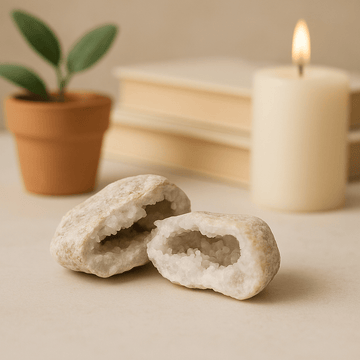


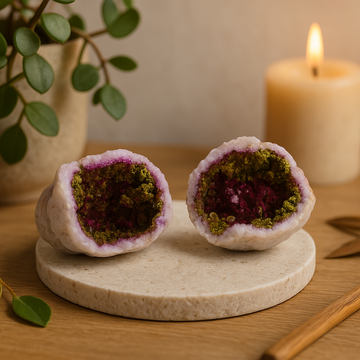
Che cos'è Calcite?
Calcite is calcium carbonate, CaCO3 in the chemistry books, and it is one of the most common minerals on the planet. You have walked on it without knowing: limestone, chalk, marble and travertine are all calcite in different geological costumes. The crystal form, cut and polished for the cabinet, is rarer and more curious: it fractures into rhombohedra, it bends light in two directions at once, and some specimens fluoresce pale blue or pink under ultraviolet light. The name comes from the Latin calx, meaning burnt lime, the stuff left behind when limestone is heated.
In the crystal tradition, calcite travels with light. Clear or white calcite belongs to the crown chakra; orange and green varieties keep company with the heart and solar plexus. The tradition pairs it with Cancer and the water element, perhaps because the mineral dissolves so willingly in anything acidic, including rainwater, leaving the cave formations that have made it a feature of sacred spaces for centuries.
Calcite has been the quiet working material of civilisation for longer than it has been a collectable stone. The Egyptians carved vessels from it. The Romans built with it. When you hold a piece of calcite, you are holding the same material that the Great Pyramid's inner casing was made from.
The tradition's invitation with calcite is simple: give it a place in a practice rather than a shelf. A clear piece on a desk works the way a clear window does. It doesn't change the room, but it changes what you notice in it. Paired with Cancer's water element, it asks for the quiet ritual rather than the dramatic gesture: one intention held in the morning, returned to at intervals, left in place.
Below you'll find what the catalogue holds for calcite: rough and polished pieces, jewellery and objects in the crystal's register. A stone that has been with us, in one form or another, for a very long time.