
Aroma
Muschio
The oldest perfumery material in the world. Warm, animalic, body-close. Modern musk is typically synthetic, but the warmth it holds is the same one that made it irreplaceable for three thousand years.
Acquista Muschio
- Bastoncini di incenso Musk Egiziano 20 bastoncini Stamford 20 bastoncini · 30 min
 India 4.4 (9)£1.80
 - Bastoncini d’Incenso Muschio Bianco Confezione da 20 Stamford 20 bastoncini · 30 minIndia 4.6 (8)£1.80

 India
India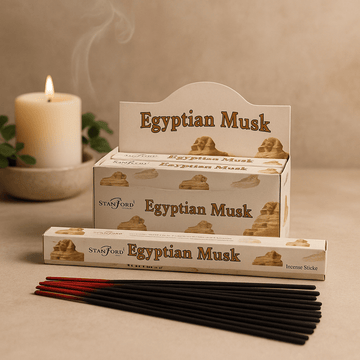


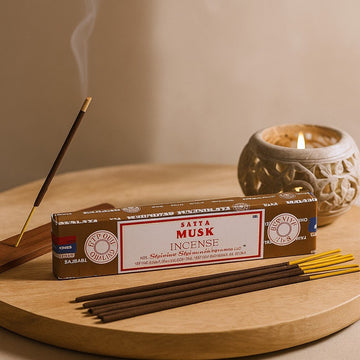




Musk is the oldest perfumery material in the world. The original came from the musk deer, a single drop from the animal's scent gland could scent a room for days, and the substance was so prized it was once weighed against gold. The word arrives from Sanskrit: mushka, testicle, which is exactly where it came from.
Most musk in use today is synthetic. This is worth knowing plainly, because the warmth it holds is real and the same warmth that made it irreplaceable for three thousand years. White musk, skin musk, clean musk. These are the modern forms, and they smell exactly as the name suggests: warm, slightly sweet, intimate. The scent opens with something animalic and soft, then settles close to the skin where it lingers for hours. It is a scent you wear rather than a scent you spray into a room.
In the tradition, musk lives at the winter end of the year and the dark hours of the day. It is the smell the body remembers: something that reads as warmth and presence rather than decoration. The associations with love and romance follow from this: animalic scents mark territory, signal presence, draw close. Protection lives here too, in the same gesture, the scent that says I am here to the self as much as to anyone else.
The practice the tradition suggests is unhurried. Apply at the pulse points after a bath, name an intention in plain words (warmth, presence, an evening of my own) and let the scent stay. Winter nights and close skin are its natural hours. Return to it through the evening and it returns something back.
Below: the musky shelf. Oils, candles and incense in the warm, close register, for winter nights and the quiet hours.