Aroma
White Sage
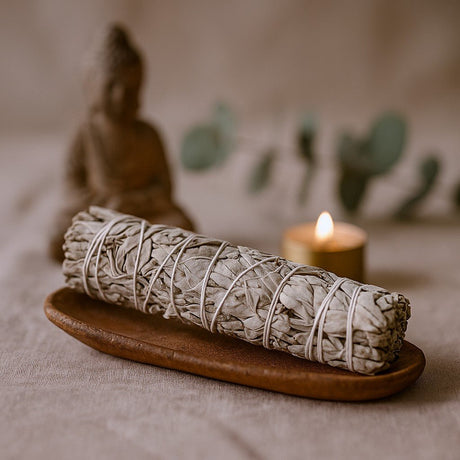
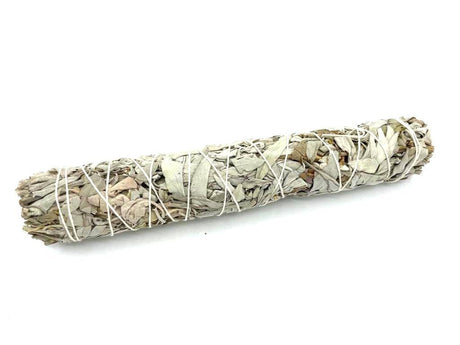
White sage — Salvia apiana — native to the American Southwest, with a camphorated, herbaceous scent used in ceremony for generations. The grounding smoke.
White sage — Salvia apiana — grows wild across the chaparral slopes of Southern California and the Baja California peninsula. Its botanical name comes from the Latin for bees, which the plant attracts so reliably that beekeepers once planted it near hives. The name most people know it by, though, is the one handed down through the Indigenous communities of the region, who have used it in ceremony for generations. It is their tradition, and a specific one.
The scent opens sharp and camphorated — that clean, almost medicinal clarity that clears the room before you've finished striking the match. Within a minute it settles into something drier and earthier, with resinous depth underneath and only the faintest trace of sweetness at the base. It is a smoke that takes up space without announcing itself. In the traditional vocabulary of scent, it belongs to protection and to the sharpening of attention — the work of drawing a boundary and then sitting inside it, quietly, to listen.
The tradition's invitation is practical: find the moment that calls you back to centre, and make the same small gesture there — the same bowl, the same three breaths, the same few leaves. The repetition builds the meaning. The smoke marks the territory, and your attention learns to follow it.
Below you'll find white sage in its traditional form — loose leaves for burning — alongside the other herbs, resins and scent objects our catalogue gathers for grounding and focus.
Domande frequenti
What does burning white sage do spiritually?
What is the difference between white sage and clary sage?
What is the spiritual meaning of sage oil?
What to mix with sage essential oil?
What essential oil makes your house smell amazing?
Acquista White Sage


Bastoncini per fumigazione Palo Santo e Salvia Bianca
DisponibilePrezzo normale £220Prezzo unitario


Bastoncino di Salvia Bianca per Purificazione Torcia 10cm
DisponibilePrezzo normale £995Prezzo unitario


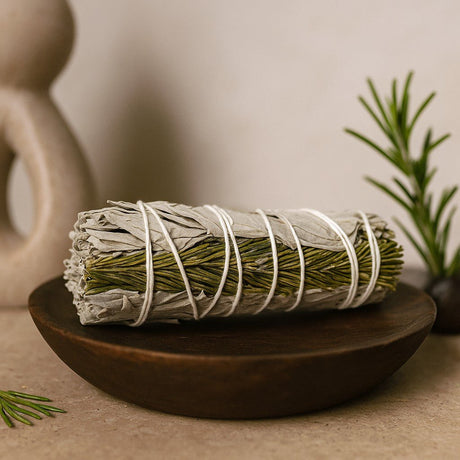
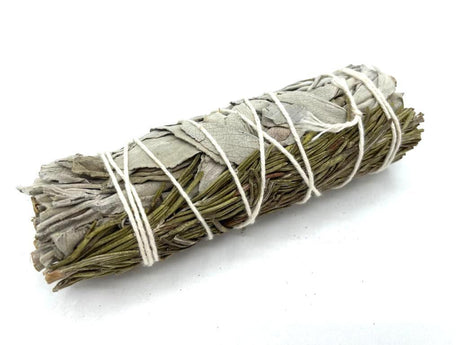


Bastoncino di Salvia Bianca con Yerba Santa 10cm
Scorte molto bassePrezzo normale £899Prezzo unitario