
Gemstone
Sodalite
Deep blue feldspathic mineral named for its sodium content — tradition links it with the throat and third eye, Sagittarius, and the work of clearer communication.
Deep blue
Sodalite takes its name from the sodium within it — soda — which gives the deep blue mineral its character and its first description. Discovered in Greenland in the early nineteenth century and quickly adopted by Canada's craftspeople, it arrived in Europe as a decorative stone rather than a spiritual one. Its colour, rich and saturated, runs from blue to violet-blue, and it is almost always marked with white veins or patches of calcite — which makes each piece look like a small, frozen map.
The mineralogy is straightforward; the tradition's interest in it is less so. Sodalite sits at the intersection of two chakras: the throat, where communication lives, and the third eye, where clarity and perception are held. In the yogic map these are close neighbours, and the stone travels between them naturally. Sagittarius claims it in the zodiac. Air and Water share custody — a sign of the stone's ability to hold precision and intuition in the same hand.
The tradition's quiet invitation is to give the stone a role alongside your own practice. Hold it before a difficult conversation, set a small intention in plain words, and let it return the attention to that intention over the course of the day. The stone keeps the note. The practice remains yours.
In the catalogue you'll find sodalite as tumbled stones, raw pieces, jewellery and small carved objects — each one different in its veining, each one carrying that same deep blue.
Shop Sodalite


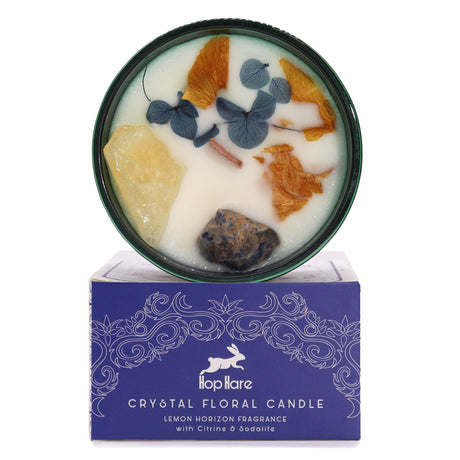


 £3.98 avslag
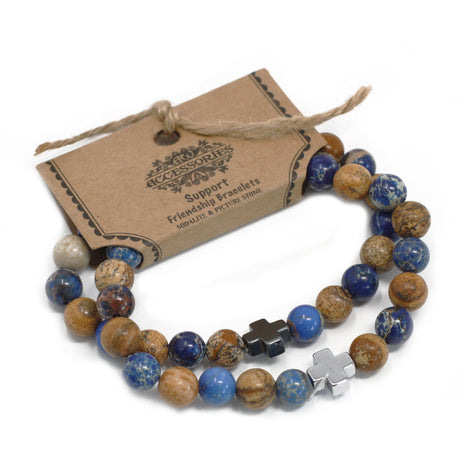


 £1.50 avslag

 £2.09 avslag


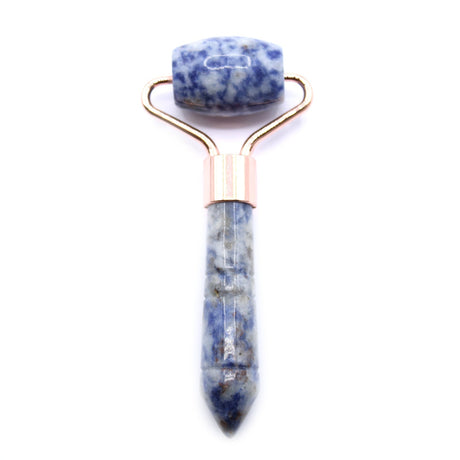


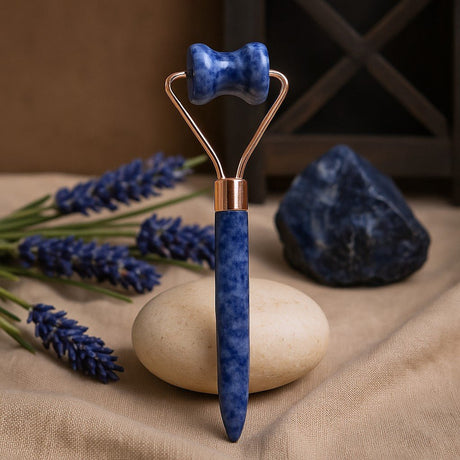

 £2.64 avslag


 £2.64 avslag


 £0.65 avslag


 £1.98 avslag
Badebombe med sodalitt-krystallarmbånd – Sandeltre
På lagerSalgspris £1395 Vanlig pris £1593Enhetspris


