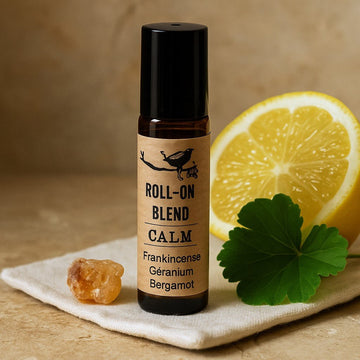
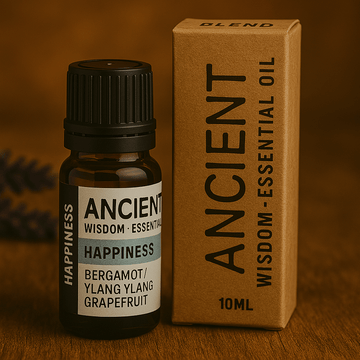
Bergamot is the fruit of Citrus bergamia, a small citrus hybrid that grows almost exclusively along the Ionian coast of Calabria in southern Italy. The name likely comes from the Turkish beg armudu, prince's pear, though the fruit itself is closer to a lime in shape. The oil is cold-pressed from the peel, which makes it immediate and bright in a way that steam-distilled citruses rarely are.
The scent opens sharp and clean: lemon, a little floral, a faint bitter edge that stops it from being sweet. Within minutes it softens, and what remains is more complex: something between sweet orange blossom and a faintly herbal green note. It is the smell behind Earl Grey tea, which was named after Charles Grey, the 1830s Prime Minister, though the story of how the blend came to him is probably invented.
Bergamot belongs to spring mornings and the early part of the day. The tradition pairs it with Energy and Vitality, which makes sense (the opening is clarifying, almost bracing) but also with Calm, which the tradition holds because the base note is never aggressive. In the mood vocabulary it keeps company with Joy and Balance.
The practice the tradition suggests is simple: bergamot is one of the better candles for the morning desk, and the habit it builds is an honest one. A few breaths before the first email, the same hour each day. The scent does not create calm; it marks the territory where you have chosen to practise it.
Below: bergamot in essential oil, candles, and room sprays, the catalogue's morning shelf, and its most Italian corner.
Sıkça sorulan sorular
What is bergamot essential oil traditionally used for?
The tradition pairs bergamot with Energy and Vitality for its clarifying opening, and with Calm and Balance because the base softens rather than sharpens. It is traditionally reached for in morning routines, diffused at the desk, or added to a room spray to mark the start of purposeful work. The practice is about building habit, not altering mood.
Who should not use bergamot essential oil?
Bergamot oil is phototoxic: it makes skin more sensitive to sunlight and can cause burns or pigmentation if applied before UV exposure. Never use it on skin that will see daylight within twelve hours. In a diffuser or candle the risk does not apply, but anyone pregnant, nursing or with sensitive skin should consult a qualified practitioner before topical use.
What is bergamot essential oil used for spiritually?
The tradition associates bergamot with Joy, Clarity and letting go of stagnant patterns. It is often diffused before meditation or ritual work where focus and lightness are wanted, and is traditionally paired with moon phases that invite release. The scent is thought to open rather than ground, so it suits the early part of practice rather than deep trance.
What are the traditional witchcraft uses of bergamot?
In folk practice bergamot is traditionally reached for in money work, success rituals and joyful intention-setting. The peel was once tucked into charm bags or rubbed on green candles before lighting. Its Calabrian origin ties it to sun magic and Mediterranean abundance traditions, and it pairs well with basil, mint and citrine in spring and summer spellwork.
Is bergamot a feminine or masculine scent?
Bergamot reads as fairly neutral, bright and clean rather than heavy or sweet, which is why it appears in both cologne and tea. Historically it was used across gender in Italy and Britain, and the tradition does not assign it a pole. If you find citrus sharp rather than soft, you will read it as crisp; if you catch the floral undertone, warmer.