
Değerli Taş
Howlite
A white stone with grey veining, discovered in Nova Scotia in 1868. The tradition pairs it with the crown chakra, Gemini and the work of settling down.
White, grey veins
Howlite Mağazasını Ziyaret Et




Howlite nedir?
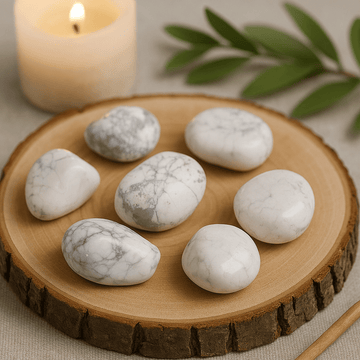
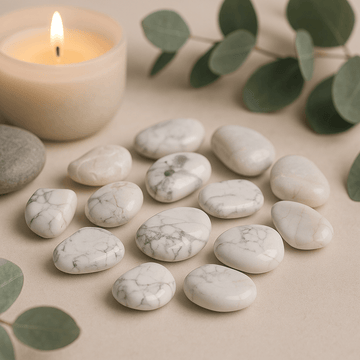
Howlite is a calcium borosilicate hydroxide mineral, first identified in Nova Scotia in 1868: named, fittingly, after the geologist Henry How who brought it to light. It is opaque white, almost chalky, threaded with grey or dark veining that makes each piece look slightly different. The veining is how you tell it from its many lookalikes, and it is why the stone takes dye so readily: a market curiosity rather than a flaw in the stone itself.
The tradition links howlite with the crown chakra, the sign of the Twins, and the element of air: associations that point toward clarity of thought, steadiness of attention, and the kind of calm that comes from not being pulled in too many directions at once. It is a stone that practitioners often reach for when the thinking won't settle, or when sleep feels just out of reach.
The suggestion is simple: give the stone a role in a practice you already have, or are willing to begin. Hold it for a moment in the morning while you name what you want to carry through the day (steadiness, a quieter mind, permission to rest) and let it be a physical place to return. The object keeps the intention in view; the practice remains yours.
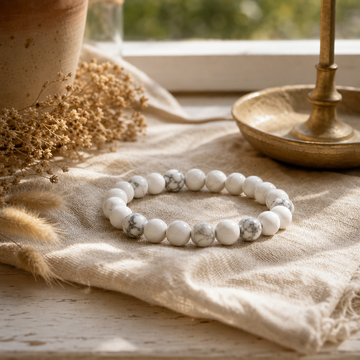
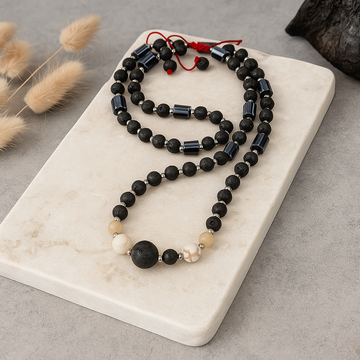
Below: the catalogue's howlite, in tumbled stones, worry stones, pendulums and jewellery, each piece natural, so the veining will be its own.