
Aroma
Rosewood
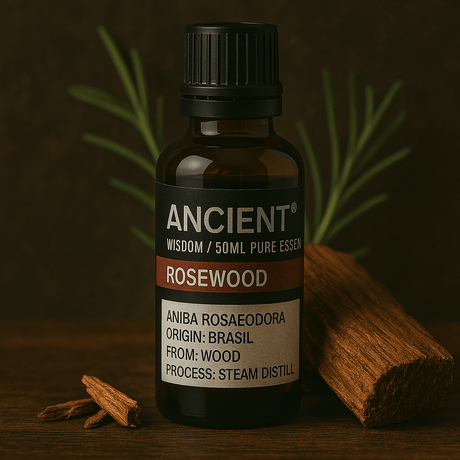
Rosewood (Aniba rosaeodora) — a warm, sweet-woody Amazonian oil with a soft rosy undertone. Traditional companions: calm and balance.
Rosewood comes from the tropical forests of the Amazon basin — primarily Brazil — where Aniba rosaeodora grows tall and straight. The essential oil is obtained by steam distillation of the wood, a practice that has been part of South American botanical tradition for well over a century and entered European perfumery in the early twentieth century. It remains a valued base note in both fine fragrance and aromatherapy work.
The scent opens softly, with a warm sweetness that reads as creamy rather than sharp. As it settles, the woody depth arrives — not the dry, resinous quality of cedar, but something rounder, more intimate, with a faint rosy undertone that gives the wood its name. It is one of the gentler woody oils: the florals keep it from being heavy, the wood keeps it from being sweet. On a blotter it develops slowly, holding its character for hours.
The mood register is evening, all four seasons. Rosewood sits quietly in the background — not demanding attention, just present. It belongs to the Calm and Balance shelf in our intention vocabulary: the kind of scent the tradition might turn to at the end of a day that needed steadying, or in the early hours when the thinking won't stop. Winter evenings suit it especially, when the warmth in the scent answers the cold outside the window.
The practice the tradition offers is unhurried. Place rosewood somewhere you return to in the evening — a diffuser by the chair, a candle on the shelf, a few drops on a cloth in the bedroom. Let it mark the same hour each day. The scent becomes the signal: the day is moving toward its quieter gear.
Below: our catalogue's rosewood in essential oil, candles, soaps and blends — the warm, woody-floral end of the shelf.
Sıkça sorulan sorular
What does rosewood smell like?
What does rosewood symbolize?
Why is rosewood so special?
What are the spiritual benefits of rosewood?
Why is rosewood not used anymore?
Rosewood Mağazasını Ziyaret Et


 £9.34 indirim
Gül Ağacı Uçucu Yağı Buhar Distile 50ml
Az stoktaİndirimli fiyat £1445 Normal fiyat £2379Birim fiyatı


