Basil, Ocimum basilicum, carries its name like a title. The Greek basileus means king, and across two thousand years of cultivation the herb has rarely been treated as ordinary. Romans kept it in window boxes for pleasure and protection. Ayurvedic texts gave it a role in ritual. Southeast Asian traditions wove it into ceremony. By the time it reached English kitchen gardens, it had already spent centuries as something more than a culinary leaf.
The scent does not arrive gently. True basil oil opens herbal and almost peppery, with a minty brightness at the edge that cuts through stale air efficiently. Give it a minute and the sharpness softens into something greener, earthier: the smell of the whole plant rather than just the leaf. In a room it lingers for an hour or so before settling.
The tradition places it with morning and with summer: the hours and seasons that ask for clear-headedness without agitation. It belongs to Focus and Clarity in our intention vocabulary, that first clean inhale registers before you've named it, and to Abundance, the plant's willingness to grow generously wherever it finds itself. In the mood register it holds Focus and Energy: not the revving urgency of citrus, but the steady readiness of a window opened early.
The tradition's quiet suggestion: use the same opening breath each morning. A few drops in a diffuser, an unhurried inhale while the day assembles itself, and let the repetition build the association. When the scent returns, so does the quality of attention it carries.
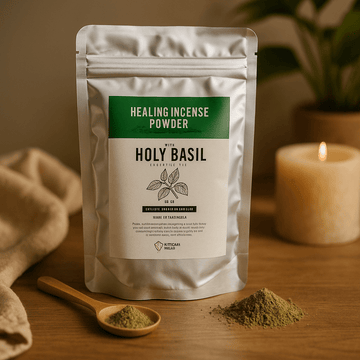
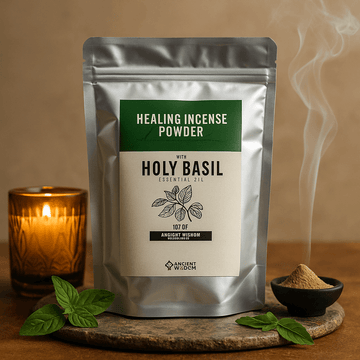
Below: basil as essential oil, candle and incense, the clean, green beginning of the shelf.
Ofte stillede spørgsmål
What does basil essential oil mix well with?
Basil blends well with citrus oils like lemon or bergamot, which brighten its green edge, and with lavender or geranium, which soften its peppery sharpness. The tradition also pairs it with rosemary or peppermint for morning diffusions that support clarity and focus. Start with two parts basil to one part companion oil and adjust to taste.
What does basil not go with?
Basil's brightness can overwhelm heavier resinous scents like patchouli or myrrh, and its herbal sharpness often clashes with very sweet florals such as ylang-ylang or jasmine. The tradition generally keeps it away from night-time blends, where its clarity-focused character works against the intention. Trust your nose and layer cautiously with unfamiliar oils.
What are the potential side effects of basil oil?
Basil essential oil can irritate skin if applied undiluted; always mix with a carrier oil at no more than two per cent dilution. Avoid use during pregnancy or if you have epilepsy, as the oil contains methyl chavicol, which requires caution in those circumstances. Keep away from eyes and mucous membranes, and store tightly sealed in cool, dark conditions.
Do I need to refrigerate basil oil?
Basil essential oil does not require refrigeration but does best stored in a cool, dark place away from direct sunlight and heat, which degrade its volatile compounds. Keep the bottle tightly sealed between uses to slow oxidation. Properly stored, the oil retains its character for one to two years; discard if the scent turns sharp or rancid.
What is basil essential oil traditionally reached for?
The tradition reaches for basil oil in morning diffusions and study spaces, pairing its green, peppery clarity with intentions of focus, mental sharpness and purposeful energy. It appears in rituals marking new beginnings and abundance, reflecting the plant's vigorous growth. Some practices use a drop on the wrists or temples, diluted, before work requiring sustained concentration.


 Nepal