
Ædelsten
Hematite
Metallic iron oxide with a five-thousand-year history as pigment and mirror: the tradition links it with the root chakra, Aries and Aquarius.
Metallic grey
Shop Hematite




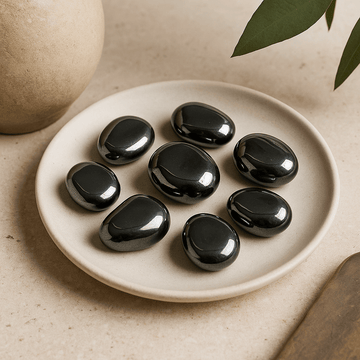
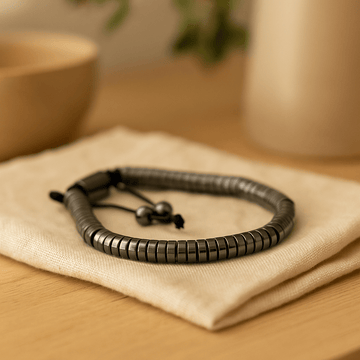
Hvad er Hematite?
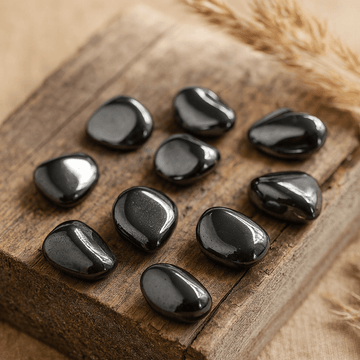
Hematite is iron oxide, Fe₂O₃, one of the most common minerals on earth and the primary source of the metal itself. The name comes from the Greek haimatitēs lithos, 'blood-like stone', not for its colour but for the deep red streak it leaves on unglazed porcelain. Its surface, though, is something else entirely: when polished it turns mirror-bright, which is why the Romans called it sanguis and used it for looking glasses before glass was readily available. The ochre pigment used in cave paintings across Europe and the Americas was iron oxide too: the same mineral, in a different form.
In the crystal tradition, hematite belongs to the root chakra, the grounding centre at the base of the spine. It is paired with Aries and Aquarius in the zodiac, and with both Earth and Fire as elements, a combination that makes intuitive sense: the stone is heavy and cool and undeniably of the earth, yet it takes a shine that catches light like a flame.
The tradition gives hematite a practical role alongside the work of staying grounded, focused and steady. The suggestion is straightforward: choose one, hold it for a moment in the morning and name what you're aiming for (clarity, courage, the ability to stay in the room) and let the stone be the physical place you return to when the morning's intention has quietly left the building. The weight of it, the coolness, the polished surface catching the light: these are what the practice keeps coming back to.
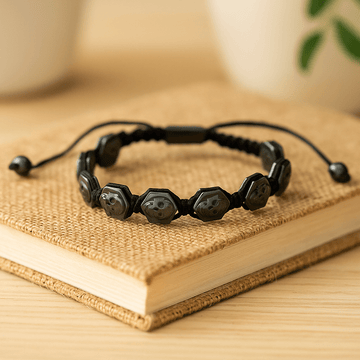
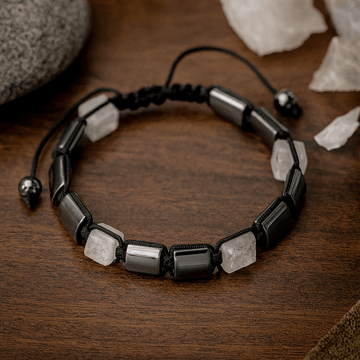
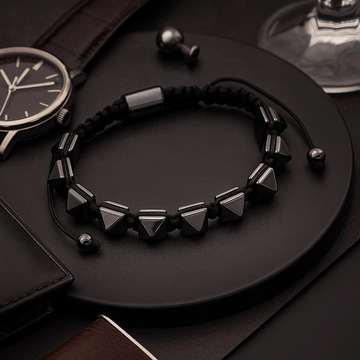
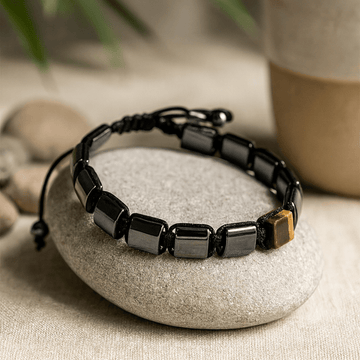
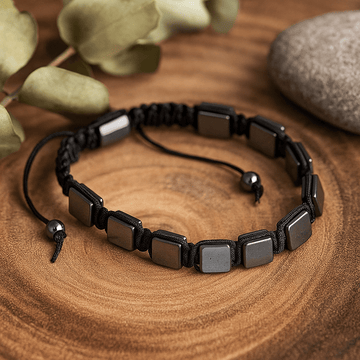
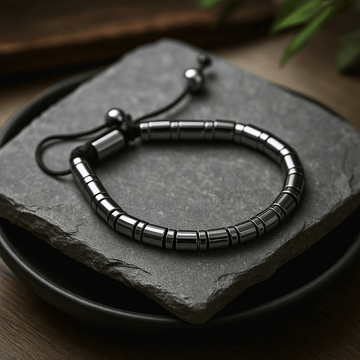
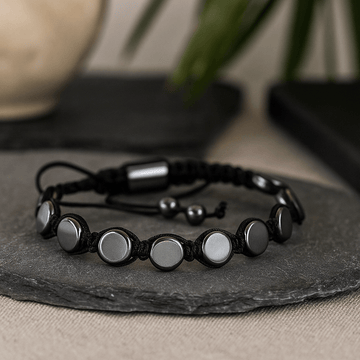
In the catalogue you'll find hematite as tumbled stones, bracelets, pendulums and raw specimens, each one cut and polished from natural stone, so the finish varies from piece to piece.