
Aroma
Sandalwood
Creamy, warm wood with three thousand years in temples and ceremony. The tradition holds it for evening, autumn, and the work of settling.
The scent comes from the heartwood of Santalum album — Indian sandalwood — which must spend decades developing its fragrance in the presence of a particular soil fungus before the tree is fit to harvest. Three thousand years of use across India, Southeast Asia and the Buddhist world has given this small, parasitic tree an outsized place in the tradition of sacred scent.
Real sandalwood opens creamy and almost nutty, with a soft warmth underneath. As it settles, the sweetness recedes and the wood comes forward — dry, warm, close to the skin. It is a scent that asks for space rather than filling it. Good sandalwood does not announce itself; it lingers.
The tradition files it firmly in the evening register. Temples and meditation halls, Japanese incense ceremony, the last hour before sleep — sandalwood belongs where the day is folding down. Autumn suits it well, when the light begins to change and the body responds to different air. In the mood vocabulary it keeps company with Grounding and Calm; in the intention vocabulary, with Intuition.
The practice the tradition offers is simple: let sandalwood mark the end of the working day. Not an event — just the same candle, the same hour, the breath that comes before the next thing. Scent is unusually good at this work. The body remembers, and repetition builds the association between the smell and the state it belongs to.
Below — our catalogue's selection in the sandalwood register: essential oil, candles, incense and blends for the evening shelf.
Shop Sandalwood






 £17.30 kedvezmény
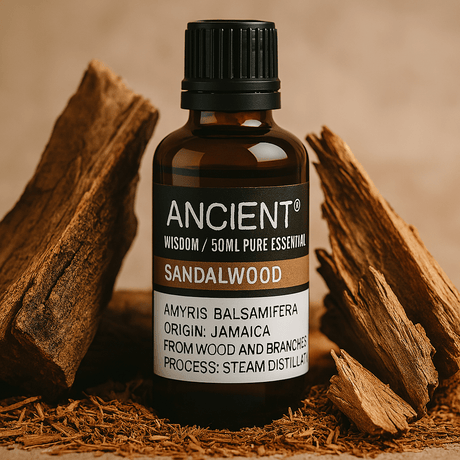
Amyris Illóolaj Nyugat-indiai Szantálfa 50 ml
Akciós ár £2899 Normál ár £4629EgységárAlacsony készlet



 £4.95 kedvezmény
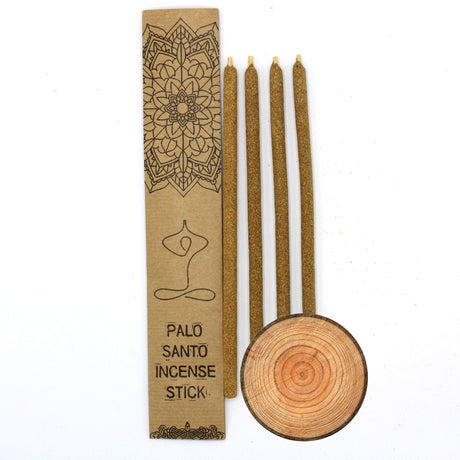
Palo Santo füstölőpálcikák szantálfa, nagy, 4 darab
Akciós ár £1395 Normál ár £1890EgységárRaktáron


 £19.70 kedvezmény


 £1.40 kedvezmény


 Elfogyott
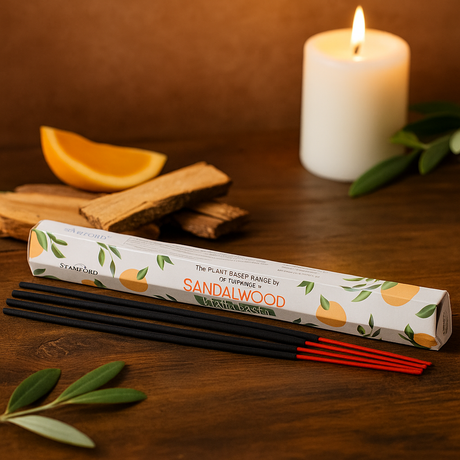
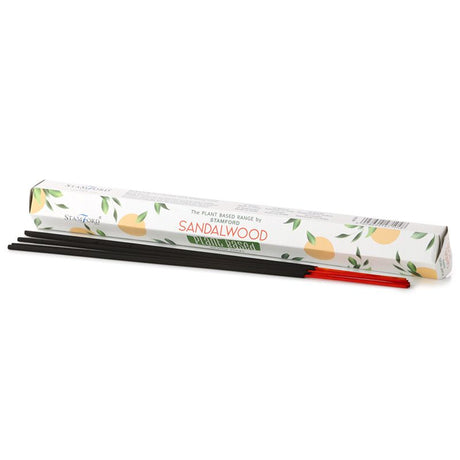
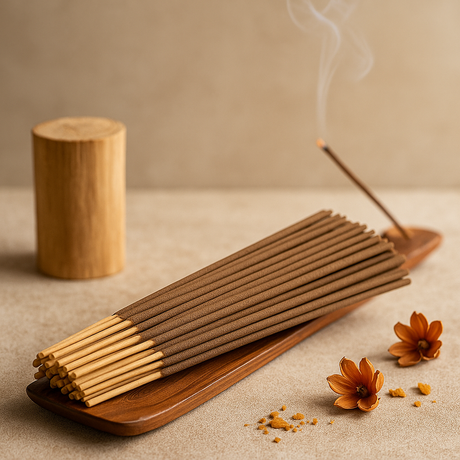
Szantálfa Füstölőpálcikák 15g Satya
Normál ár £165Egységár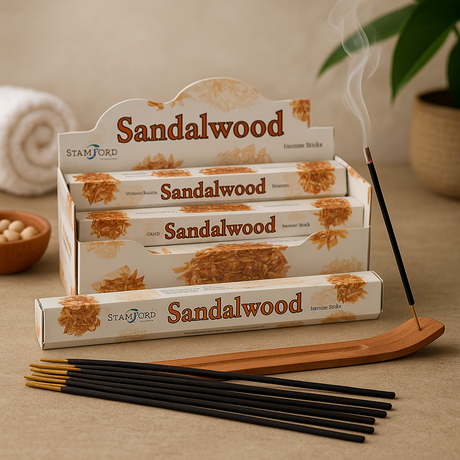


 £7.80 kedvezmény


