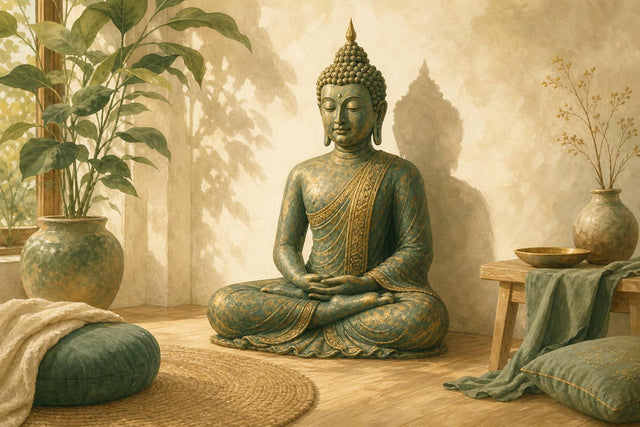
Budda
A Buddha figure portrays Siddhartha Gautama, the teacher who lived in northern India around the fifth century BCE and whose teaching became Buddhism. Each pose and hand gesture recalls a moment of his life: meditation, teaching, the night of his awakening. For Buddhists the figure is an object of respect and a reminder of the path he showed.
- Tradition
- Buddhism, from northern India
- First figures
- around the 1st century CE
- Traditional place
- raised and clean, never on the floor

W bibliotece
Aromaty

Kup Budda
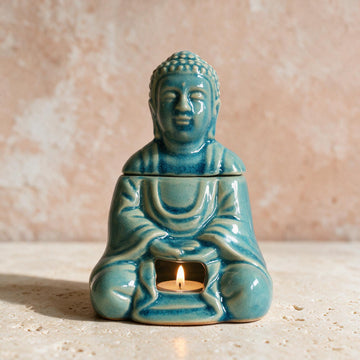
- Palnik do olejków Budda, siedzący, niebieski Wosk zapachowy · Ceramika 5,0 (2)£7.95Członkowie: +£0.30 zwrotu
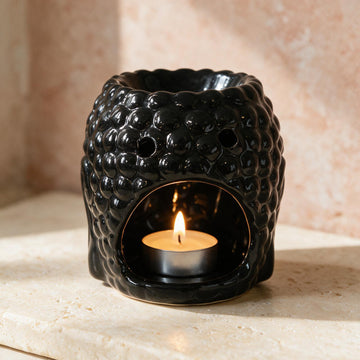
- Palnik do olejków i wosków Budda, czarny Wosk zapachowy · Ceramika 4,9 (13)£5.99Członkowie: +£0.20 zwrotu
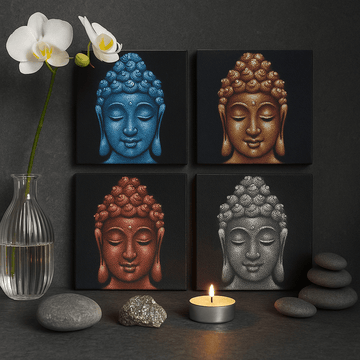
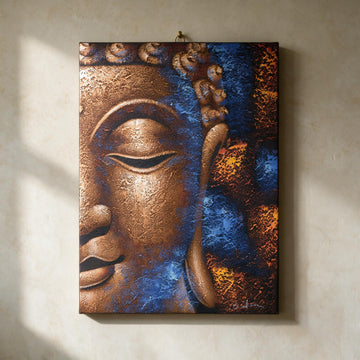
- Obraz na płótnie Buddha w ramie, miedziany, 80x60 cm Płótno £40.99Członkowie: +£2.60 zwrotuMała ilość w magazynie
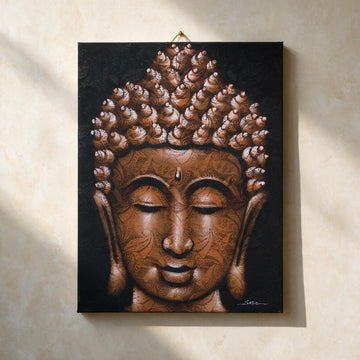
- Obraz Buddy, miedziany brokat, 80x60 cm Płótno 5,0 (2)£40.99Członkowie: +£2.60 zwrotuMała ilość w magazynie
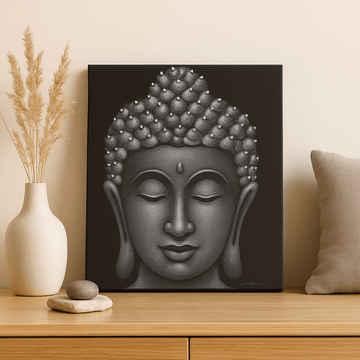
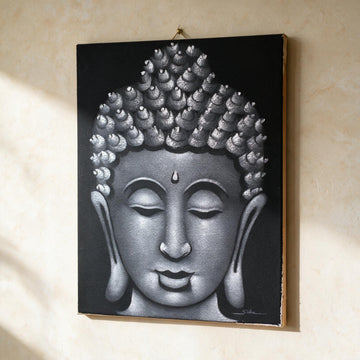
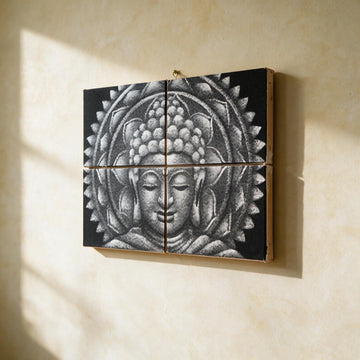
- Obraz na płótnie Buddha, szare wykończenie piaskowe, 80x60 cm Płótno 5,0 (2)£34.99Członkowie: +£2.25 zwrotuMała ilość w magazynie
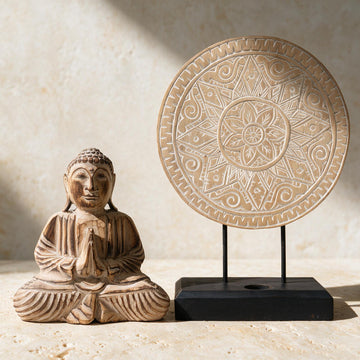
- Figurka Buddhy z Klasyczną Mandalą, Zestaw 2-częściowy Drewno albasia 5,0 (1)£68.95Członkowie: +£4.45 zwrotu
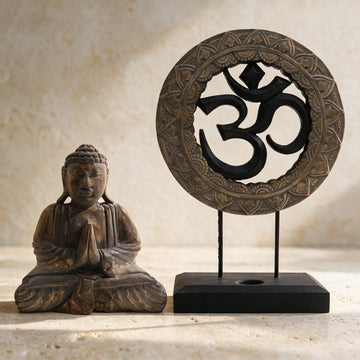
- Zestaw figur Buddha 2-częściowy z symbolem Om, szaro-czarny Drewno albasia 4,0 (1)£77.00Członkowie: +£4.95 zwrotuMała ilość w magazynie
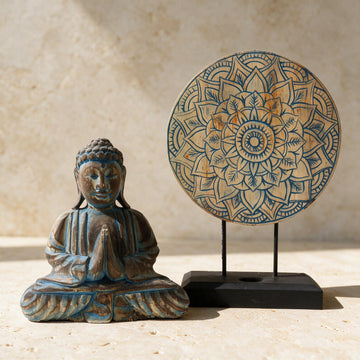
- Figurka Buddhy z Kwiatową Mandalą, Zestaw 2-częściowy, Niebieski Drewno albasia £68.95Członkowie: +£4.45 zwrotuMała ilość w magazynie










Najczęściej zadawane pytania
Is it disrespectful to have a Buddha statue if I am not Buddhist?
Most Buddhist teachers welcome it when the figure is kept with respect: raised, clean, and away from the floor and the bathroom. Avoid using it as a doorstop, a lamp base or a garden joke.
Which way should a Buddha statue face?
Custom varies from country to country. A common choice is facing into the room or towards the main door, at or above eye level when you sit. A clean, calm place matters more than the direction.
What does a reclining Buddha mean?
It shows the Buddha at the end of his life, lying on his right side as he passed into final nirvana. In Buddhist art it is a peaceful image of completion, not a sad one.
Is the laughing Buddha the same as the Buddha?
No. The laughing figure is Budai, a Chinese monk of folklore later linked with Maitreya, the Buddha to come. Siddhartha Gautama is usually shown slender and calm.