Algumas noites pedem um tipo mais pequeno de chegada. Não um ritual longo, apenas uma nota clara que diz à divisão, e a si, que é hora de abrandar. Uma taça tibetana faz exatamente isso. Um toque suave, e o ar parece amolecer e alargar. O som abre, a respiração alonga-se, e a atenção assenta num ritmo mais calmo. É uma pequena pausa que pode segurar nas suas mãos.
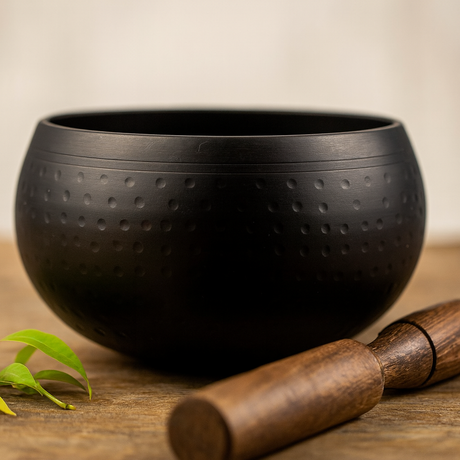
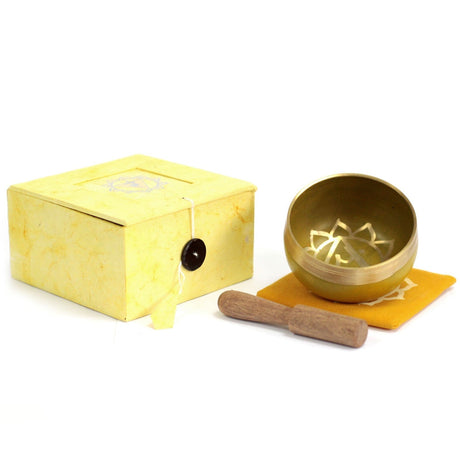
É por isso que mantemos uma ao alcance na SHAMTAM. Não como decoração, mas como companheira para a presença. Uma taça como a nossa Taça Tibetana Verde Musgo de 23cm tem uma sustentação quente e constante e um peso reconfortante na palma da mão. Ajuda a mente a chegar, com gentileza e sem pressa.
O que torna uma taça tibetana especial
Uma taça tibetana é um recipiente metálico que soa e canta quando é batido ou circulado com um malhete. Os seus harmónicos são longos e em camadas. Você ouve-os, mas também os sente. O som torna-se uma âncora tátil, reunindo a atenção dispersa num único ponto estável.
As taças tibetanas são frequentemente chamadas de tibetanas ou do Himalaia. A sua história é entrelaçada e, por vezes, atribuída incorretamente. A imagem popular associa-as à prática monástica tibetana antiga, mas as evidências apontam mais claramente para artesãos e linhagens de metalurgia no Nepal e na Índia, onde as taças eram usadas tanto como recipientes do dia a dia como objetos rituais. Desde gravações do meio do século XX até aos espaços atuais de yoga e mindfulness, o papel contemporâneo da taça cresceu através de uma mistura de tradição, artesanato e nova prática contemplativa.
O que permanece constante é simples: uma taça convida ao silêncio.
Por que convidar uma taça para a sua prática
Uma taça tibetana oferece tanto um sinal como um suporte para a atenção. O tom claro indica o início, e o seu desvanecer guia-o para o silêncio. Muitas pessoas sentem um amolecimento do corpo, uma desaceleração da respiração, uma libertação subtil na face e na mandíbula. É suave, mas notavelmente preciso.
- Marque o início ou o fim de uma sessão
- Convide um ritmo mais lento e calmo no corpo
- Leve o som por uma divisão como um pequeno ritual refrescante
- Acompanhe uma meditação sonora em casa
- Apoie um ritual de definição de intenção
Antes de começar: um pequeno momento
Não precisa de um altar perfeito nem de um estúdio insonorizado. Alguns detalhes cuidados são suficientes para criar o ambiente de tranquilidade.
- Postura: Sente-se confortavelmente com a coluna ereta e relaxada, num almofadão ou cadeira.
- Colocação: Descanse a taça na palma aberta ou num almofadão macio para que a borda possa vibrar livremente.
- Respiração: Faça uma inspiração lenta e uma expiração sem pressa. Deixe os ombros relaxarem.
- Intenção: Nomeie o seu desejo para esta sessão, mesmo que seja numa só palavra: descanso, clareza, bondade.
Que este seja um espaço que o acolha exatamente como é.
Como usar uma taça tibetana: um guia passo a passo
Abaixo está um método simples que pode usar com qualquer taça de latão de qualidade. Referimo-nos à nossa taça verde musgo ao longo do texto, para lhe dar uma ideia da experiência.
Passo 1. Posicione a taça
Segure a taça ligeiramente com a mão não dominante. Mantenha a palma aberta e os dedos relaxados. Evite agarrar as laterais, pois isso pode abafar a vibração. Sinta o latão fresco. Sinta o peso que ancora a sua atenção.
Passo 2. Escolha o seu malhete
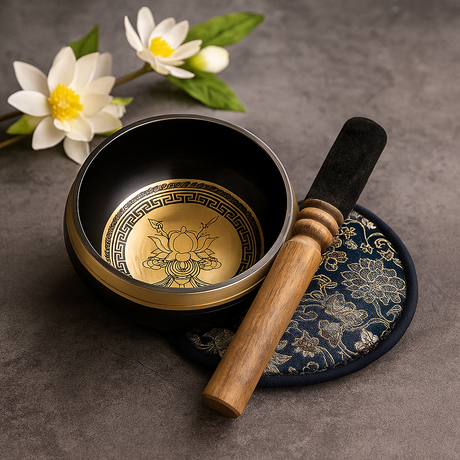
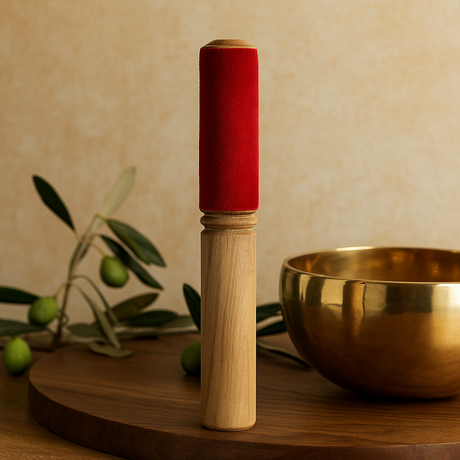
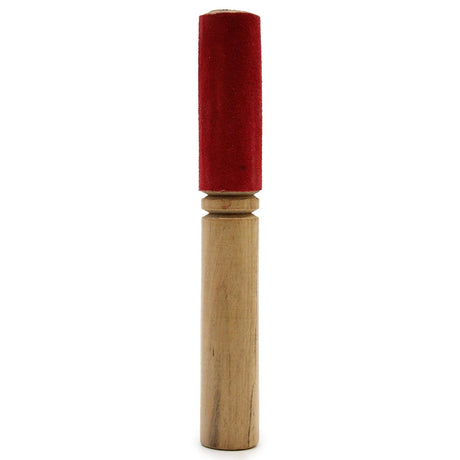
A maioria das taças vem com um malhete de madeira ou revestido a camurça. Um malhete de madeira produz um som claro e brilhante; o de camurça tende a ser mais quente e suave. Ambos são encantadores. Escolha o ambiente que deseja convidar.
Passo 3. Toque suavemente para despertar o tom
Toque a borda uma vez, como se tocasse a superfície da água. Com uma taça de latão quente como a verde musgo, surge um tom limpo, semelhante a um sino, que permanece no ar. Deixe-o florescer, pairar no ar e depois desaparecer em silêncio. Um único toque pode ser um ritual em si.
Passo 4. Faça a taça cantar
Após o toque, coloque o malhete contra a borda e comece um círculo lento e suave. Mantenha a pressão uniforme. Mova-se ao ritmo de uma respiração calma. O som vai crescendo gradualmente, como se ondas se alargassem num lago calmo. Se ouvir arranhões, suavize a pressão e desacelere.
Passo 5. Combine a respiração com o som
Inspire enquanto o som cresce; expire enquanto ele se acalma. O corpo encontra o tom, depois a mente encontra o corpo. Forma-se um pequeno ciclo constante: respiração, som, quietude.
Usar a taça durante a meditação
Muitos praticantes usam a taça como um guia temporal. Comece com um único toque, permaneça em silêncio por alguns minutos e toque novamente sempre que a atenção precisar de um suave retorno. Durante uma meditação mais longa, pode deixar a taça cantar a cada poucos minutos, permitindo que cada nota desapareça completamente antes da próxima. O primeiro tom define o espaço; o último tom abre novamente a sala.
Os professores frequentemente tocam uma vez para começar, uma ou duas vezes durante as transições, e três vezes para terminar. Se gostar de levar o som pela sua casa como um pequeno ritual refrescante, caminhe lentamente de divisão em divisão, tocando cada canto com som.
Respiração, corpo e tom
Combinar a taça com a respiração aprofunda o foco. Experimente estes padrões simples:
- Toque na expiração e deixe o tom levar o resto.
- Comece um círculo lento na borda durante a inspiração e complete-o na expiração.
- Após um toque, descanse as mãos e perceba a vibração na palma, no peito, no silêncio dentro dos seus ouvidos.
Deixe o som ser o seu ponto focal. Deixe a respiração ser a sua âncora. Os dois juntos criam um ritmo silencioso e confiável. Algumas pessoas gostam de aprofundar a respiração ou o yoga juntamente com a taça, contando cada volta numa corda de contas.
Uma nota sobre o tempo e o ritmo
Menos é muitas vezes mais. Em sessões de grupo, muitos facilitadores tocam uma taça a cada dois a cinco minutos, ou em pontos naturais de transição na prática. Um toque claro refoca a atenção. Um som sustentado convida à profundidade. O silêncio entre os tons dá tempo ao corpo para absorver a mudança.
Se é novo nas taças, dê a cada nota espaço para decair antes de tocar novamente. Permita que os últimos vestígios de brilho desapareçam na sala. Isto evita que o som fique sobrecarregado e preserva a sua capacidade de abrir a mente.
O que a ciência sugere
As pessoas frequentemente descrevem sentir-se mais calmas e centradas mesmo após uma curta meditação sonora. Alguns estudos começaram a investigar o porquê. Numa pequena experiência, uma breve sessão com sons de taças do Himalaia antes do relaxamento esteve associada a uma maior redução da frequência cardíaca do que relaxar em silêncio. Alguns estudos observacionais relataram que as pessoas sentiram menos tensão, raiva e mau humor após sessões de grupo com taças metálicas.
Estudos sobre ondas cerebrais acrescentam outra camada. Quando os ouvintes se sentam com o ritmo constante e de baixa frequência de uma taça, a atividade registada tende a deslocar-se para as gamas mais lentas theta e delta, frequentemente associadas a um relaxamento profundo e foco interior. As evidências aqui são iniciais e limitadas, mas apontam na mesma direção: o som da taça parece ajudar o corpo a assentar num estado mais calmo e repousante. Mantemos uma linguagem honesta sobre isto. Uma taça não é uma cura nem um tratamento. A calma surge através da sua própria atenção e respiração, com o tom como um lugar constante para os repousar.
Escolher o seu martelo
Os maços moldam o carácter da voz da sua taça. Pode manter um ou dois, ou construir um pequeno conjunto ao longo do tempo. Abaixo está um guia simples dos tipos comuns e a sua sensação.
| Tipo de maço | Material e sensação | Qualidades do som | Estado de espírito e uso |
|---|---|---|---|
| Camurça ou feltro macio | Cabeça muito macia e almofadada | Ataque quente e arredondado, longa sustentação, enfatiza os harmónicos graves | Profundamente calmante, enraizador, adorável para encerramentos ou à noite |
| Borracha média ou almofadada | Firmeza média | Tom claro, harmónicos equilibrados, sustentação moderada | Focado, estável, ideal para meditação diária |
| Ponta de madeira dura ou couro | Contacto firme e brilhante | Ataque nítido, sustentação curta, mais brilho | Energizante, clarificador, útil para abertura ou transições |
| Cabeça mais pesada com cabo robusto | Sensação densa e pesada | Volume forte, fundamentos graves ricos | Poderoso, envolvente, melhor em espaços maiores |
Se estiver incerto, comece com um maço de camurça macia para um tom mais suave e indulgente, depois adicione um maço mais firme para sinais mais brilhantes quando necessário. Confie no seu ouvido. Se um som fizer a sua respiração acalmar e os seus ombros relaxar, é o certo para hoje.
Cuidar da sua taça
Com um pouco de cuidado, uma taça bem feita pode durar décadas. O latão e o bronze desenvolvem lentamente uma pátina. Muitos de nós adoramos este aspeto vivido; se preferir um brilho suave, uma manutenção simples é suficiente.
- Limpe após o uso: Um pano macio e seco para remover óleos e impressões digitais.
- Polir com moderação: Um polidor suave para latão ou uma pasta de limão e bicarbonato, depois seque com um pano.
- Evite produtos agressivos: Sem abrasivos, sem imersões prolongadas.
- Guarde com cuidado: Mantenha-a seca, sem empilhar, e repousando numa almofada ou pano macio.
Se o tom alguma vez soar estranhamente áspero ou a chiar, verifique primeiro a sua técnica: alivie a pressão e desacelere o círculo. Experimente um maço diferente. Limpe a borda. Se o problema persistir após um choque ou queda, um artesão experiente pode aconselhar sobre reparação.
A sala faz parte do instrumento
O som interage com o espaço. Tetos altos e pavimentos de madeira convidam a uma ressonância generosa. Tapetes e cortinas pesadas suavizam e encurtam o toque. Nenhum é melhor, apenas diferente. Numa sala animada, toque mais devagar e permita desvanecimentos mais longos. Numa sala suave, considere um golpe mais firme ou um maço mais pesado para manter a voz presente.
Quando encontrar um ponto onde a taça soe especialmente ressonante, marque-o com uma pequena almofada e volte a esse local. Com o tempo, o espaço em si começa a parecer familiar, como uma cadeira moldada à sua forma.
Escolher a sua taça tibetana
Cada taça da nossa coleção é selecionada com intenção:
- som limpo e ressonante
- sustentação longa que preenche suavemente uma divisão
- peso estável e que traz enraizamento
- artesanato que traz beleza e significado aos seus rituais
Algumas são perfeitas para cantos de meditação, outras para espaços abertos ou prática em grupo. Todas são escolhidas para apoiar os seus momentos de presença, clareza e calma.


Rituais suaves que pode experimentar
Comece com três respirações. Bata uma vez. Conte cinco inspirações lentas e cinco expirações lentas, olhos suaves ou fechados. Bata novamente. Deixe o som desaparecer completamente. Sussurre uma palavra que gostaria de encontrar mais vezes hoje. Depois, entre na sua prática ou simplesmente sente-se por um ou dois minutos, mãos repousadas, atenção centrada. Termine com um último toque e uma reverência suave à taça.
Ou faça uma caminhada tranquila pela sua casa enquanto a taça canta. Segure-a numa mão, circule a borda com a outra e faça pausas em limiares, cantos e prateleiras. Para redefinir a energia de uma divisão à sua maneira, pode acender primeiro um incenso e deixar que os dois se movam juntos pelo espaço. Repare como até as divisões pequenas se sentem diferentes depois do som passar por elas.
O modo SHAMTAM de lidar com o som
Na SHAMTAM, selecionamos taças e itens rituais com cuidado e paciência. A nossa coleção é multilíngue e internacional, feita por artesãos do Nepal, Índia, Bali e Reino Unido, e embalada com um olhar para a gentileza. O objetivo é simples: ajudar a abrandar, reconectar e viver com intenção.
Se é novo nos tigelas cantantes, comece com uma que lhe pareça reconfortante na mão e suave para o ouvido. Se já toca, considere um segundo malhete para ampliar a paleta, ou uma almofada que permita à borda vibrar livremente. Também pode levar o som da taça consigo de divisão em divisão, como uma antiga tradição que transporta o som pela casa. Pequenas mudanças podem fazer uma prática familiar parecer nova outra vez.
Traga uma taça para a sua casa quando estiver pronto para um ritmo mais tranquilo. Um sopro, um tom, um momento gentil e atento de cada vez.