Jasmine is one of the most labour-intensive materials in the perfumer's palette. The flowers of Jasminum officinale are harvested by hand at dusk. They open in the cool of the evening, releasing their scent only once the sun drops. To produce one kilogram of absolute, roughly a thousand kilograms of blossoms pass through extraction. The name arrived in Europe from the Persian yasmin, carried along the trade routes that once moved silk and spice.
The scent itself is immediate and arresting: a deep, sweet floral with a warmth that sits close to the skin rather than projecting outward. It is heady at first contact, then settles into something quieter, more intimate. This trajectory (from bold entrance to a gentle, lingering presence) is what gives jasmine its place in the night register.
The tradition has spent centuries placing jasmine in the same territory: love, openness, the hours when the world quiets. It appears in Indian wedding garlands and Chinese poetry, in temple offerings and the evening gardens of North Africa. The night-blooming habit has made it a natural companion for intimacy and for sleep, not as a cure, but as atmosphere. A few drops in a diffuser an hour before bed, a candle lit while the room goes soft.
The practice the tradition suggests is simple: choose an hour, keep the appointment, and let the scent mark the transition. The body learns. The scent remembers.
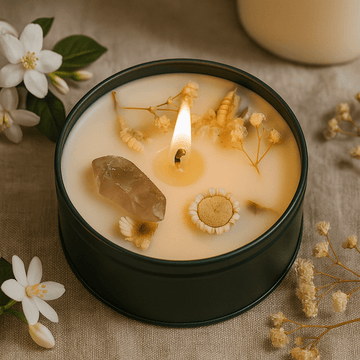
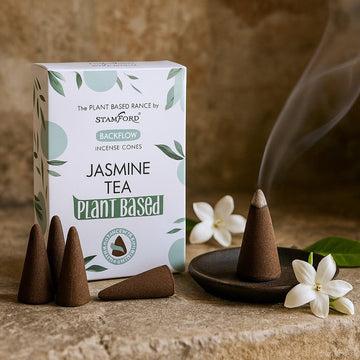
Below you'll find jasmine as essential oil, candles, incense and bath blends: the full evening register from our catalogue.
Întrebări frecvente
What is jasmine essential oil used for?
Jasmine essential oil is traditionally used in evening rituals, diffused or added to baths to mark the transition between day and rest. The tradition pairs it with practices of intimacy, contemplation and preparing for sleep, not as treatment, but as atmosphere. A few drops in a diffuser an hour before bed is the most common practice.
What does jasmine oil do spiritually?
The tradition associates jasmine with openness, love and the quiet hours of the evening. It appears in temple offerings across Asia, in wedding garlands and poetry, and in practices that invite intimacy or inward attention. The scent is reached for when marking thresholds: between day and night, self and other, noise and stillness.
What are the potential side effects of using jasmine oil?
Jasmine absolute is highly concentrated and should always be diluted before skin contact: a 1–2 per cent dilution in a carrier oil is standard. Patch-test on the inner arm first. Avoid during pregnancy unless guided by a qualified practitioner. If irritation occurs, discontinue use and rinse thoroughly with a plain oil, not water.
What are the differences between pink jasmine and star jasmine?
Pink jasmine and star jasmine belong to different botanical families and produce different scents. True jasmine, Jasminum officinale and Jasminum grandiflorum, is what perfumers and practitioners use. Star jasmine is Trachelospermum jasminoides, unrelated and lighter in fragrance. Our jasmine products use only true jasmine absolute or essential oil from the Jasminum genus.
Is jasmine a toxic plant?
True jasmine flowers, Jasminum officinale and Jasminum grandiflorum, are not toxic and have been used safely in ritual and fragrance for centuries. Some plants called jasmine, such as Carolina jasmine and yellow jasmine, belong to other families and are toxic. Our products use only true jasmine from the Jasminum genus, steam-distilled or solvent-extracted for aromatic use.


 India


 China