Felfedezés › Szimbólumok és oltár
Buddha
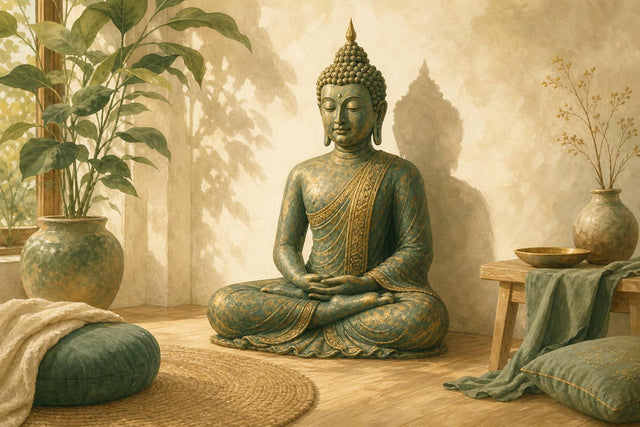
A Buddha figure portrays Siddhartha Gautama, the teacher who lived in northern India around the fifth century BCE and whose teaching became Buddhism. Each pose and hand gesture recalls a moment of his life: meditation, teaching, the night of his awakening. For Buddhists the figure is an object of respect and a reminder of the path he showed.
- Tradition
- Buddhism, from northern India
- First figures
- around the 1st century CE
- Traditional place
- raised and clean, never on the floor

A könyvtárban
Illatok

Vásárolj itt: Buddha
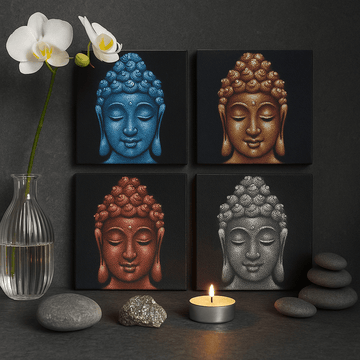
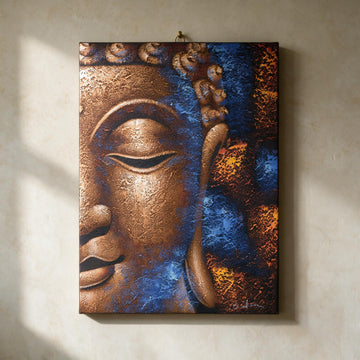
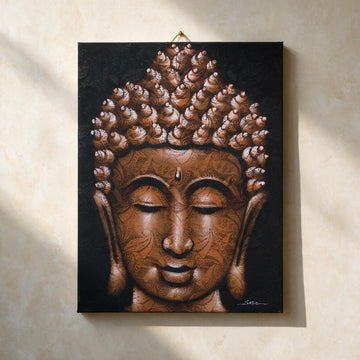
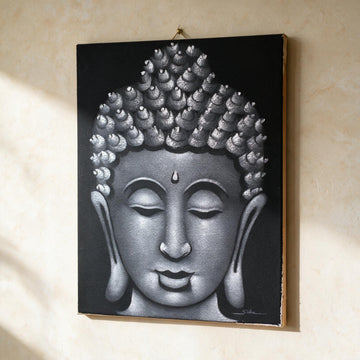
- Buddha vászon falikép, keretezett réz, 80x60 cm Vászon £40.99Tagoknak: +£2.60 visszaAlacsony készlet
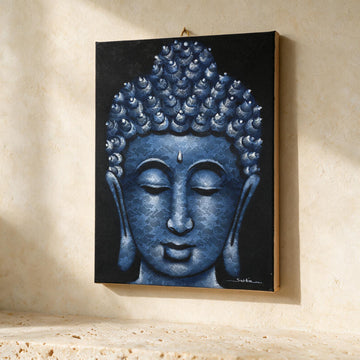
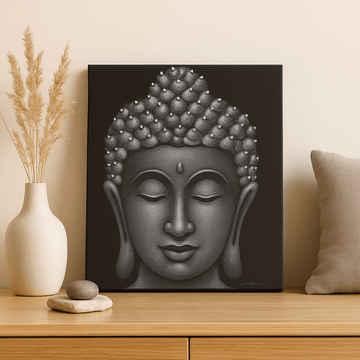
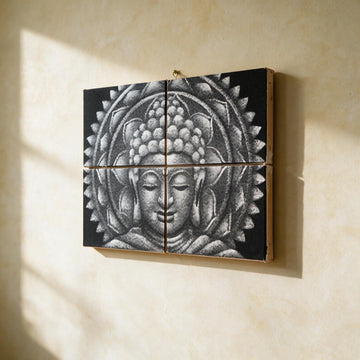
- Buddha vászon falikép szürke homokhatás, 80x60 cm Vászon 5,0 (2)£34.99Tagoknak: +£2.25 visszaAlacsony készlet
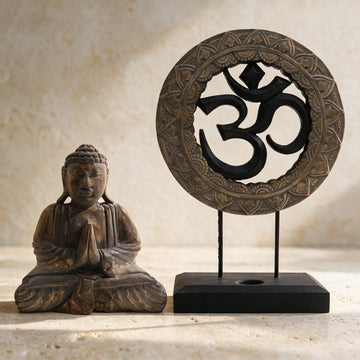
- Buddha szobor szett 2 darabos Om szimbólummal, szürke-fekete Albasiafa 4,0 (1)£77.00Tagoknak: +£4.95 visszaAlacsony készlet
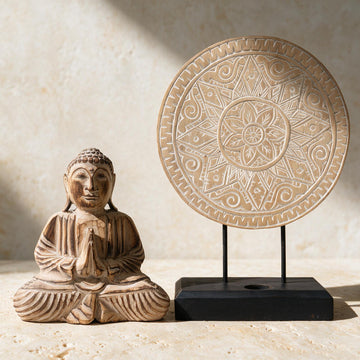
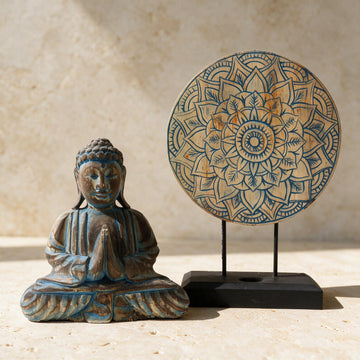
- Buddha-szobor virág mandalával 2 részes készlet, kék Albasiafa £68.95Tagoknak: +£4.45 visszaAlacsony készlet









A könyvtárban


Gyakran ismételt kérdések
Is it disrespectful to have a Buddha statue if I am not Buddhist?
Most Buddhist teachers welcome it when the figure is kept with respect: raised, clean, and away from the floor and the bathroom. Avoid using it as a doorstop, a lamp base or a garden joke.
Which way should a Buddha statue face?
Custom varies from country to country. A common choice is facing into the room or towards the main door, at or above eye level when you sit. A clean, calm place matters more than the direction.
What does a reclining Buddha mean?
It shows the Buddha at the end of his life, lying on his right side as he passed into final nirvana. In Buddhist art it is a peaceful image of completion, not a sad one.
Is the laughing Buddha the same as the Buddha?
No. The laughing figure is Budai, a Chinese monk of folklore later linked with Maitreya, the Buddha to come. Siddhartha Gautama is usually shown slender and calm.