Fri frakt over £33 · sendes fra Storbritannia · avgifter inkludert

Aroma

Chamomile

The gentlest thing in the herbal garden: apple-sweet, hay-warm, quietly soporific. Chamomile has kept company with tired minds and slow evenings for two thousand years.

DuftfamilieHerbal-floral
Beste sesongSummer
Tid på dagenNight

Kjøp hos Chamomile

25 produkter

Chamomile is the gentlest thing in the herbal garden. Two species find their way into essential oil, Roman chamomile (Chamaemelum nobile) and German chamomile (Matricaria chamomilla), and both carry the same signature: a green, apple-sweet note that opens almost immediately, followed by warm hay and something faintly honeyed underneath. The scent is so familiar it is easy to forget it is a real plant, grown in fields, dried, and steam-distilled for a few hours of quiet.

The name comes from the Greek khamaimēlon, earth apple, for the scent the flower gives off when crushed. The Egyptians grew it in quantity and used it in remedies long before the Greeks gave it a name. By the Middle Ages it had travelled into every household herb garden in northern Europe, and the tradition of the chamomile pillow, a small muslin bag tucked under the head at bedtime, was already old. The name keeps: chamomile has always smelled like something laid down to rest.

In the catalogue's vocabulary it belongs to summer, to night, to the hour when the day begins to fold. It is the companion of calm and sleep, not because it does anything to the body, the tradition holds it as a cue rather than a cause, but because it has spent two thousand years marking the same territory. The brain learns. A scent that has once meant rest means rest again.

The practice is unhurried. A few drops in a diffuser an hour before bed, or a sachet in the pillowcase, or a candle lit while the room goes quiet. Same hour, same scent, unhurried breath. The repetition is the work.

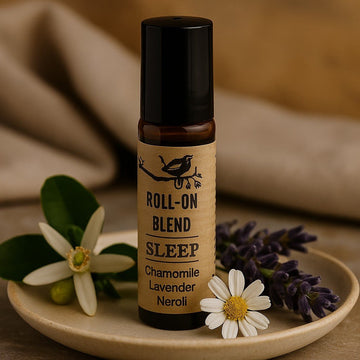
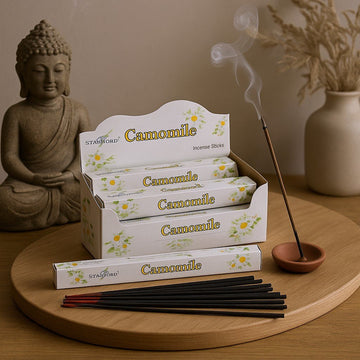
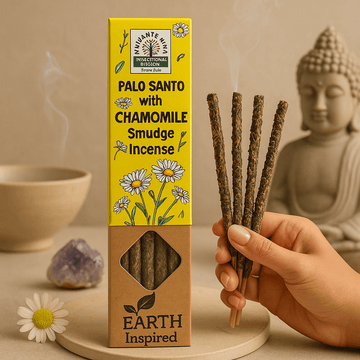
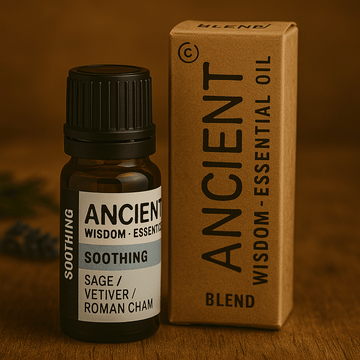
Below: chamomile in the quiet register, essential oil, candles, incense, bath blends, soaps. The soft end of the shelf.

Gir gjenklang med

Stemninger

Intensjoner

Vanlige spørsmål

What is chamomile essential oil good for?

Chamomile essential oil is traditionally reached for at bedtime and during quiet evening rituals. Its apple-sweet, hay-warm scent has marked the hour before sleep for two thousand years, acting as a familiar cue when diffused, added to bath water or tucked into a pillowcase sachet. The repetition of scent and hour is the practice itself.

What pairs well with chamomile?

Chamomile pairs well with lavender, which shares its soporific associations, and with bergamot or sweet orange, which lift its hay sweetness without overwhelming it. Roman chamomile also sits comfortably alongside sandalwood or cedarwood in evening blends, where its herbal-floral warmth meets quiet wood. The tradition keeps it in gentle company.

Who should avoid chamomile?

Those with allergies to the Asteraceae family (which includes ragweed, chrysanthemums and daisies) should approach chamomile cautiously, as cross-reaction is common. Pregnant or nursing mothers are generally advised to consult a qualified practitioner before using chamomile essential oil. Always dilute before applying to skin and patch-test first.

What should you not mix with chamomile?

Chamomile essential oil should not be mixed undiluted with other undiluted oils directly on the skin, as sensitisation increases with concentration. In diffuser blends it is forgiving, but avoid pairing it with stimulating oils like peppermint or rosemary if the aim is evening quiet. Always dilute chamomile in a carrier oil before topical use.

Is chamomile oil good for the skin?

Chamomile essential oil is traditionally added to carrier oils, balms and bath blends for its mild, apple-sweet scent and gentle nature. Both Roman and German chamomile are used in natural cosmetics for their long association with soothing skincare rituals. Always dilute before applying to skin and patch-test first, especially if prone to sensitivity.