Fri frakt over £33 · sendes fra Storbritannia · avgifter inkludert

Edelsten

Goldstone

Copper-flecked glass with a five-hundred-year history: the tradition places it with fire, Sagittarius, and the lower chakras as a stone of warmth and will.

Copper sparkle

Kjøp hos Goldstone
6 produkter

Hva er Goldstone?

Goldstone is what happens when silica glass meets copper. A melt of sand and mineral oxides heated until the copper crystallises into the thousands of tiny flecks that give it that unmistakable glitter. The process was almost certainly discovered by accident in sixteenth-century Venice, where glassmakers had been experimenting with metallic inclusions for generations. The earliest records appear around the 1620s, though the exact origin story remains disputed: one tradition credits a monk, another a Venetian family, and both probably simplify a messier truth.

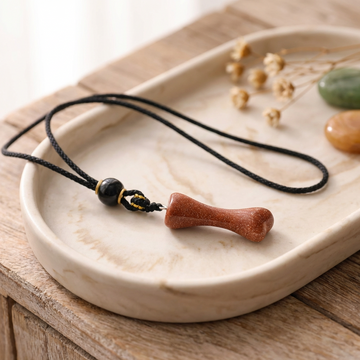
The brown-gold variety is the most common: warm, coppery, catching light the way a campfire does. Blue goldstone exists too, coloured by cobalt rather than copper, though it is harder to find. Neither is a stone in the geological sense, both are glass, and there is something quietly honest about that. What you see is what was made.

The crystal tradition places goldstone with the sacral and root chakras, links it with Sagittarius and the fire element, and reaches for it under the intentions of energy, courage and abundance. The warmth of the copper tone is part of the picture: this is not a stone of cool detachment but of directed will.

The tradition's invitation is to work with it as a marker for something you have already decided. If you have named an intention (for steadiness, for nerve, for the willingness to begin) goldstone keeps it in sight. The glitter catches the eye; the eye comes back; the intention stays.

Below you'll find what the catalogue holds for the fire register: goldstone pieces alongside other warm-toned stones, scents and objects for the Sagittarian shelf.

Vanlige spørsmål

Is Goldstone a real gemstone?

Goldstone is glass, not a geological gemstone, a silica melt seeded with copper or cobalt that crystallises into those characteristic flecks. The process dates to sixteenth-century Venice, and the material has been used in ritual and ornament for hundreds of years. It is honestly what it is: a made thing with its own history and place in the crystal tradition.

Is Goldstone manmade?

Yes: goldstone is made by heating silica glass with copper or cobalt until the metal crystallises into tiny flecks. The technique is centuries old, almost certainly discovered by Venetian glassmakers experimenting with metallic inclusions. It is a craft object, not a mineral, though the tradition places it squarely within the crystal canon as a fire-aligned stone of warmth and will.

What colours does Goldstone come in?

Brown-gold is the most common. Warm copper sparkle against a dark ground. Blue goldstone exists too, coloured by cobalt rather than copper, though it is harder to find. Both share the same glittering structure, the tiny metallic crystals catching light the way a campfire does, and both sit within the fire tradition despite their different tones.

What is Goldstone crystal good for?

The tradition reaches for goldstone under intentions of energy, courage and steadiness. It is placed with the sacral and root chakras, linked to Sagittarius and the fire element. The invitation is to work with it as a marker for something already decided: the glitter catches the eye, the eye returns, and the intention stays in sight. It is a stone of directed will, not cool detachment.

Is Sunstone the same as Goldstone?

No: sunstone is a feldspar mineral with natural metallic inclusions, found in places like Oregon and India. Goldstone is glass made with copper, a Venetian craft tradition dating to the sixteenth century. Both have warm metallic sparkle, but sunstone forms in the earth over geological time, while goldstone is made deliberately by human hands in a workshop.