Исследовать › Символы и алтарь
Мандала
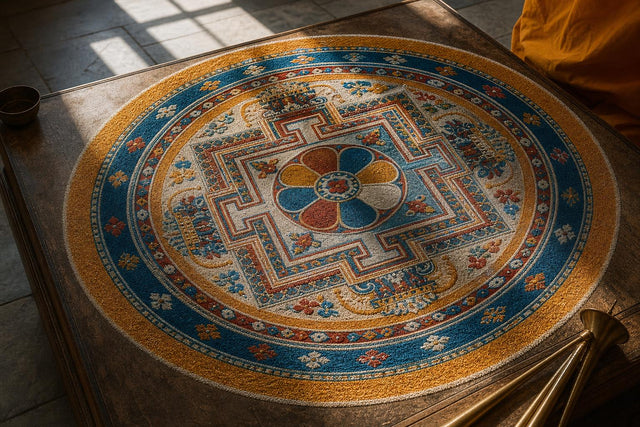
A mandala, from the Sanskrit for circle, is a sacred diagram of Hindu and Buddhist tradition: a picture of the universe arranged around a centre. Monks use it as a map for meditation, moving in thought from the outer rings towards the middle. Today many people also draw or colour mandalas as a slow, focused practice.
- Word
- Sanskrit for circle
- Traditions
- Hinduism, Buddhism
- Used for
- meditation and ritual

Купить Мандала
- Антикварный латунный подсвечник в форме гриба с мандалой и подносом Палочки · Алюминий £9.99Участникам: +£0.55 вернётся
- Эмалированная курильница из мангового дерева с мандалой Палочки · Дерево манго 4.0 (1)£10.99Участникам: +£0.60 вернётся
- Поднос для благовоний, деревянный, овальный с мандалой 30x10 см Палочки · Дерево манго 5.0 (1)£12.99Участникам: +£0.70 вернётся
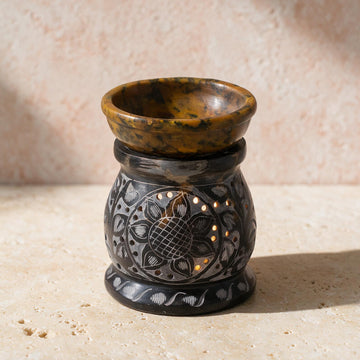
- Аромалампа из мыльного камня 10 см Мандала цветок чёрно-жёлтая Масло и вода · Мыльный камень £19.99Участникам: +£1.10 вернётся


В библиотеке


Часто задаваемые вопросы
What is the purpose of a mandala?
In Hindu and Buddhist practice it supports meditation and ritual: a map of the universe with a sacred centre. At home many people use it simply as a point of focus.
Why do monks destroy sand mandalas?
Sweeping away days of careful work is part of the teaching: everything that is made will change. The sand is often poured into flowing water.
Is colouring a mandala a form of meditation?
It is not the traditional practice, but slow, repetitive colouring keeps attention in one place, and many people find it restful at the end of a day.
Where should I hang a mandala?
Where you sit still: above a meditation cushion, beside a reading chair or in a hallway you pass often, at about eye level.