Mandala
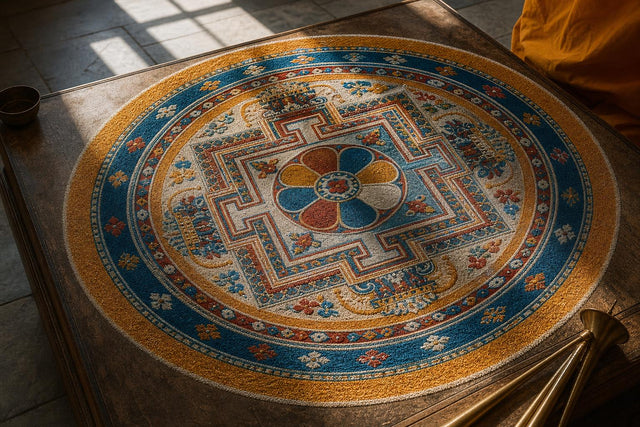
A mandala, from the Sanskrit for circle, is a sacred diagram of Hindu and Buddhist tradition: a picture of the universe arranged around a centre. Monks use it as a map for meditation, moving in thought from the outer rings towards the middle. Today many people also draw or colour mandalas as a slow, focused practice.
- Word
- Sanskrit for circle
- Traditions
- Hinduism, Buddhism
- Used for
- meditation and ritual

Nakupovať Mandala
- Zelená tapiséria s mandalou a pávom, dvojitá bavlnená prikrývka Bavlnený
 India£28.99Členovia: +£1.70 späť
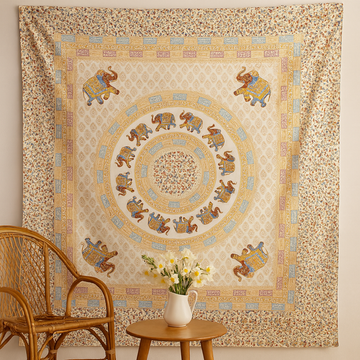
- Jednoduchý bavlnený prehoz na posteľ a záves na stenu 130x200cm Mandala BavlnenýIndia 5,0 (1)£18.95Členovia: +£1.15 späť
- Antik mosadzný držiak na vonné tyčinky v tvare huby s mandalovým podnosom Tyčinky · HliníkIndia£9.99Členovia: +£0.55 späť
- Smaltovaná kadidelnica - mangové drevo - mandala Tyčinky · Mangové drevoIndia 4,0 (1)£10.99Členovia: +£0.60 späť
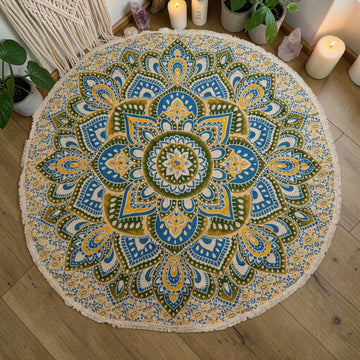
- Veľká okrúhla mandalová dekorácia (180cm), žltá a modrá 180 cm · BavlnenýIndia£26.95Členovia: +£1.60 späť
- Malá okrúhla bavlnená mandala (130cm), páví odtieň modrej 130 cm · BavlnenýIndia£21.95Členovia: +£1.30 späť


 India








V knižnici


Často kladené otázky
What is the purpose of a mandala?
In Hindu and Buddhist practice it supports meditation and ritual: a map of the universe with a sacred centre. At home many people use it simply as a point of focus.
Why do monks destroy sand mandalas?
Sweeping away days of careful work is part of the teaching: everything that is made will change. The sand is often poured into flowing water.
Is colouring a mandala a form of meditation?
It is not the traditional practice, but slow, repetitive colouring keeps attention in one place, and many people find it restful at the end of a day.
Where should I hang a mandala?
Where you sit still: above a meditation cushion, beside a reading chair or in a hallway you pass often, at about eye level.