£33 üzeri ücretsiz kargo · Birleşik Krallık’tan gönderim · vergiler dahil

Keşfet › Semboller ve sunak

Mandala

Sanskritçede daire anlamına gelen mandala, Hindu ve Budist geleneğinin kutsal bir diyagramıdır: bir merkezin çevresinde düzenlenmiş evrenin resmi. Keşişler onu meditasyon için bir harita olarak kullanır, düşüncede dış halkalardan ortaya doğru ilerler. Bugün birçok kişi mandalaları yavaş ve odaklı bir uygulama olarak çiziyor ya da boyuyor.

Sözcük
Sanskritçede daire
Gelenekler
Hinduizm, Budizm
Kullanım alanı
meditasyon ve ritüel
Mandala

Hediye olarak

Mandala Mağazasını Ziyaret Et
41 ürün

What it means

A mandala is a whole world in one circle. In Hindu and Buddhist tantric practice it is a consecrated space with a deity or a buddha at its centre, and the person meditating travels inward, ring by ring, towards that centre. The outer rings guard the way; the centre is what the practice is for.

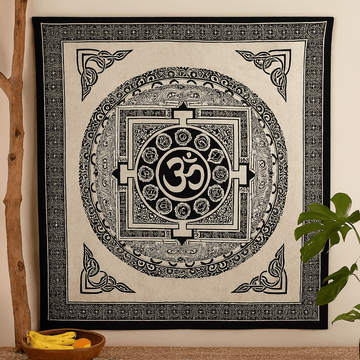
Most traditional mandalas show a square palace inside a circle, with four gates facing the four directions. The square holds the order of the world, the circle around it holds the whole, and in meditation you enter, in thought, through one of the gates.

How it is made

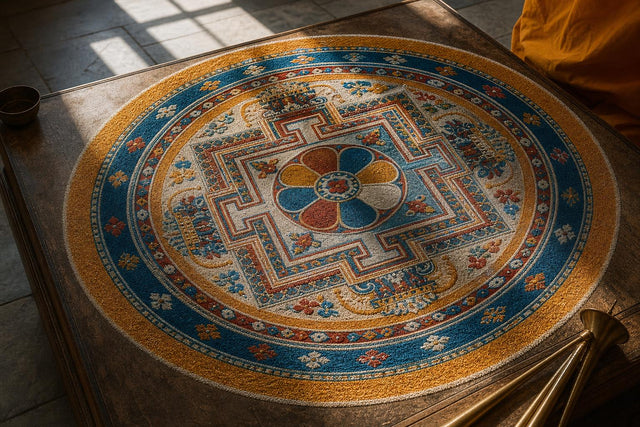
Mandalas are painted on cloth or paper, cast in bronze, built in stone or laid out on prepared ground with coloured threads and powders. Tibetan monks make them from coloured sand over many days, then sweep the sand away: a lesson in impermanence.

In the twentieth century the psychologist Carl Jung drew mandalas himself and helped bring the word into Western thought, which is why it now also means any circular design with a strong centre.

At home

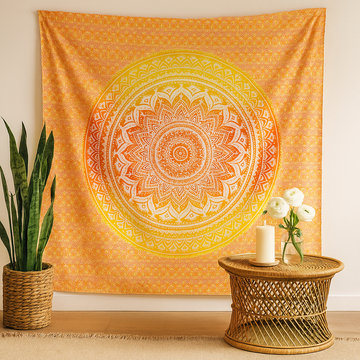
People hang a mandala where the eye can rest: above a meditation corner, opposite a reading chair, in a hallway passed several times a day. Others keep a notebook of their own, drawn with a compass and filled in slowly over an evening.

Choosing one

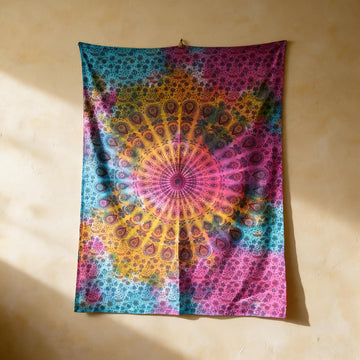
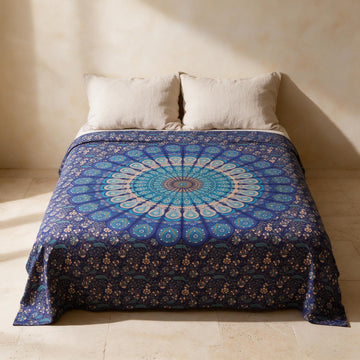
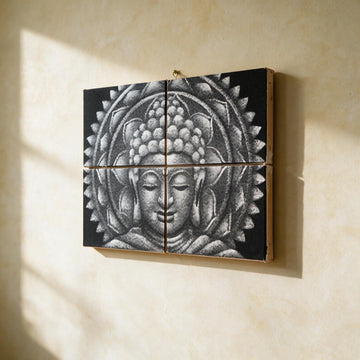
A traditional mandala holds the figures and symbols of one particular practice; a decorative one keeps the circle and the centre without them. Both give the eye a place to return to. Keep printed and painted pieces out of strong sun.

Sıkça sorulan sorular

Mandalanın amacı nedir?

Hindu ve Budist uygulamasında meditasyonu ve ritüeli destekler: kutsal bir merkezi olan, evrenin haritası. Evde birçok kişi onu basitçe bir odak noktası olarak kullanır.

Keşişler kum mandalalarını neden bozar?

Günlerce süren özenli çalışmayı süpürüp atmak öğretinin bir parçasıdır: yapılan her şey değişecektir. Kum çoğu zaman akan suya dökülür.

Mandala boyamak bir meditasyon biçimi midir?

Geleneksel uygulama değildir, ancak yavaş ve tekrarlı boyama dikkati tek bir yerde tutar ve birçok kişi onu günün sonunda dinlendirici bulur.

Mandalayı nereye asmalıyım?

Sessizce oturduğunuz yere: bir meditasyon minderinin üstüne, bir okuma koltuğunun yanına ya da sık geçtiğiniz bir koridora, yaklaşık göz hizasında.