Мандала
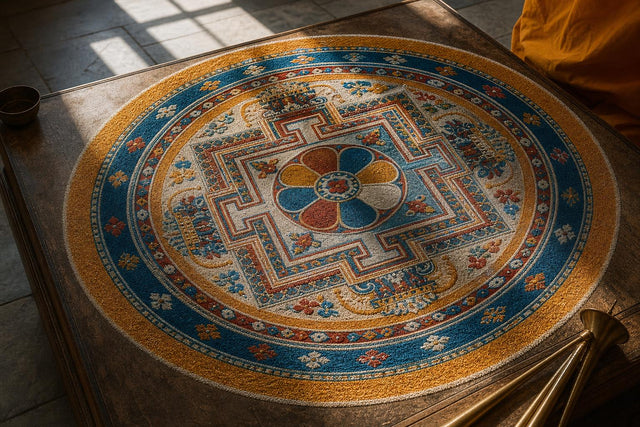
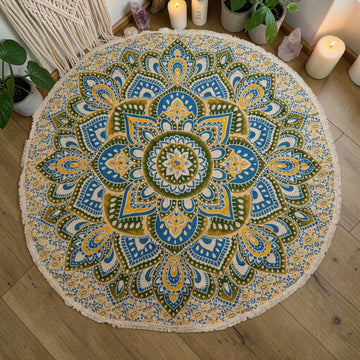
A mandala, from the Sanskrit for circle, is a sacred diagram of Hindu and Buddhist tradition: a picture of the universe arranged around a centre. Monks use it as a map for meditation, moving in thought from the outer rings towards the middle. Today many people also draw or colour mandalas as a slow, focused practice.
- Word
- Sanskrit for circle
- Traditions
- Hinduism, Buddhism
- Used for
- meditation and ritual

Пазарувайте в Мандала
- Зелено покривало с гоблен с мандала и паун, двойно, от памучна смес Памучен £28.99Членове: +£1.70 обратно
- Еднолицев памучен покривал и стенен гоблен 130x200 см, мандала Памучен 5,0 (1)£18.95Членове: +£1.15 обратно
- Античен месингов държач за ароматни пръчици гъба с мандала и поднос Пръчици · Алуминий £9.99Членове: +£0.55 обратно
- Двойно памучно покривало за легло, тюркоазена мандала за стена Памучен £28.99Членове: +£1.70 обратно
- Емайлирана купа за тамян - мангово дърво - мандала Пръчици · Мангово дърво 4,0 (1)£10.99Членове: +£0.60 обратно
- Голяма кръгла декорация с мандала (180cm), розова и лилава 180 см · Памучен £26.95Членове: +£1.60 обратно
- Малка кръгла памучна мандала (130cm), паунови сини нюанси 130 см · Памучен £21.95Членове: +£1.30 обратно










В библиотеката


Често задавани въпроси
What is the purpose of a mandala?
In Hindu and Buddhist practice it supports meditation and ritual: a map of the universe with a sacred centre. At home many people use it simply as a point of focus.
Why do monks destroy sand mandalas?
Sweeping away days of careful work is part of the teaching: everything that is made will change. The sand is often poured into flowing water.
Is colouring a mandala a form of meditation?
It is not the traditional practice, but slow, repetitive colouring keeps attention in one place, and many people find it restful at the end of a day.
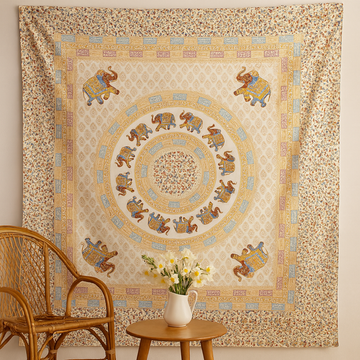
Where should I hang a mandala?
Where you sit still: above a meditation cushion, beside a reading chair or in a hallway you pass often, at about eye level.