Μάνταλα
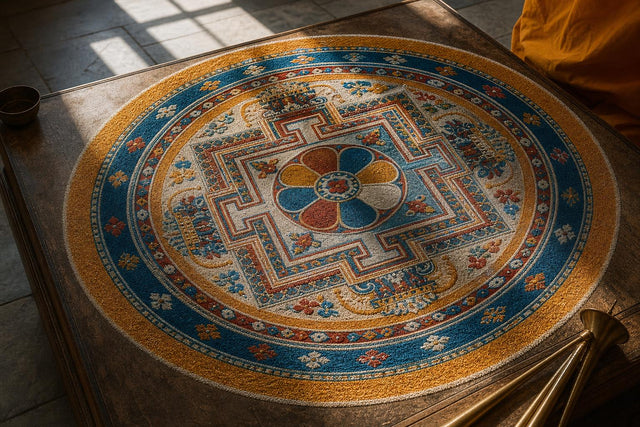
A mandala, from the Sanskrit for circle, is a sacred diagram of Hindu and Buddhist tradition: a picture of the universe arranged around a centre. Monks use it as a map for meditation, moving in thought from the outer rings towards the middle. Today many people also draw or colour mandalas as a slow, focused practice.
- Word
- Sanskrit for circle
- Traditions
- Hinduism, Buddhism
- Used for
- meditation and ritual

Αγόρασε από το Μάνταλα
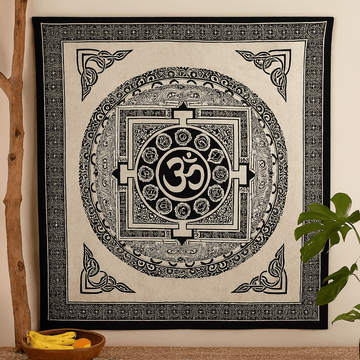
- Διπλό βαμβακερό κάλυμμα κρεβατιού, Μονό OM Μαντάλα κρεμαστό τοίχου Βαμβακερό £25.99Μέλη: +£1.45 πίσω
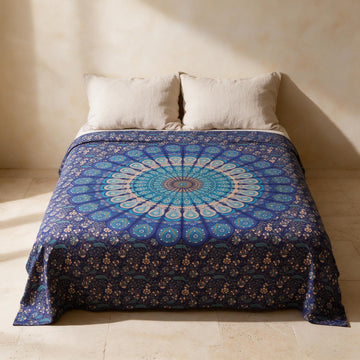
- Διπλό βαμβακερό κάλυμμα κρεβατιού και κρεμαστό τοίχου, Μαντάλα ελέφαντα Βαμβακερό £25.99Μέλη: +£1.45 πίσω
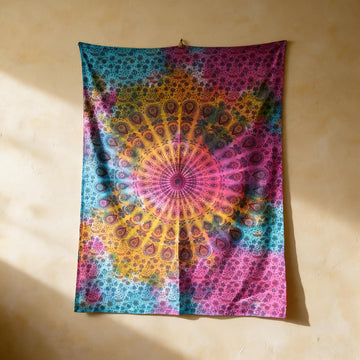
- Διπλό βαμβακερό κάλυμμα κρεβατιού και κρεμαστό τοίχου, Μάνταλα Βαμβακερό 5,0 (2)£26.95Μέλη: +£1.60 πίσω
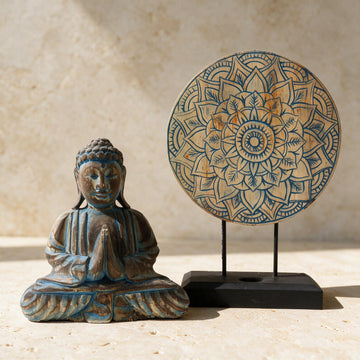
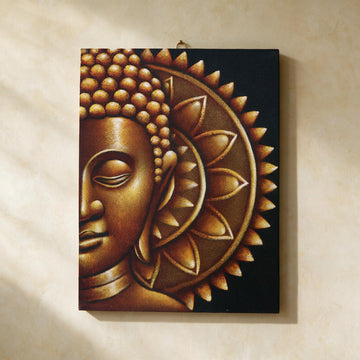
- Σετ 2 Τεμαχίων Άγαλμα Βούδα με Ανθική Μάνταλα, Μπλε Ξύλο αλμπάζια £68.95Μέλη: +£4.45 πίσωΧαμηλό απόθεμα
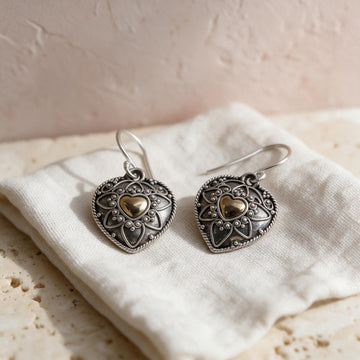
- Χρυσά και Ασημένια Κρεμαστά Σκουλαρίκια Mandala Καρδιές Ζευγάρι 1,6 cm · Στερλίνο ασήμι £63.00Μέλη: +£3.65 πίσωΧαμηλό απόθεμα










Στη βιβλιοθήκη


Συχνές ερωτήσεις
What is the purpose of a mandala?
In Hindu and Buddhist practice it supports meditation and ritual: a map of the universe with a sacred centre. At home many people use it simply as a point of focus.
Why do monks destroy sand mandalas?
Sweeping away days of careful work is part of the teaching: everything that is made will change. The sand is often poured into flowing water.
Is colouring a mandala a form of meditation?
It is not the traditional practice, but slow, repetitive colouring keeps attention in one place, and many people find it restful at the end of a day.
Where should I hang a mandala?
Where you sit still: above a meditation cushion, beside a reading chair or in a hallway you pass often, at about eye level.