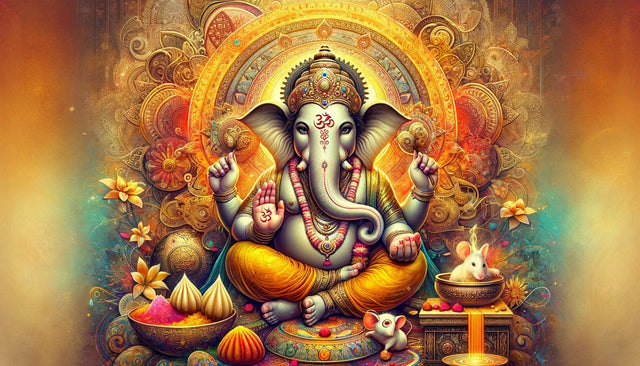
Ganesha
Ganesha, also called Ganesh or Ganapati, is the elephant-headed Hindu god of beginnings and the remover of obstacles. Hindus honour him before any new undertaking, from a journey to a wedding, and his name is spoken first in many rituals. He is the son of Shiva and Parvati, and a mouse is his vehicle.
- Tradition
- Hinduism, India
- Honoured
- before any new beginning
- Festival
- Ganesh Chaturthi, August or September

I biblioteket
Aromaer

Chakraer

Som gave

Kjøp hos Ganesha

 India

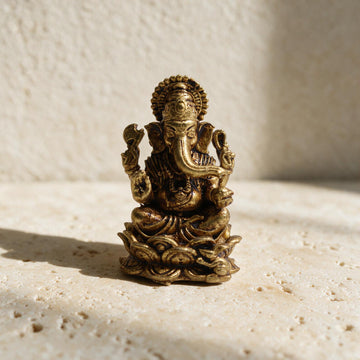
Ganesha: The elephant-headed god of beginnings, honoured before anything new is started.
Shiva: One of the great gods of Hinduism, the ascetic and Lord of the Dance, worshipped by Shaiva Hindus as the supreme god.
Lakshmi: The goddess of wealth, good fortune and abundance, wife of Vishnu, celebrated above all at Diwali.
I biblioteket



Vanlige spørsmål
What does Ganesha symbolise?
New beginnings, wisdom and the clearing of obstacles. Hindus honour him before any new undertaking, which is why his image so often sits by the door.
Where should I place a Ganesha statue at home?
Custom favours a clean, raised place near the entrance or in the home shrine. Avoid the bathroom, the floor and the space under the stairs.
Why does Ganesha have an elephant head?
The best-known story says Shiva, not knowing that the boy guarding Parvati's door was her son, struck off his head. To make amends he gave him the head of an elephant and made him first among the gods.
When is Ganesh Chaturthi?
It falls in the Hindu month of Bhadrapada, usually in August or September, and lasts up to ten days, ending as the figures are carried to the water.