
Gemstone
Moss Agate
Green-chalcedony with mineral inclusions that mimic moss — not a true agate. Tradition links it to the heart, Virgo, and the work of tending things slowly.
Green-mossy
Moss agate is chalcedony — micro-crystalline quartz — stained green by embedded minerals, usually hornblende or chlorite. The patterns inside it look like landscape paintings: ferns, forests, fog over fields. They gave it the name, though mineralogy and botany have never been acquainted.
It isn't a true agate. Agates carry banding; moss agate doesn't. It belongs to the same silica family as jasper and onyx, formed in volcanic cavities where silica-rich water deposited very slowly, over millions of years. The green comes from the rock around it, not from anything the stone produced. Each piece is a record of its own formation — no two share a pattern.
The name that stuck was the old one: mocha stone, after the Yemeni port from which European traders bought it in the eighteenth and nineteenth centuries. Before that it had a following in Indian and Persian jewellery. Agricultural communities kept it as a talisman for growth — not magic, but something closer to a farmer's superstition: an object that stood for what you were tending.
The tradition places it with the heart chakra, with Virgo — the zodiac's earth worker — and with the element earth itself. Abundance, the tradition says, is its register: not the sudden kind, but the kind you build. Grounding is here too. The green that looks like growing things is also, quietly, the green that asks you to put your feet on the actual ground.
The suggestion is ordinary: choose the stone for its weight and its pattern, give it a role in a small daily practice, and let it hold the thread. The pattern inside it has taken a very long time. A few weeks of attention is not unreasonable by comparison.
Below you'll find what the catalogue holds in moss agate — tumbled stones, pendants, jewellery, and pieces large enough to sit with.
Shop Moss Agate


 Скидка £3.93
Набор из 25 рун из мохового агата с мешочком
В наличииЦена со скидкой £2295 Обычная цена £2688Цена за единицу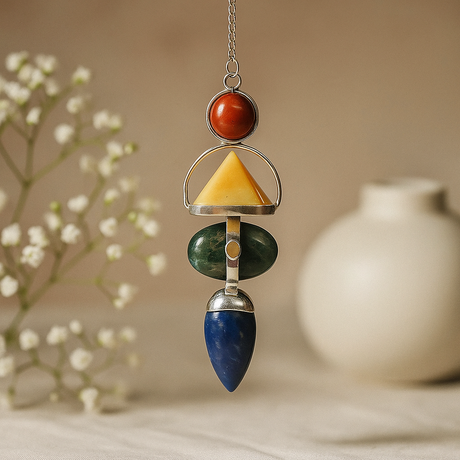
 Скидка £5.48
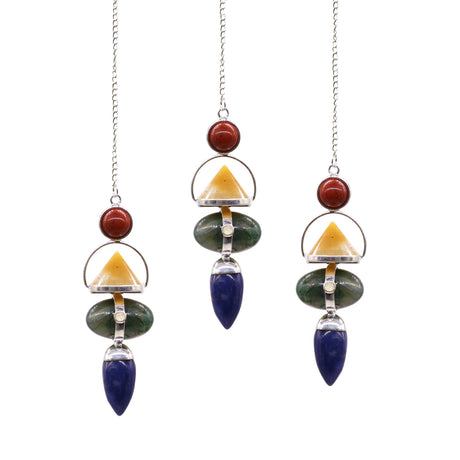
Кристаллический маятник из красного яшмы, авантюрина, мохового агата и лунного камня
В наличииЦена со скидкой £2695 Обычная цена £3243Цена за единицу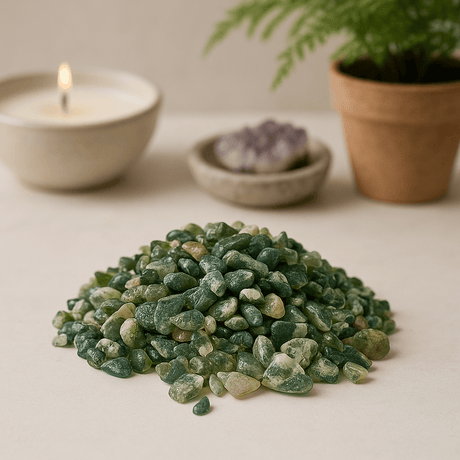
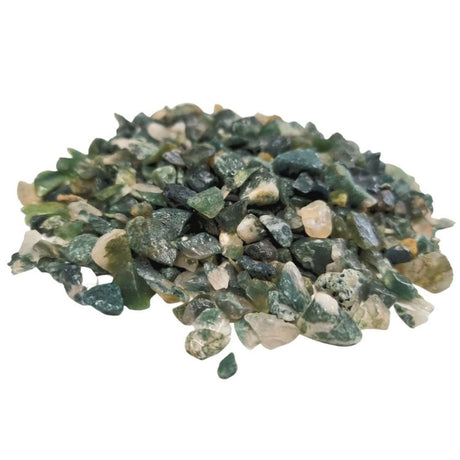


 Скидка £4.79
Кристаллы мохового агата, 1 кг оптом
В наличииЦена со скидкой £2695 Обычная цена £3174Цена за единицу


Подвеска из мохового агата в форме шестиугольника на цепочке
В наличииОбычная цена £1195Цена за единицу


 Скидка £5.44
Кристальное дерево из мохового агата с основанием из оргонита, 160 драгоценных камней
В наличииЦена со скидкой £2795 Обычная цена £3339Цена за единицу


 Скидка £3.34
Кристальное дерево из мохового агата на основании из оргонита – 80 драгоценных камней
В наличииЦена со скидкой £2195 Обычная цена £2529Цена за единицу


 Скидка £12.88
Кристаллическое дерево из мохового агата на основании оргонита, 320 камней
В наличииЦена со скидкой £4595 Обычная цена £5883Цена за единицу

 Скидка £0.40
Кристаллическое дерево из мохового агата, 80 кристаллов
В наличииЦена со скидкой £1199 Обычная цена £1239Цена за единицу


 Скидка £2.90
Дерево из мохового агата с 160 кристаллами
В наличииЦена со скидкой £1999 Обычная цена £2289Цена за единицу


