
Pierre précieuse
Moonstone
Feldspar with a luminous internal glow: named for moonlight, linked to Cancer, the water element, and the slow work of listening to what you already know.
Pearly opalescent
Achetez Moonstone
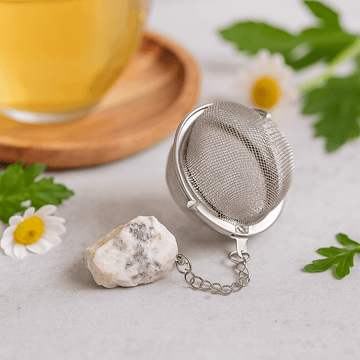


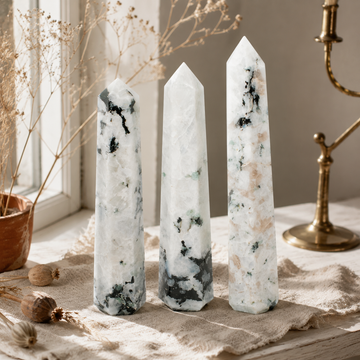




Qu'est-ce que Moonstone ?
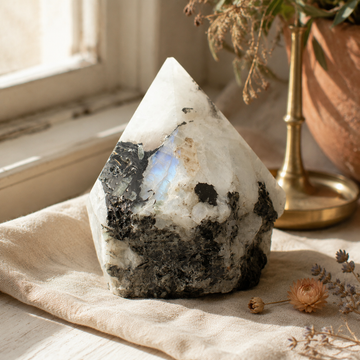
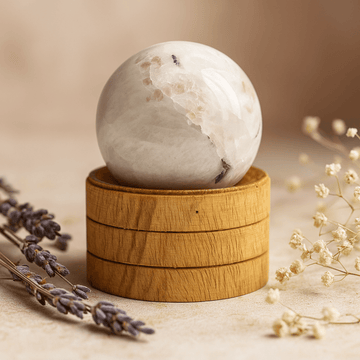
Moonstone is feldspar: a family of silicate minerals that makes up a large portion of the Earth's crust. What makes it moonstone is a phenomenon called adularescence: alternating layers of two feldspar varieties, orthoclase and albite, scattering light so that a luminous glow moves beneath the surface when the stone is turned. The effect is pearly, shifting, like light through water. The name is older than the science. Sanskrit has chandrakanta, moon-loved, and the Roman naturalist Pliny was writing about stones that showed a moon-like sheen two thousand years ago. Sri Lanka, now as then, supplies the finest examples.
The crystal tradition places moonstone with the Moon's own sign, Cancer, a water sign of memory, feeling and the instinct that arrives before reason does. It sits with the sacral and third eye chakras: the seat of creativity, and the seat of seeing. Its element is water, its intentions are intuition, calm and love.
The tradition suggests giving moonstone a quiet role in a practice, holding it in the morning while you name what you're listening for, or keeping it somewhere the hand returns to through the day. The stone works alongside the practice, not instead of it. What it offers is a physical form for an intention that would otherwise dissolve into good intention. A small, repeated ritual is more than the stone itself.
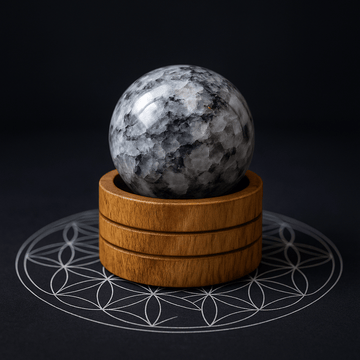
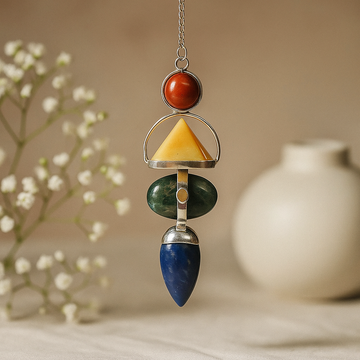
In the catalogue: rough and polished stones, cabochons for jewellery, spheres and moons, and pieces set in silver to catch the light.