Květ života
Květ života je vzor z prolínajících se kruhů, rozmístěných tak, že se kolem každého středu otevírá šest okvětních lístků. Vzor je prastarý: objevuje se na asyrském prahu ze 7. nebo 6. století př. n. l., na římských podlahách i ve středověkém umění. Název Květ života je novodobý, pochází z new age literatury konce dvacátého století.
- Nejstarší známý
- asyrský práh, 7. až 6. století př. n. l.
- Název
- novodobý, z new age literatury
- Zkoumal ho
- Leonardo da Vinci

Jako dárek

Nakupujte v Květ života
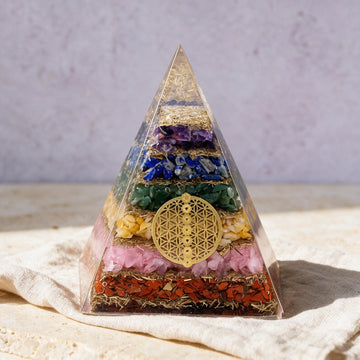
- Orgonitová pyramida, květ života měděné drahokamy 80mm Orgonitová pryskyřice 5,0 (8)£37.95Členové: +£2.15 zpět
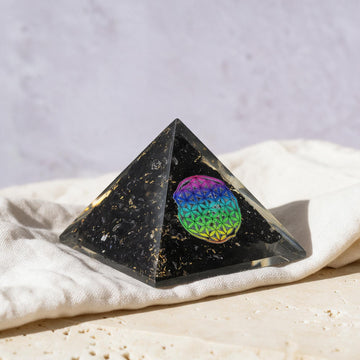
- Malé orgonitové pyramidy 5.5x4.5cm, květ života, úlomky černého turmalínu 5,5 × 4,5 cm · Orgonitová pryskyřice £11.95Členové: +£0.75 zpět
- Orgonitová pyramida zelený avanturín květ života 70mm Orgonitová pryskyřice £29.95Členové: +£1.85 zpět

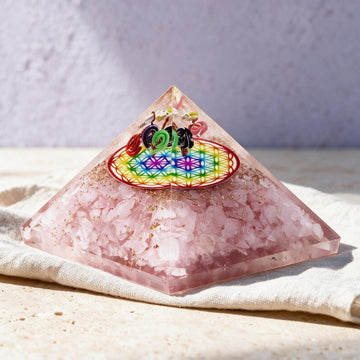
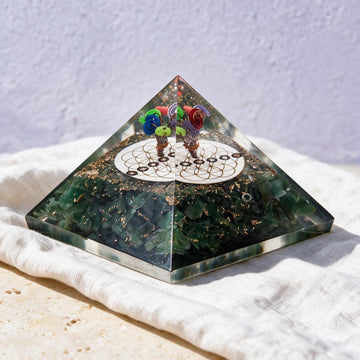
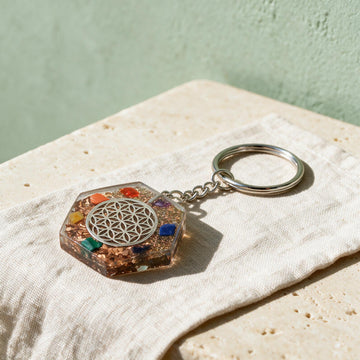
V knihovně


Často kladené otázky
What does the flower of life symbolise?
Today it is read as the unity of life: many circles from one rule, each joined to the next. Historically it was mostly ornament, and in some old buildings it may have been a protective mark.
Is the flower of life a religious symbol?
It belongs to no single religion. It appears in Assyrian, Roman, Islamic and Gothic art and in folk carving, and modern spiritual movements gave it its name.
How old is the flower of life?
The overlapping-circle pattern goes back at least to the 7th century BCE. The name Flower of Life is much newer, from the late twentieth century.
What is the seed of life?
The smaller figure at the heart of the pattern: seven circles, one in the centre and six around it. It is the first step when you draw the full flower.