
Drahokam
Zkamenělé dřevo
Ancient wood turned to stone over millions of years, silica replaced the cells, leaving banded brown growth rings and a weight that speaks for itself.
Brown banded
Nakupujte v Zkamenělé dřevo

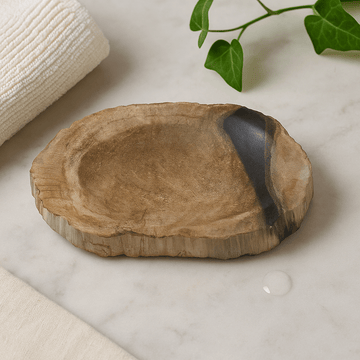
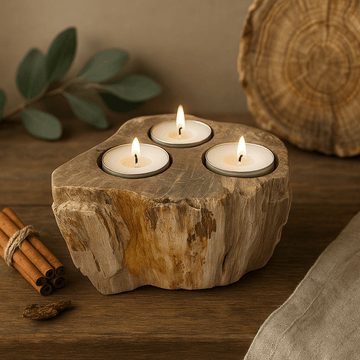
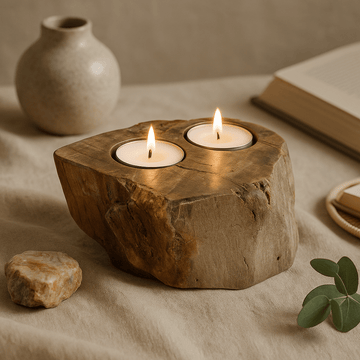
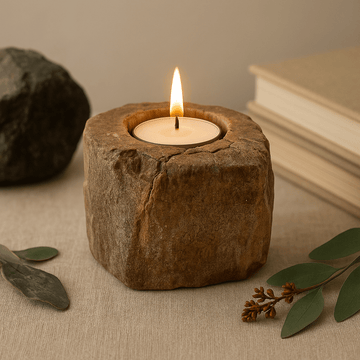

Co je Zkamenělé dřevo?
Petrified wood is wood turned to stone, not metaphorically, but literally. Where a fallen trunk lay in silica-rich water, the organic cells were replaced molecule by molecule over millions of years, until nothing remained but the shape of the wood, cast in quartz. The name comes from the Greek petros, stone.
The brown banding is the original growth rings, preserved in agate-like layers: each ring a year, each inch of stone a small eternity. The colours depend on the minerals that did the replacing: iron brings rust and amber, manganese makes grey and pink. The finest specimens come from Arizona's Petrified Forest, and from deposits in Indonesia, Madagascar and Australia.
As a material for objects and jewellery, it has been gathered for centuries. The Romans cut it into seals; Victorians set it into writing desks. It is heavy in the hand in a way that wood never is, and warm in a way that stone rarely is: a material that sits between two worlds.
The tradition places it at the root chakra, with the earth element, and gives it to Leo and Virgo: the signs that work and build. Its intentions are grounding, calm and the kind of steadiness that grows slowly.
The suggestion for working with it is simple: hold it in the morning, name what you are building, and let the weight of it be the whole instruction. It is a reminder, not a guarantee: a weight in the hand, not a force in the mind.
Below you'll find what the catalogue holds in its register: rough slabs, polished slices, rings and pendants, each one a different piece of ancient forest, now stone.