Forestil dig selv på dørtrinnet ved dagens afslutning. Nøglen er allerede i din hånd, låsen få centimeter fra dit ansigt, og arbejdsdagen er stadig høj et sted bag dine ribben. Om et øjeblik vil du dreje nøglen og bære det hele direkte indenfor, som du næsten altid gør. Men ikke helt endnu. Før låsen klikker, tag en jævn vejrtrækning: en langsom indtælling, en langsom udtælling, intet holdt tilbage, intet tvunget. Den ene vejrtrækning er hele denne tekst. Ikke en disciplin at overvinde, ikke en rutine at mestre – bare en lille tilbagevenden, på dørtrinnet, før du går ind.
Hvad pranayama egentlig betyder
De fleste sider, der rangerer for ordet, giver dig en liste – otte typer, tolv typer, hver med en pæn kolonne af fordele – og antyder stille, at åndedrættet er en teknik, der skal mestres, og en gevinst, der skal opnås. Den blidere læsning, den der er værd at bevare, begynder med selve ordet. Pranayama er et sanskritsammensat ord: prana, livskraften, især som den bæres i åndedrættet, forenet med ayama.
Den anden del er, hvor de sædvanlige oversættelser snævrer for hurtigt ind. Ayama oversættes ofte som kontrol eller tilbageholdelse, og den læsning er rigtig. Men det bærer lige så legitimt betydningen forlængelse, udstrækning, udtrækning. Så pranayama kan lige så trofast forstås som at give plads til livskraften – forlænge åndedrættet, give det rum – snarere end at tvinge det i form. Begge læsninger er ærlige; traditionen holder dem sammen. Vi hælder her mod den blidere. Ikke at gribe fat i åndedrættet, men at forlænge det.
Det hjælper at vide, hvor praksissen placerer sig. I Patanjalis Yoga Sutras regnes pranayama traditionelt som den fjerde gren af den otte-leddede vej – efter de etiske grundlag og stillingerne, og før sansernes indadvendte drejning. Teksten diskuterer det kun kort og uden fanfare. Det er et skridt blandt flere mod et roligt sind, ikke en præstation med en målstreg.
Det åndedræt, du allerede tager tyve tusind gange om dagen
Her er den stille kendsgerning, som listerne springer over. Du trækker vejret omkring tyve tusind gange om dagen, og næsten intet af det bliver bemærket. Åndedrættet lever for dig, mens du svarer på e-mails, krydser veje, falder i søvn, skændes, glemmer. Det kræver intet. Det fortsætter, uanset om du lægger mærke til det eller ej.
Det betyder, at pranayama i sin kerne ikke er en ny færdighed at tilegne sig. Det er opmærksomhed rettet mod noget, der allerede sker. Du tilføjer ikke et åndedræt til din dag; du bemærker et, der altid har været der, og giver det blidt længde. Den omformulering fjerner det meste af presset. Der er intet at gøre rigtigt, intet at være god til. Der er kun åndedrættet, der trofast kommer, og valget – for én runde, på ét dørtrin – om at være til stede for det. Øvet på denne måde bliver åndedrættet et stille redskab til en følelse af jordforbindelse snarere end endnu en ting at perfektionere.
Vishnu og den rolige fastholdelse af ting
Der er et billede fra den hinduistiske tradition, som gør idéen om åndedræt som bevarelse lettere at holde fast i. Inden for den tradition tales der om tre store guddomme sammen: Brahma, forbundet med skabelse; Shiva, med opløsning; og mellem dem Vishnu, beværteren. Vishnus rolle har et navn – sthiti, den rolige fastholdelse, vedligeholdelsen af en ting i væren.
Måden Vishnu oftest fremstilles på, er den del, der er værd at tage med til dørtrinnet. I sin hvilende skikkelse, Anantashayana, ligger han sovende på den kosmiske slange Shesha – også kaldet Ananta, den uendelige, ofte beskrevet som mangehovedet. Han flyder på mælkens hav, gudinden Lakshmi, hans ledsager, forbundet med overflod og held, ved hans fødder, og fra hans navle stiger en enkelt lotus op. Verden hviler på ham, og han hviler også. Der er ingen anspændt indsats i ansigtet. Total ansvarlighed, båret uden anstrengelse.
Det er hele tesen om en jævn vejrtrækning. Bevarelse er ikke angstfyldt greb; det er rolig fastholdelse. Det åndedræt, der holder dig hele dagen, gør det på samme måde som Vishnu holder verden – trofast og med ro. Et par runder langsom vejrtrækning i et dunkelt hjørne kan føles som at falde til ro i en følelse af ro, ikke fordi åndedrættet fikserer noget, men fordi opmærksomheden på det i sig selv er en slags hvile.
Avatarerne og åndedrættet, der vender tilbage af sig selv
Vishnu er også kendt for sine ti hovednedstigninger, Dashavatara, og de fleste beretninger behandler dem som trivia, der skal læres udenad. Læs dem i stedet som en enkelt tilbagevendende bevægelse. Den bredt anvendte standardliste lyder: Matsya fisken, Kurma skildpadden, Varaha vildsvinet, Narasimha menneske-løven, Vamana dværgen, Parashurama, Rama fra Ramayana, Krishna (talt som den ottende), Buddha og Kalki, avataren der stadig ventes ved afslutningen af den nuværende tidsalder. Det er værd at sige klart, at listerne varierer mellem traditioner – nogle har Balarama i stedet for Buddha – og rækkefølgen er konventionel snarere end fast.
Formen under dem er det, der betyder noget. Hver gang verdens balance tipper, vender noget tilbage for at rette op på det. Ideen om, at det guddommelige tager form tid efter tid for at genoprette den rette orden, er et af de bedst kendte temaer forbundet med Bhagavad Gita, omkring dens fjerde kapitel – et berømt mønster snarere end en ordret linje, da formuleringen skifter med hver oversættelse. Læst blidt og uden påstand om at forudsige, hvad der kommer næste, beskriver det fornyelse: omsorg, der vender tilbage pålideligt, når tingene glider ud.
Tag det nu til åndedrættet, for parallellen er næsten slående i sin enkelhed. Du behøver aldrig at tilkalde det næste indånding. Efter hver udånding kommer det bare tilbage. Du beslutter det ikke, tjener det ikke, fremstiller det ikke; ligesom nedstigningen, der kommer tid efter tid, vender det tilbage af sig selv. Det er kernen i praksissen, og den del, som tekniklisterne helt overser. Du bliver ikke bedt om at overvinde åndedrættet. Du inviteres til at blive ved med at vende tilbage til det – og til at bemærke, at det allerede er vendt tilbage til dig.
Dørtrinspraksissen, trin for trin
Så her er den ene teknik, på det ene øjeblik. Den kaldes Sama Vritti, hvilket betyder lige eller jævn vejrtrækning: en jævnt talt vejrtrækning, cirka fire tællinger ind og fire tællinger ud, uden at holde tilbage eller tvinge. En begynder behøver ikke mere end det. Og øjeblikket er tærsklen ved din egen hoveddør, i de få sekunder før nøglen drejes – sømmen mellem arbejdsdag og aften, det præcise hængsel, hvor de fleste af os bærer dagens støj direkte indenfor.
Prøv det i aften, sådan her.
- Stop på trinnet. Nøgle i hånden, lås foran dig. Lad dine skuldre falde lidt. Du skal ikke nogen steder i længden af et åndedræt.
- Fire langsomme tællinger ind gennem næsen. Dette er puraka, indåndingen. Lad åndedrættet være langt og ubesværet snarere end stort – fire blide tællinger, uden at presse på for mere.
- En blød, naturlig vending i toppen. Den klassiske cyklus navngiver en holdt fase her – kumbhaka, fastholdelsen – men fastholdelse er traditionelt et avanceret element, så som begynder lader du blot åndedrættet vende over af sig selv. Intet greb, intet hold for syns skyld.
- Fire tællinger ud. Dette er rechaka, udåndingen. Lad den matche indåndingen – jævn, langsom, fuldstændig – og mærk lidt af dagen forlade dig med den.
- Lad det næste åndedræt komme af sig selv. Træk det ikke ind. Vent et halvt sekund, og bemærk, at det kommer tilbage, trofast, som beværterens rolige fastholdelse. Så drej nøglen.
Det er hele praksissen. Én jævn vejrtrækning, måske et minut, hvis du tager et par runder, bundet til et ægte øjeblik i en almindelig dag. Den lover intet og kræver næsten intet. Gentaget på samme dørtrin, aften efter aften, bliver det et lille pålideligt sted at lægge dagen fra sig. Hvis du vil tidsbestemme en enkelt runde, giver en røgelsespind tændt på tærsklen dig længden af dens første røgtråd at ånde efter.
Nadi Shodhana: at balancere åndedrættet

Når dørtrinsåndedrættet føles velkendt, kan du være nysgerrig efter den teknik, folk oftest går videre til: Nadi Shodhana, nogle gange kaldet skiftevis næsebor-åndedræt. Gestussen er enkel – højre hånd løftes nær det nederste ansigt, tommelfingeren hviler for at lukke det ene næsebor, mens ringfingeren venter på at lukke det andet – og åndedrættet bevæger sig blidt fra den ene side til den anden i en jævn rytme. Traditionelt beskrives det som balancerende og beroligende, en måde at samle spredt opmærksomhed på ét punkt.
Læs det på samme måde som alt andet her: som et redskab til at stabilisere dig selv, ikke en kur, der handler på dine vegne. Strukturen giver blot et travlt sind noget enkelt at følge. Hold hvert åndedræt blødt, og pres aldrig på for tællingen. Sidder du med det i et par stille minutter, kan det give sindet lidt mere fokus og klarhed – opmærksomhedens samling på én ting – men det er en jævn vejrtrækning med lidt mere form, intet at perfektionere, kun at vende tilbage til.
Andre små hængsler til at fastholde åndedrættet
Dørtrinnet er én tærskel, men en dag er fuld af dem, og den samme jævne vejrtrækning passer til enhver søm, hvor du plejer at bære spænding videre. Pointen er ikke at samle en rutine. Det er at have et par pålidelige steder, hvor åndedrættet kan vende tilbage.
- Det første minut ved skrivebordet. Før skærmen vågner, og indbakken begynder at trække, én jævn vejrtrækning for at ankomme ordentligt.
- Pauserne før en svær samtale. Hånd på døren eller finger over opkaldsknappen. Fire tællinger ind, fire ud, og lad det næste åndedræt komme, før du taler.
- Sømmen før søvn. Lyset slukket, hovedet allerede ned. Én langsom jævn vejrtrækning for at markere overgangen fra dag til nat.
- Det røde lys. En lille påtvungen stilstand, som de fleste af os bruger utålmodigt. Brug et af dem på åndedrættet i stedet.
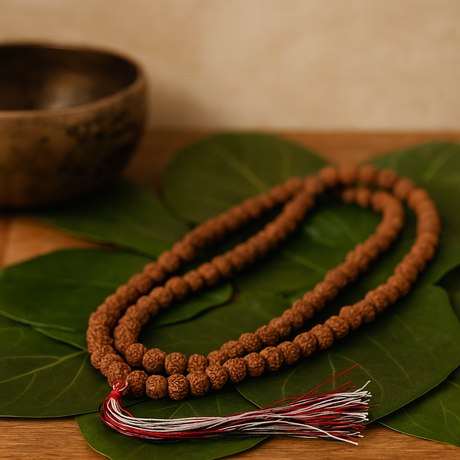
Ingen af disse er en ny vane at føje til. Det er øjeblikke, du allerede passerer igennem. Åndedrættet venter blot der, som det altid har gjort, klar til at blive bemærket. Hvis du kan lide en rytme at holde over flere runder, giver en mala til at tælle åndedrætscyklusser fingrene mulighed for at holde tællingen – én per perle – så sindet har én ting mindre at holde styr på.
At bygge en lille daglig ritual omkring åndedrættet

Du behøver slet intet for at begynde – dit åndedræt er hele udstyret, og et stille hjørne er nok. Men et par ærlige genstande kan fastholde øjeblikket, og de hører her kun til som signaler for opmærksomhed, kulturarvsgenstande snarere end charms eller midler. Åndedrættet gør arbejdet; genstanden markerer blot øjeblikket og inviterer dig tilbage til det.
Dufte er den hurtigste måde at fortælle sindet, hvor det skal hen. En duft, du kun tænder, når du sætter dig, bliver et signal i sig selv. Den harpiksagtige dybde af røgelse er en, mange finder beroligende for stilhed; den varme, jordforbindende note af sandeltræ er en gammel ledsager til meditation. Hvis røg er for meget, bærer et par dråber æterisk olie i en diffuser en blødere duft gennem rummet. Uanset hvad du vælger, hold det konsekvent – den samme duft hver gang lærer praksissen, hvor den hører til.
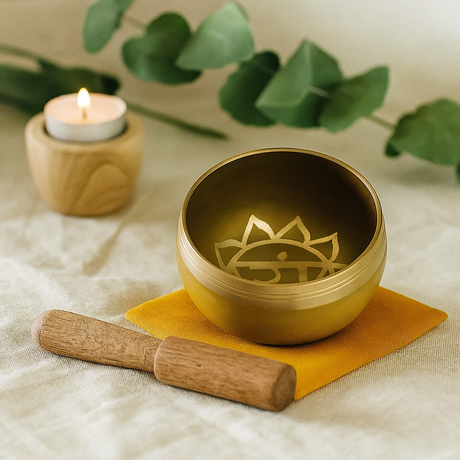
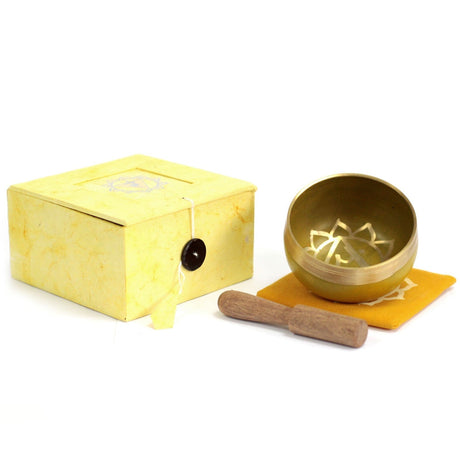
For sømmen i begge ender af en siddepraksis kan en enkelt klang fra en syngeskål åbne og lukke øjeblikket: en klar lyd til at træde ind i åndedrættet og en klar lyd til at træde ud. En ren pude, et lille ryddeligt rum, måske en figur af Vishnu eller Lakshmi som påmindelse om rolig omsorg – alt dette er ledsagere, aldrig selve praksissen. Arbejdet bliver hos dig, i det åndedræt, der bliver ved med at vende tilbage.
Tilbage til dørtrinnet
Så vi ender, hvor vi begyndte. Du på trinnet, nøgle i hånden, dagen stadig høj bag dine ribben. Beværteren holder hele verden og hviler i samme øjeblik; åndedrættet holder dig hele dagen og kræver intet til gengæld. Begge er rolig fastholdelse, ikke angstfyldt greb – omsorg, der vender tilbage af sig selv, tid efter tid, åndedræt efter åndedræt.
Uanset hvad du bærer hjem i aften, behøver du ikke bringe det gennem døren i fuld lydstyrke. Læg det ned i længden af én jævn vejrtrækning. Fire tællinger ind. En blød vending. Fire tællinger ud. Lad det næste komme af sig selv – det vil det. Så drej nøglen.