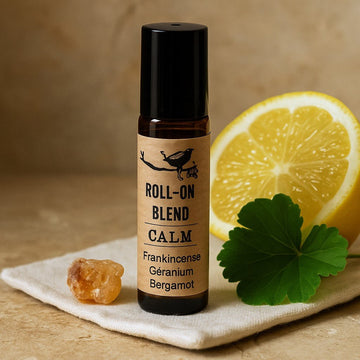
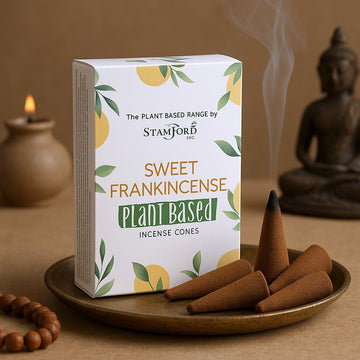
Frankincense is the hardened sap of the Boswellia tree, which grows in some of the least hospitable ground on Earth: the dry hills of Oman, Yemen and the Horn of Africa. Cut the bark and the tree bleeds milky tears; dried in the sun, they become the pale gold beads that have been burned in temples for at least five thousand years.
It was once worth its weight in gold, and the trade routes built for it shaped the ancient world. Egypt burned it for the gods; Rome burned a year's harvest at a single funeral; it arrived in Bethlehem as one of three gifts. No scent in history has more consistently meant this moment is set apart.
The smell explains the career. Frankincense is woody and resinous but with an unexpected top note of lemon and pine: smoke that rises clean rather than heavy. It smells less like perfume than like architecture: high ceilings, stone, quiet.
In the aroma tradition it belongs to evening and winter, to the third eye, and to the moods we file under Grounding and Inspiration. It is the natural companion for meditation: light it as the sitting begins, let the first thread of smoke mark the threshold, and allow five thousand years of association to do the settling with you.
We stock it as resin for charcoal burning, incense sticks, and essential oil.
Frequently asked questions
What is frankincense good for?
Frankincense is traditionally reached for in meditation, contemplative prayer and ritual to mark the threshold between ordinary time and set-apart time. Its woody, resinous smoke has been used for five thousand years to settle the mind, create atmosphere and signal that a practice has begun. In the aroma tradition it is paired with grounding and inspiration.
Can you put frankincense essential oil directly on your skin?
Frankincense essential oil should be diluted in a carrier oil before applying to skin, typically one or two drops per teaspoon of jojoba, sweet almond or grapeseed oil. Undiluted essential oils are too concentrated and may irritate. Always patch-test on a small area first, and avoid use during pregnancy or on broken skin.
What are the side effects of using frankincense oil?
Frankincense essential oil may cause skin irritation if used undiluted, and some people experience sensitivity even when properly diluted. It should not be ingested, and care is needed around pets, particularly cats, for whom many essential oils are toxic. Avoid during pregnancy, and stop use if any reaction occurs.
Who should avoid frankincense?
Frankincense essential oil should be avoided during pregnancy and breastfeeding, and kept away from children and pets, especially cats. Anyone with sensitive skin, asthma or allergies should patch-test before use. If you are taking medication or have a health condition, consult your doctor before introducing essential oils into your routine.
How do you use frankincense oil?
Frankincense essential oil can be diffused in an oil burner or electric diffuser, diluted in a carrier oil for topical use, or added to a warm bath. Traditionally it is used at the beginning of meditation or evening ritual, with a few drops released into the room to mark the transition into quieter time.


 India

 United Kingdom