Un solo objeto, con suficiente silencio a su alrededor, hace más que un conjunto cuidadosamente seleccionado. Esta es una guía sobre la pared detrás del colgante y sobre por qué ese espacio es la mitad de la composición.
Un objeto, silencio deliberado
En un tokonoma japonés tradicional, la alcoba empotrada integrada en un washitsu, una habitación con tatami, se exhibe un único rollo colgante sobre yeso desnudo. Nada compite con él. El rollo, conocido como kakejiku, cambia con la estación: una rama trazada con tinta para el invierno, una caligrafía con un poema de verano. La pared que lo rodea se considera tan deliberadamente como el propio rollo.
Este es el principio del ma (間): el espacio negativo entendido no como ausencia, sino como presencia activa. El ma no es una tendencia minimalista. Es una idea compositiva desarrollada y codificada durante el periodo Muromachi, entretejida en la estética de la ceremonia japonesa del té, y todavía visible en la forma en que se percibe un tokonoma bien dispuesto: como un pensamiento completo, no como algo a medio terminar. El yeso vacío está haciendo algo. Mantiene el rollo en quietud.
La mayoría de los consejos contemporáneos de decoración avanzan en la dirección opuesta. Llenan. Agrupan. Recomiendan números impares, paredes galería y marcos superpuestos. Nada de eso está mal, pero responde a otra pregunta. Si la pregunta es cómo hacer que una pared transmita calma, el tokonoma ofrece un punto de partida más útil: un objeto, elegido con cuidado, con suficiente silencio a su alrededor para dejarlo respirar.
Qué significa realmente la calma en una pared
La calma no es lo mismo que desnudez, ni es lo contrario de lo interesante. Una pared desnuda puede parecer inacabada; una pared recargada puede transmitir ansiedad. La calma se sitúa entre ambas, producida por tres variables que trabajan juntas.
La primera es la escala en relación con la pared. Un colgante demasiado pequeño parece inseguro. Uno demasiado grande abarrota la habitación antes incluso de que te hayas sentado. La escala adecuada deja espacio para que la pared respire alrededor del objeto sin hacer que este desaparezca en ella.
La segunda es la relación tonal con la habitación. Un colgante de un tono cercano al color de la pared se percibe discretamente; uno de contraste marcado se percibe con fuerza. Ninguno está mal, pero producen habitaciones diferentes. Para lograr un efecto verdaderamente reparador, la proximidad tonal suele funcionar mejor que el contraste: el colgante llega como parte de la pared, no como una interrupción.
La tercera variable es la línea de visión desde el asiento más utilizado. Un colgante de pared no es un cuadro en una galería, contemplado de pie desde una distancia medida. Es algo con lo que convives, y el ángulo desde el que lo ves más a menudo, desde el sofá o desde el sillón de lectura, es el que más importa. Una pieza que parece equilibrada desde la entrada, pero resulta incómoda desde el asiento donde pasas las tardes, se ha colgado para el observador equivocado.
Colocación: altura, orientación y la lógica detrás de ambas
La convención ampliamente citada entre los profesionales de la decoración de interiores es colgar el centro de una pieza aproximadamente a 145 a 152 centímetros del suelo, más o menos a la altura media de los ojos de una persona de pie. Esto se aplica al centro del colgante, no a su borde superior, una distinción más importante de lo que parece. En habitaciones donde las personas permanecen principalmente sentadas, bajar el centro hasta unos 130 a 140 centímetros suele funcionar mejor, alineando el colgante con las líneas de visión desde los asientos en lugar de hacerlo con las de pie.
El Vaastu Shastra, el antiguo sistema indio de organización espacial con raíces textuales en tratados sánscritos, entre ellos el Manasara, un texto arquitectónico que detalla las proporciones de templos y viviendas, y el Brihat Samhita, que aborda la auspiciosidad de las direcciones, aporta una dimensión direccional a esta forma de pensar. En el Vaastu, las paredes norte y este de un espacio habitable se consideran direcciones auspiciosas para objetos significativos: el norte se asocia con Kubera, la deidad de la riqueza y la prosperidad tal como se describe en estos textos, y el este con el sol naciente. Por lo general, se evita la pared sur para los objetos decorativos principales de las zonas de estar. En muchos hogares indios, esta lógica direccional todavía se consulta activamente al organizar una casa, no como superstición, sino como un marco vivo para una colocación intencionada. Conviene señalar que las tradiciones regionales varían y que los practicantes de distintas corrientes del Vaastu pueden interpretar las reglas direccionales de manera diferente.
Lo llamativo es que ambas tradiciones, la japonesa y la india, comparten el mismo principio subyacente: la colocación es una decisión, no una opción predeterminada. La pared que eliges, y la posición que ocupas en ella, tienen significado incluso antes de que llegue el objeto.
Elegir el objeto: material, peso y lo que la pared puede sostener
Las fibras naturales, como el algodón, el yute, la lana y el lino, interactúan con la luz de manera diferente a las láminas enmarcadas o los materiales sintéticos. Proyectan sombras suaves que cambian a lo largo del día a medida que se desplaza la luz. Entre los primeros ejemplos documentados de textiles tejidos para paredes se encuentran los de la Sudamérica precolombina, en particular los de las tradiciones andinas de las culturas wari y tiwanaku, junto con los colgantes de lino del antiguo Egipto y las tradiciones textiles de Asia meridional y central; su presencia continuada en los interiores contemporáneos es en parte estética y en parte algo más difícil de nombrar: la calidez de un material trabajado a mano.
En composición, el peso visual y el peso físico son cosas distintas. Un colgante grande de tejido suelto y tono neutro puede descansar con ligereza sobre una pared pese a su tamaño; una pequeña lámina enmarcada de alto contraste puede dominar una habitación. Las paredes serenas tienden a favorecer objetos con un peso visual bajo o medio, piezas cuya relación tonal con la pared es lo bastante cercana como para asentarse en lugar de imponerse.
La disciplina de un solo objeto no es una declaración estética sobre el minimalismo. Es un argumento práctico: un colgante bien elegido, con suficiente espacio a su alrededor, atrae la mirada sin agotarla. Un textil tejido a mano colocado solo en una pared invita a observarlo de verdad, en lugar de pasar junto a él con la mirada como parte de un conjunto, una cualidad diferente de atención y, en última instancia, lo que produce una pared serena.
Colgar con intención: una breve práctica
Antes de colocar el colgante, despeja por completo la pared. Si puedes, déjala vacía durante un día. No es un truco decorativo; es una forma de ver la pared tal como es: sus proporciones, su luz a distintas horas y la manera en que la habitación se relaciona con ella desde el asiento donde pasas la mayor parte del tiempo.
Cuando cuelgues el objeto, siéntate en ese asiento principal y observa. No desde la entrada, ni desde el otro lado de la habitación de pie, sino desde donde realmente estás. Ajústalo una vez si lo necesitas. Después, déjalo así.
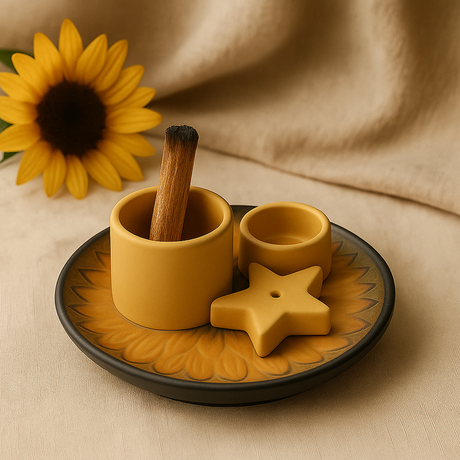
Algunos practicantes marcan el momento de colocar un objeto nuevo con una pequeña ceremonia: encienden incienso o hacen sonar una vez un cuenco tibetano antes de empezar, no como requisito ritual, sino como una forma de indicarse a sí mismos que se trata de un acto deliberado y no incidental. La calidad de la atención cambia. No estás colgando un cuadro; estás decidiendo qué sostendrá esta pared. La ceremonia puede acompañar o no el acto, pero la decisión en sí es la práctica.
La pared como práctica
La tradición del tokonoma cambia el rollo con cada estación. No se trata del diseño de interiores como un proyecto que se completa, sino del diseño de interiores como una relación continua con un espacio. La pared no está terminada cuando se coloca el colgante. Simplemente se encuentra en su estado actual.
Tal vez eso sea lo más útil que comparten las tradiciones japonesa e india: la idea de que una casa no se decora una vez y luego se abandona. Se cuida. La pared norte en el Vaastu no se elige porque quede bien en una fotografía; se elige porque el hogar ha decidido que esta dirección, esta pared, es el lugar al que pertenece algo significativo. El kakejiku no se cuelga porque llene un hueco; se cuelga porque esta estación lo pide.
Una pared serena, en última instancia, no es el resultado de una decisión decorativa. Es la evidencia de una decisión tomada despacio, prestando atención a lo que el espacio ya es y mostrando cierta disposición a dejar la mayor parte tal como está.