
Piedra preciosa
Turquoise
Hydrated copper phosphate: one of the oldest gemstones, reaching from Persian mines to Egyptian pharaohs and the silversmiths of the American Southwest.
Blue-green
Compra en Turquoise
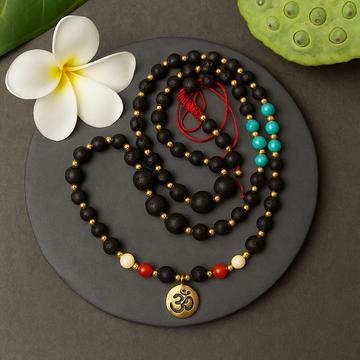

 India
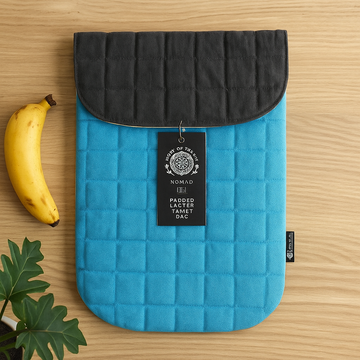
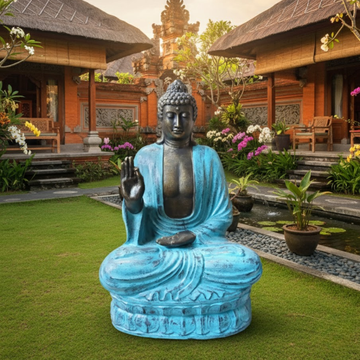

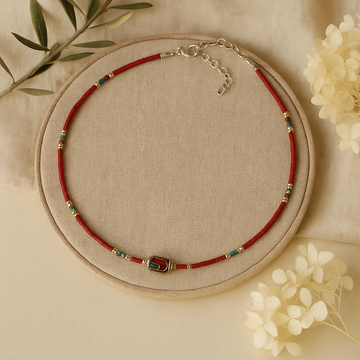
 Nepal



 China


¿Qué es Turquoise?
Turquoise is a phosphate mineral, hydrated copper aluminium phosphate, and one of the very few gemstones whose colour comes from a metal rather than a crystal structure. Copper is what makes it blue; iron brings the green. The result is never one colour, always a conversation between the two.
The name arrives from Old French turqueise, Turkish, because the stone reached Europe along trade routes through Turkey, from the ancient mines of Persia. Nishapur turquoise has been prized for two thousand years. Cleopatra wore it. The Aztecs set it in gold. In the American Southwest it belongs to a longer, unbroken lineage, a stone that carries the names of makers and places, passed between hands as a living thing.
The matrix is part of what makes it itself. Turquoise forms in nodules and veins, and the host rock it grew in leaves its mark: dark lines, pale clouds, a geography that is different in every piece. The colour deepens with the oils of the skin, which is why the tradition's advice is simply to wear it often and let it learn you back.
The crystal tradition places turquoise at the throat chakra: the place of honest speaking and clear exchange. Sagittarius and Pisces are its zodiac companions; air and fire its elements. The protective and healing associations are ancient: soldiers, pilgrims, horse bridles, burial masks. The tradition holds these as exactly that: associations.
The invitation is unhurried. Keep turquoise close (at the throat, on a wrist, in a pocket) and let it be a small, physical appointment with an intention you named in plain words. Communication, protection, steadiness: whatever the note, the stone keeps it.
Below: the catalogue's turquoise. Set in silver, tumbled into pouches, and held in objects that carry five thousand years of meaning.