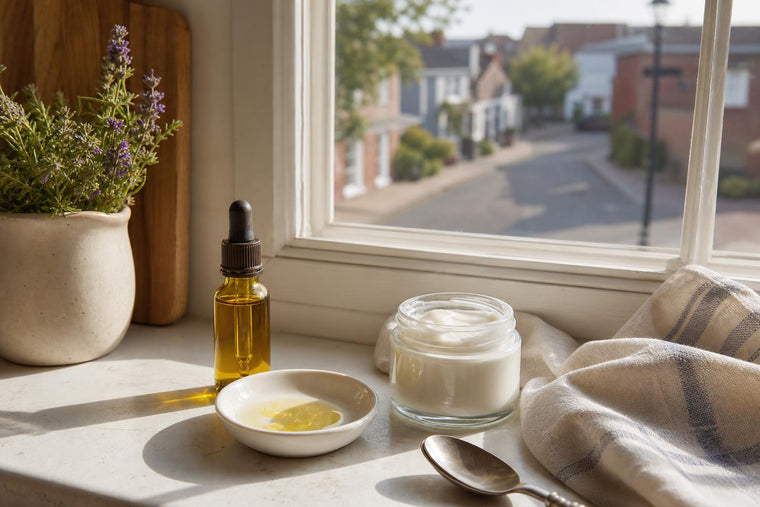
Urea turns up in dry-skin creams often enough that it can sound like something invented for the job, a lab-shelf additive with a faintly clinical name. It isn't. Urea is a compound the skin already makes, one part of what dermatology calls the skin's natural moisturising factor: a mix of substances the outer layer produces and holds onto specifically to keep water where it belongs. A cream that lists urea on the label isn't adding something foreign. It's offering the skin back a version of what it already knew how to do, before the shower ran too hot or the season turned dry.

What actually empties the skin's water store
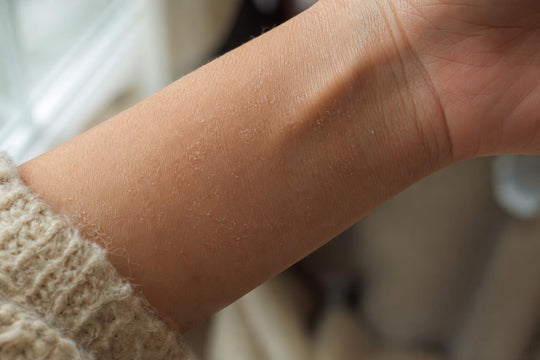
Dry skin is rarely one single cause. Hot water and long showers are a common contributor: dermatologists widely note that heat and prolonged washing strip away the skin's own oils faster than they can be replaced, leaving the barrier thinner and less able to hold moisture. Central heating and cold outdoor air both pull humidity from the skin's surface. Skin's ability to retain water often declines with age too, though how much and how soon varies a great deal from one person to the next. None of this means dry skin is a fault to correct so much as a barrier asking for a bit of help restoring what the weather, the water and the years have been quietly taking away.
The three-minute rule
The advice to moisturise "straight after" washing has a more precise origin than the phrase usually suggests. The National Eczema Association describes a method it calls soak and seal: bathe or shower in lukewarm rather than hot water, pat the skin lightly with a towel rather than rubbing it dry, and apply a thick layer of moisturiser within three minutes, while the skin is still slightly damp. The window matters because of the mechanism. Damp skin already holds water at its surface; a moisturiser applied within those few minutes helps keep that water from escaping, rather than trying to add new moisture from the outside. Leave it too long and the water simply evaporates before anything can catch it. A gentle, fragrance-free wash helps too, since soap can strip natural oils and daily scrubbing isn't necessary for most people.

Oil before water: what Ayurveda does differently
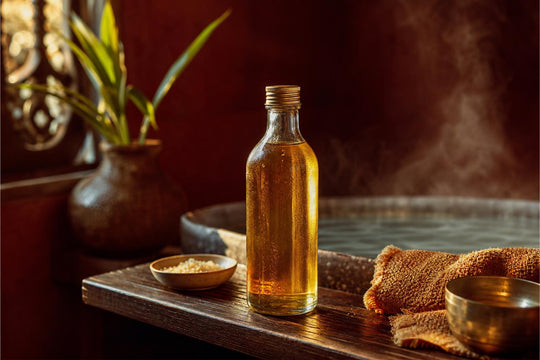
Every routine above assumes the same order: wash, then moisturise. Ayurvedic dinacharya, the daily routine set out in classical texts including the Charaka Samhita and the Ashtanga Hridaya, reverses it. Abhyanga, the practice of massaging warm oil into the body, is traditionally done before bathing, not after. The logic is different rather than lesser: oil applied to dry skin is left to sit and be absorbed in its own time, and the warm water that follows is understood to open the skin and help it take the oil in further, rather than simply washing a fresh layer on top of already-clean skin. It is a genuinely different sequence, not a variant of the same idea, and it's worth trying at least once simply to feel how differently the skin responds when oil comes first.
Choosing an oil for the climate, not the shelf
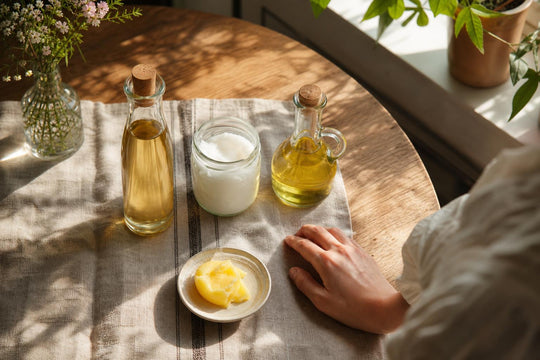
Ayurvedic tradition doesn't settle on one universal oil, and that variation is worth keeping rather than smoothing away. Dry skin is traditionally associated with vata, one of the three doshas, and warm sesame oil is the classic choice for balancing it, valued for a warming quality suited to drier, cooler conditions. In warmer, coastal regions of India, coconut oil is often favoured instead, prized for its cooling effect in a climate where warming oils make less sense. Ghee is often reserved for a narrower job again, less for the whole body than for genuinely cracked, hard-worn skin at the heels and elbows, a use quite separate from its far more familiar place in cooking and ritual offering. It's worth saying plainly that this dosha-based reasoning and modern dermatology describe skin through different lenses, and one doesn't prove the other; what they share is a practical instinct, not a shared mechanism. The through-line isn't a single correct bottle. It's the habit of choosing an oil the way you'd choose a coat, for the weather you're actually in.

A five-minute routine you can actually keep
None of this needs to become elaborate to be worth doing. A workable version might run: a short, lukewarm wash with a gentle, fragrance-free cleanser; a light pat dry rather than a rub, leaving skin slightly damp; then a plain body oil worked in while the skin still holds some moisture, following the same three-minute logic whether the routine is Ayurvedic or simply dermatological. On particularly rough patches, elbows, heels, knees, a richer, unscented balm can sit on top afterwards for extra staying power. For anyone whose skin reacts to plain water, a hydrosol used for a lukewarm rinse can offer a milder alternative to a full wash on days when skin feels especially reactive. None of these choices needs to be perfect. What matters more is the order and the timing: oil or moisturiser meeting skin that still has water in it, not skin that has already dried out waiting.
What the skin is actually asking for
Strip away the branded lists and the routine underneath is fairly plain: keep the water the skin already has, rather than only trying to top it up once it's gone. That's true whether the method comes from a dermatology association's three-minute rule or a text many centuries older that asks for oil before the bath rather than after. Neither is claiming to fix dry skin outright, and neither needs to. What they offer is a habit worth keeping through a change of season or a change of climate: notice when the skin is dry, choose an approach suited to the weather rather than the shelf, and give it the few minutes it actually needs. Skin remembers timing far better than it remembers good intentions applied too late.

 United Kingdom


 Israel

 Malaysia

 Argentina


 Bulgaria