


 £3.67 off


 £3.67 off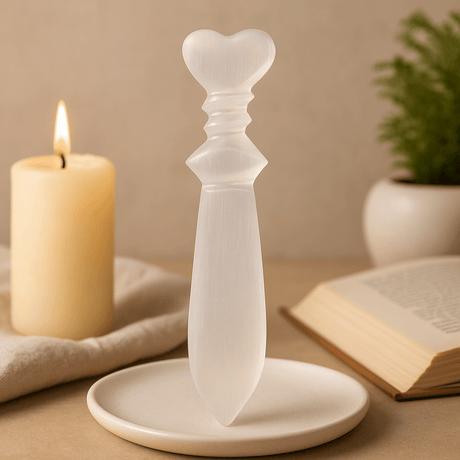


 £5.07 off


 £3.67 off


A ritual knife — often called an athame — has long served as a symbol of intention, focus and the act of consciously releasing what no longer serves. In this collection, each blade is carved from selenite: a luminous, fibrous gypsum celebrated in crystal practice for its clarity and connection to higher states of stillness. Whether you are drawn to the idea of a ceremonial blade as a chakra tool for your personal altar, or seek a meaningful object to mark moments of transition and letting go, these ritual knives offer both purpose and beauty.
What is a selenite ritual knife?
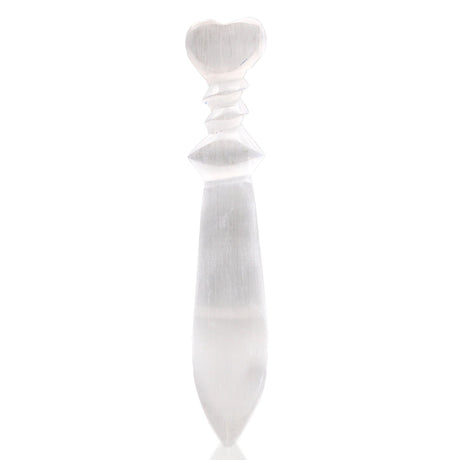
Every piece in this collection is a selenite ritual knife, shaped and polished to reveal the stone's characteristic chatoyancy — the soft, moonlit sheen that makes selenite so recognisable. Selenite is a crystallised form of gypsum, valued for its gentle energy and its ability to encourage mental clarity, making it a popular choice for those who work with spiritual tools in meditation and ritual settings. The knives are not sharp-edged utility blades; they are ceremonial objects, crafted to hold meaning rather than cut material.
Choosing the right ceremonial blade
When selecting a selenite athame, consider the size and form that feels right for your practice. The collection includes a 25-centimetre spiral design — a length that sits comfortably in the hand during guided meditation or altar work, while remaining modest enough for display. Spiral motifs are traditionally associated with intention and cycles, making a selenite ritual knife spiral a thoughtful choice if your practice involves themes of renewal or transformation.
How to use a ritual knife in your practice
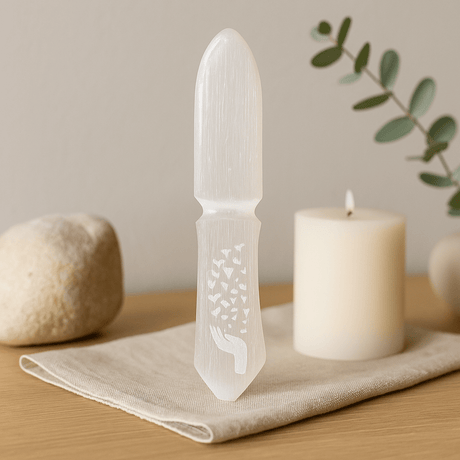
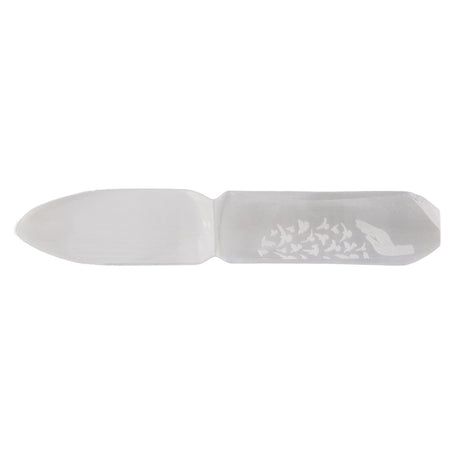
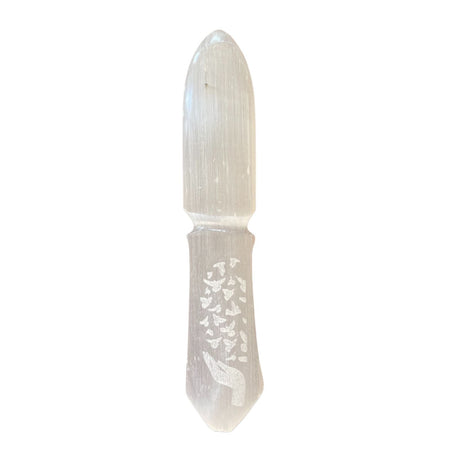
A ritual knife is used as a pointing or directing tool — to gesture with during meditation, to trace symbols in the air, or to hold steady as a focus for setting and releasing intentions. One piece in the collection is specifically named for releasing bonds: a practice in which you hold the blade, call to mind what you wish to let go of, and consciously direct your attention away from that which binds you. This is not about the blade acting upon the world — it is about you acting with clarity and purpose, using the object as a focal point for your own will.
To complement your altar cloths for ritual and meditation, a selenite athame pairs beautifully with textured linens or dark fabrics that allow the stone's pale lustre to stand out. Many practitioners also like to place their smudge bowls and ritual bowls nearby, creating a cohesive altar arrangement where each object carries its own weight of meaning.
Frequently asked questions
What is an athame?
An athame is a ceremonial knife used in contemplative and ritual traditions as a tool of focus and intention. It is traditionally a double-edged blade, though in crystal and spiritual practice it is more commonly a symbolic, polished form — such as a selenite athame — rather than a sharp cutting tool.
Is a selenite ritual knife suitable for beginners?
Yes. Selenite is one of the more approachable crystals for those new to working with spiritual tools, as it is associated with clarity and calm rather than intense or overwhelming energy. A ritual knife made from selenite offers a gentle introduction to the role that objects can play in personal practice.
How do I care for selenite?
Selenite is a relatively soft crystal — it should be kept dry, as water can damage its surface over time. Wipe it gently with a dry cloth to keep it dusted. Avoid dropping it, as selenite can cleave or chip under impact. Store it separately or wrapped in cloth if you keep other crystals nearby.
Can I use a ritual knife as a chakra tool?
Many practitioners use a selenite ritual knife as a chakra tool during meditation, holding or gesturing with it to direct attention to specific energy centres. Selenite's association with the higher chakras — particularly the crown — makes it a natural fit for work aimed at mental clarity and spiritual openness.
What is included with each ritual knife?
Each listing covers one selenite ritual knife. The exact specifications — including dimensions and any decorative detailing such as the spiral form — are listed on the individual product page.