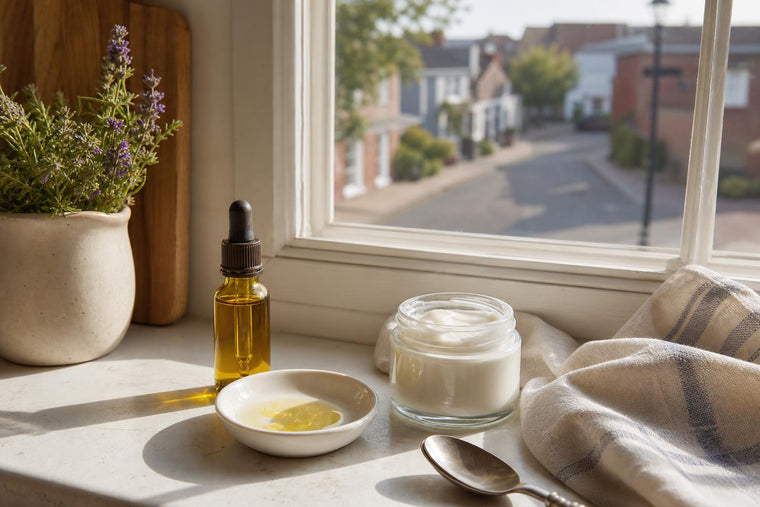
Nearly every source that claims to teach beginner skincare, however different their brand voice, agrees on the same three things: clean the skin, put moisture back into it, and protect it from the sun. Everything else on the checklist, the seven-step evening ritual, the ten-ingredient serum, the essence between toner and moisturiser, is not chemistry. It is attention dressed up as necessity. The oldest skincare practices in the world knew this too, and they solved it with a handful of ingredients rather than a shelf of them.
What a Beginner's Routine Actually Needs
Strip away the marketing language and the common core that most mainstream guidance converges on is small: cleanse, moisturise, and protect with sunscreen. That is the whole load-bearing structure. Toners, exfoliants, serums, masks and the rest are genuinely useful additions for particular skin concerns, but they are additions, not foundations. A beginner does not fail by skipping them. A beginner succeeds by doing the three basic things consistently, which is a harder discipline than it sounds, because consistency is boring and a new bottle is exciting.
The padding that surrounds the checklist online is mostly selling one thing: the feeling of doing more. It is worth naming that plainly, because it changes what a beginner should actually shop for: two or three products used properly beat a shelf of them used carelessly.

The Order, Without the Anxiety
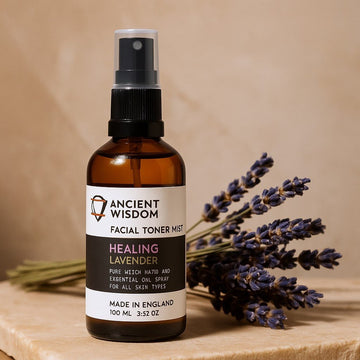
The order that most guidance recommends, cleanse, then treat, then moisturise, then sunscreen, follows a simple logic rather than a strict scientific law: thinner, more watery products go on before thicker, richer ones, so each layer can actually reach the skin instead of sitting on top of something oilier. A light toner or a hydrosol, if it is used at all, comes early for exactly this reason, before oil-based products that would otherwise block it. Some people like to use a hydrosol as a light toner between cleansing and moisturising, since its texture is closer to water than to oil, so it sits comfortably at that early stage without disturbing what follows.
Moisturiser follows once the skin is clean and slightly damp, and this is where a cold-pressed carrier oil earns its place for many beginners, applied sparingly rather than heavily. Sunscreen goes on last in a morning routine, and is commonly recommended roughly fifteen minutes before real sun exposure, so it has time to settle rather than being rubbed straight into bare skin on the way out the door. None of this needs to be memorised as a formula. It is closer to a habit of thin-to-thick than a recipe that must be followed exactly, and treating it as anxious science rather than ordinary sense is where most of the online debate goes wrong.
Where 'Natural' Actually Comes From
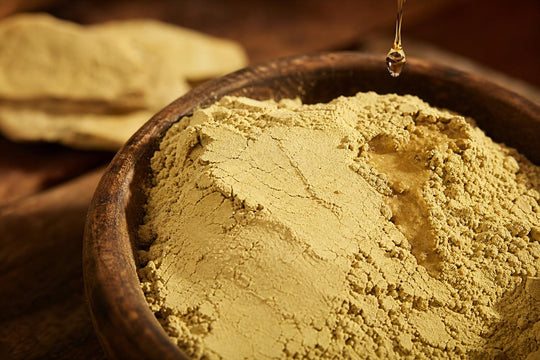
The word "natural" on a label rarely tells a beginner anything specific, and it is worth knowing that in both the UK and the US the terms "natural" and "organic" are not legally regulated for cosmetics, so a brand can use either word without meeting any fixed standard. What is more useful than the label is knowing where the ingredients themselves actually come from.
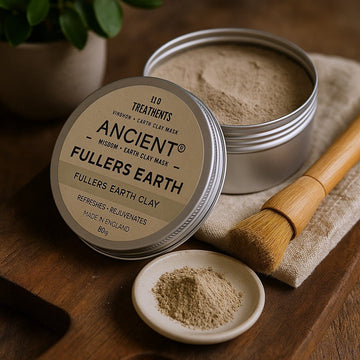
Turmeric, the ingredient behind half the "brightening" claims on any natural skincare shelf, has a long life outside cosmetics. In the Hindu haldi ceremony held before a wedding, a turmeric paste is applied to the skin of the bride and groom, a custom found across many regions of South Asia with local variations in how and when it is carried out. Its use there is rooted in a much older idea of preparing the body for an occasion rather than in any marketing claim, although turmeric's current popularity as a skincare ingredient has also been shaped by cosmetics brands trading on that older association. Multani mitti, another shelf regular, is named with unusual literalness: the word means "mud of Multan", after the city of Multan in present-day Pakistan, and it is a type of fuller's earth traditionally used across South Asia as a clay face pack rather than a recent spa invention. Rose water carries its own history through a named individual rather than an anonymous tradition: the Persian polymath Ibn Sina, known in the West as Avicenna, working around the turn of the eleventh century, is often credited with refining the steam-distillation process historically associated with producing rose water, though the history of distillation predates him by centuries; his contribution came long before the word "hydrosol" existed on any label.

The Ubtan: A Beginner's Natural Exfoliant, in Full
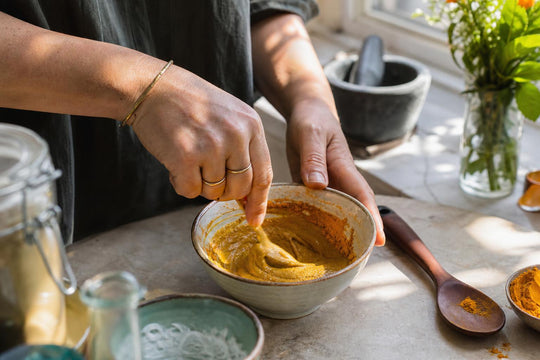
Among the traditional preparations that natural skincare marketing borrows from constantly without ever explaining, the ubtan is one well-documented example. It is a paste, typically made from gram, or chickpea, flour combined with turmeric and a liquid such as milk, yoghurt or rosewater, mixed to a consistency closer to a thick batter than a lotion. It has long been used in South Asian bathing customs, and especially in pre-wedding beautification, where it is applied generously to the skin before the wedding itself. An ubtan is a distinct preparation from a clay mask such as Multani mitti; the two come from separate traditions with separate purposes, even though shops now sometimes market them side by side as though they were the same thing.
What makes an ubtan genuinely different from a shop-bought scrub is not the ingredients but the method. It is applied to damp skin and left to dry slightly, then gently rubbed or rolled off with the fingers rather than scrubbed away with a cloth. Traditionally there is no full water rinse at the start of removal, since that would wash the paste away before it has had time to dry and lift debris with it, though many people do finish with a light splash of water afterwards to clear the last of the residue from the skin. The dried paste lifts as it is rolled, carrying dead skin and residue with it, which gives an exfoliating effect without the plastic or fruit-pit granules found in many commercial scrubs. Because it works on the skin's surface rather than deep into pores, it sits well within widely cited skincare guidance that recommends exfoliating no more than one to three times a week rather than daily, to avoid irritating the skin's barrier. A beginner curious about it might mix a small batch, apply it after cleansing, let it sit until nearly dry, and roll it off slowly rather than scrub it away in a hurry, once a week to start.
Building a Routine That Lasts
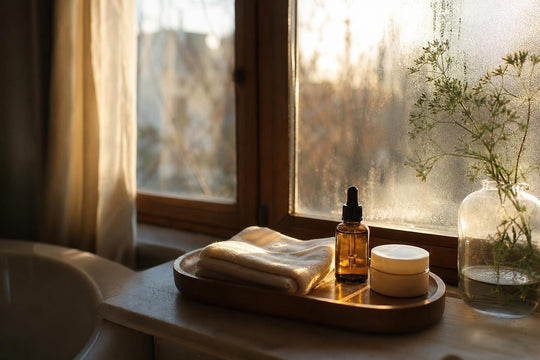
Before adding anything beyond the three foundations, a small precaution is worth the ten minutes it takes: patch-testing. Applying a small amount of a new product to an inconspicuous patch of skin and waiting around twenty-four hours is a standard precaution recommended before introducing active ingredients such as acids or retinol, and it applies just as sensibly to a new plant oil or a new clay mask as to anything from a laboratory. A witch hazel facial toner, for instance, suits some skin types well and can feel astringent on others, and there is no way to know which without testing it first on a small patch rather than the whole face.

The discipline that actually builds a lasting routine is adding one new thing at a time, giving it several weeks before judging it, rather than layering three new products in the same week and losing track of which one is doing what. This is slower than the internet wants beginners to be. It is also the only way to actually learn your own skin, rather than someone else's routine borrowed wholesale.
When to Add More
A three-step routine, kept for months, will teach a beginner more about their own skin than a nine-step routine kept for three weeks and abandoned. The moment to add a fourth step, a Multani mitti mask on oily patches, an oil for extra dryness, an exfoliant on a fixed weekly evening, is not when a new product arrives in the post. It is when the existing three steps have become a habit steady enough that a new addition can be watched properly rather than lost in the noise of everything else being new at once.
I keep returning to the idea that the "correct order" debate that dominates so much skincare writing is less about ingredients than about how much attention a person is willing to give a few minutes of their morning. Fewer steps, done slowly and noticed, will outlast more steps chased for the sake of optimisation. That was true of an ubtan rolled off by hand centuries before it had a name that suited a label, and it remains true of whatever ends up, eventually, on a bathroom shelf.

 Turkey

 Israel

 Peru

 Spain
 United States


 Bulgaria

 United Kingdom


 India

 Morocco
 France

 China