


Heart Chakra Singing Bowl Anahata

Heart Chakra Singing Bowl Anahata is backordered and will ship as soon as it is back in stock.
Email me when it's back in stock
One email when this piece is back. No marketing, and you can unsubscribe at any time.
Chosen by 20,000+ customers across Europe · 30 days to return
A quiet room changes when the wooden striker meets brass, and the first tone opens into the air. This heart chakra singing bowl set is made for focus, meditation and small daily rituals, with Anahata symbolism held at its centre. It gives you a simple way to mark a pause: lift the bowl, touch the rim, listen.

Heart Chakra Singing Bowl Anahata is backordered and will ship as soon as it is back in stock.
What it is
A small brass chakra singing bowl from India, played with a wood stick. This one is for the heart chakra, Anahata, placed by tradition at the centre of the chest.
Why people choose it
- Brass A small bowl with a stick to play it.
- Anahata Green in the tradition.
- Takes a little practice Slightly tricky at first, then a pleasure.
How to use it
- 1
Rest it flat on your palm or a cushion
- 2
Strike the rim once, lightly
- 3
Circle the outer rim slowly with the wooden side of the striker
Care: Keep dry, soft cloth. Brass darkens to a patina. Dents change the sound.
Customer reviews
1 reviews of this piece
-
★★★★★ V.
Magnificent
Other choices
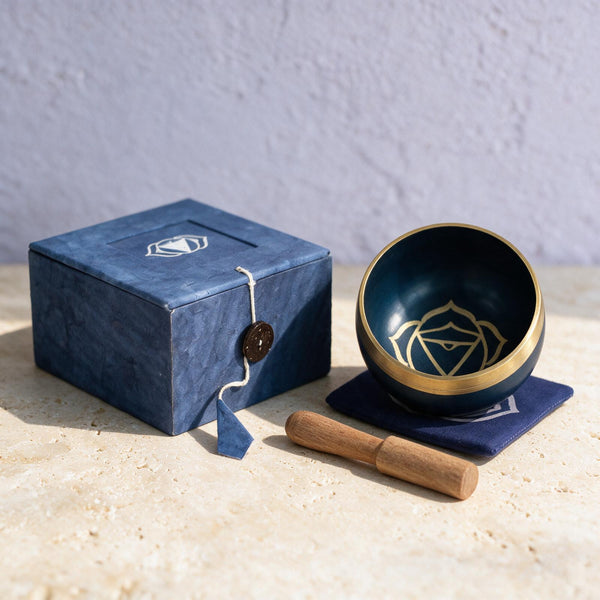

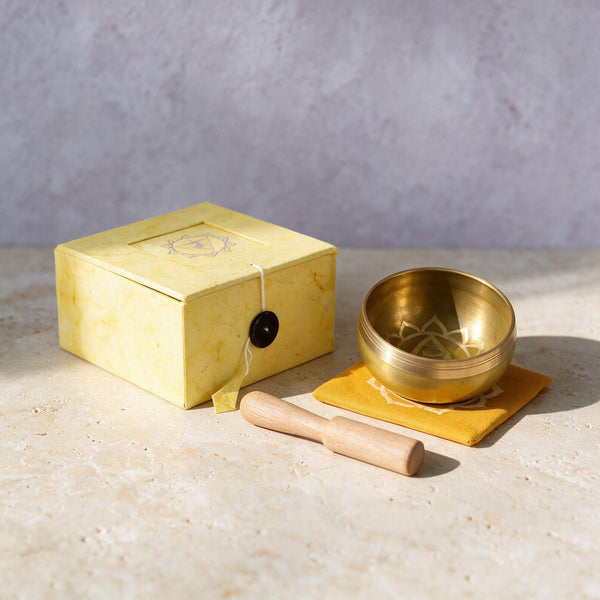
Complete your ritual
A few things often kept alongside this piece.
About this product
What comes into the ritual
- A brass singing bowl, with the warm, bell-like character that comes from metal vibration.
- A playing stick, used with the wooden end to draw sound from the rim.
- An Anahata, or heart chakra, theme for people drawn to green, Venus and the symbolism of love and compassion.
- A focused object for meditation, breathwork, yoga spaces or a quiet corner at home.
- A set that feels complete without needing to source a separate striker.
The brass bowl itself
The bowl is made from brass, a metal that catches warmth in the hand and deepens gently in character with use. Singing bowls are a type of standing bell: their sides and rim vibrate when struck or circled, creating the sound rather than a clapper inside.
This heart chakra singing bowl set comes from India and sits within the wider Tibetan singing bowl tradition, where metal bowls are used as sound objects for attention, ritual and contemplative practice.
How the sound is made
For a clear struck tone, tap the rim lightly with the wooden end of the stick. To make the bowl sing, keep the stick in contact with the outer rim and move it slowly around the edge with steady pressure.
The exact sound will depend on how you play it. A lighter touch gives a softer response; a steadier circular movement lets the vibration build gradually.
Anahata and the heart centre
In the yogic chakra system, Anahata is the heart chakra, traditionally placed at the centre of the chest. It is associated with love, compassion, the colour green and the planet Venus, with stones such as peridot, rose quartz and malachite often linked to its symbolism. Here, that meaning gives the bowl a gentle point of focus: a visual and ritual language for returning attention to the heart.
Care between sittings
Handle the bowl with dry hands where possible and wipe it with a soft, dry cloth after use. Brass can change tone in colour over time, developing a natural patina. Keep it away from prolonged damp, and store the stick beside it so the set is ready for the next quiet moment.
Weight and details
The set weighs 250 g. It includes a brass singing bowl and a playing stick.
 Heart chakra