
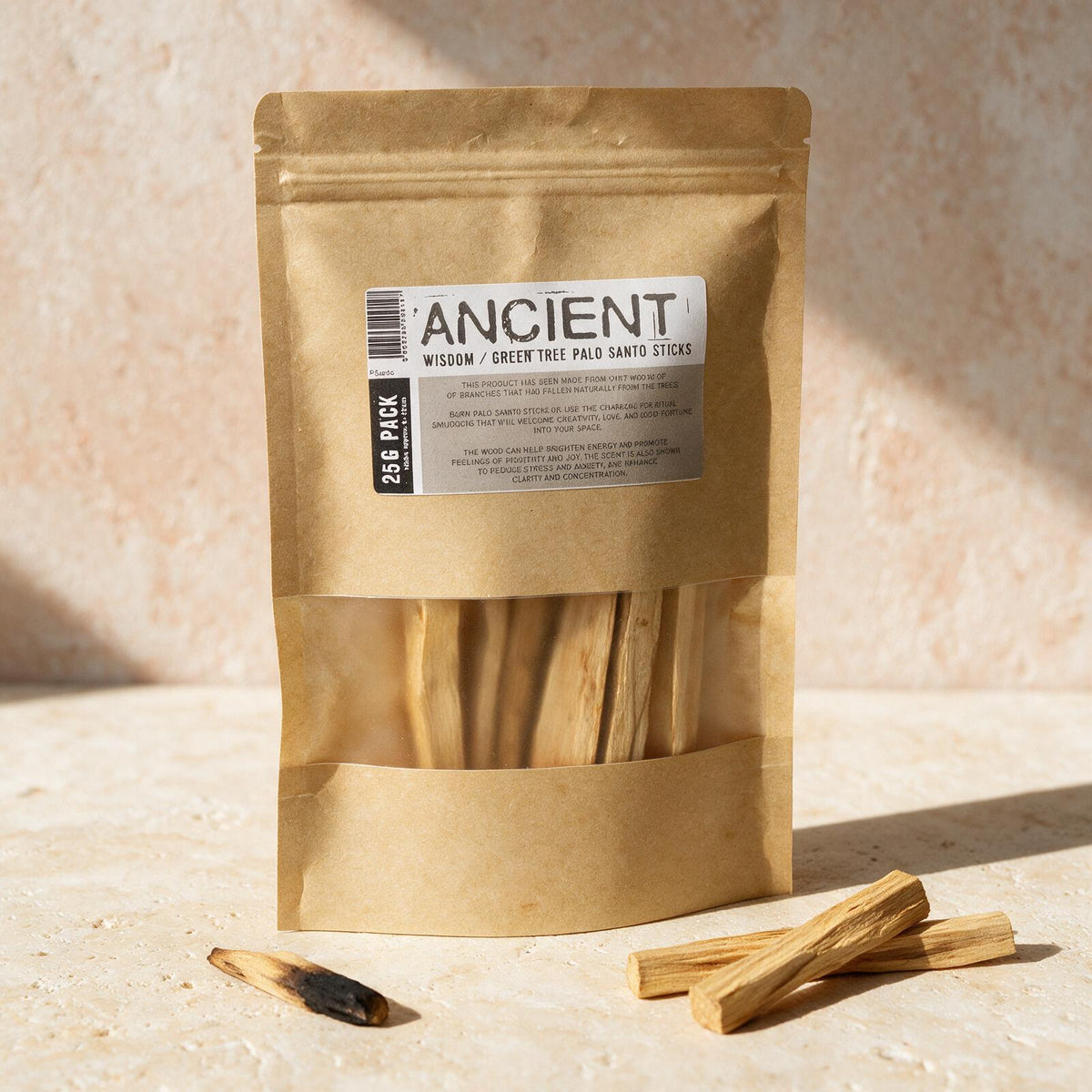
What palo santo is
Palo santo, holy wood in Spanish, is the wood of Bursera graveolens, a tree of the dry forests of Central and South America, from Mexico to Ecuador and Peru. It is a relative of the trees that give frankincense and myrrh, and its aged heartwood is rich in fragrant oils such as limonene, which gives the smoke its citrus note.
What it is used for
In Ecuador and Peru it has long been burned at home to mark a fresh start, to scent a room before rest or prayer, and to close a day. Today many people light it in the same spirit: before a yoga practice, at the start of a quiet evening, or after guests have left. It is a small act of attention, and the scent does the rest.
Why it goes out
Palo santo is meant to smoulder briefly. It is too dense and oily to keep burning like an incense stick, so once the flame is out the tip glows, smokes for a minute or two and stops. If yours goes out sooner, hold it in the flame a little longer, at a slight downward angle, so the edge catches well.
Where good palo santo comes from
Wild trees are protected in parts of the tree's range, and illegal felling happens where demand is high. In Peru, a 2006 decree banned the cutting of live trees and allowed only dead and naturally fallen wood to be collected. Responsible palo santo comes from that fallen wood, which lies for years before it is gathered.


 China