

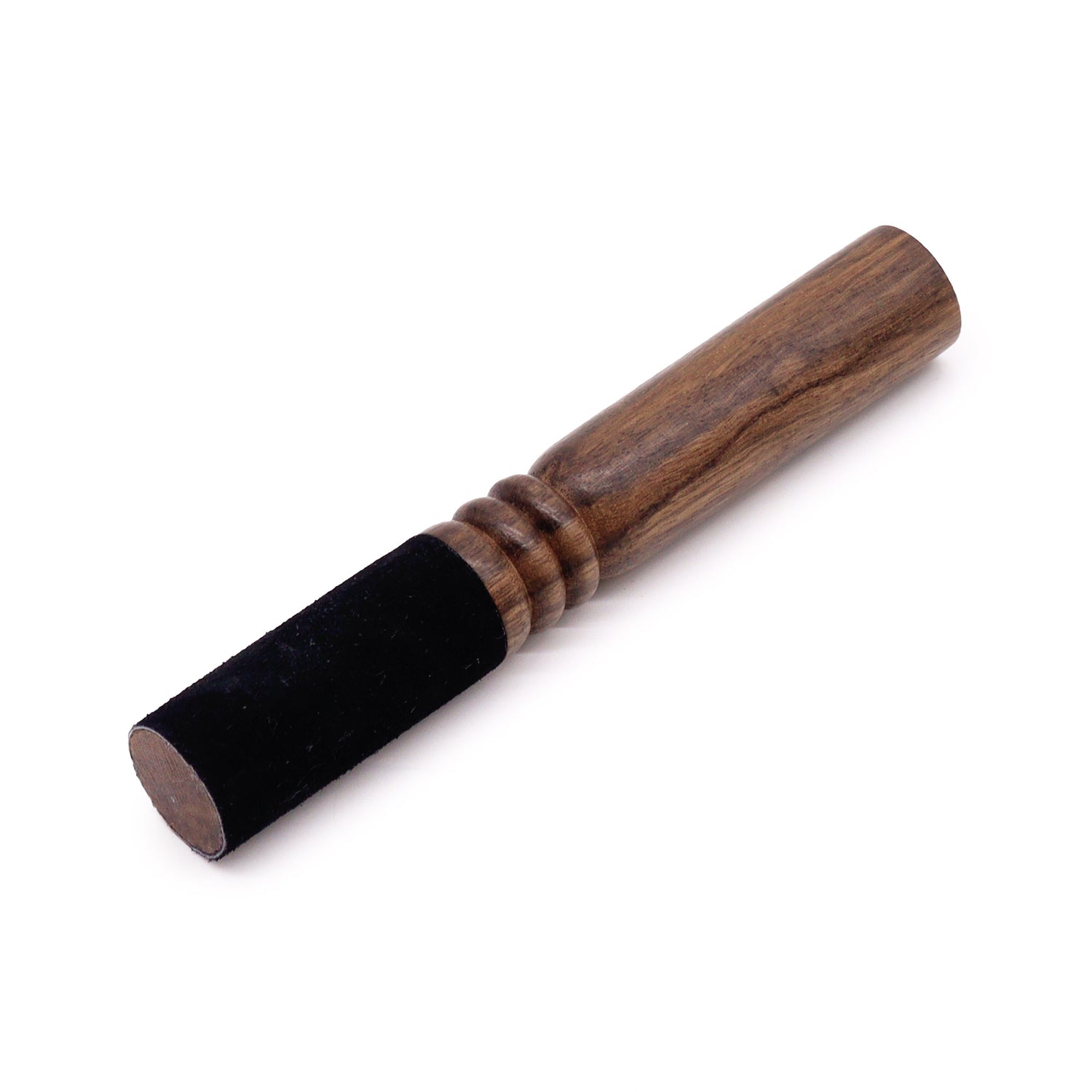
Singing Bowl Mallet Wooden Stick 18cm Medium Double-Ring

Orders start from £12. Add a holder or a second scent.
Singing Bowl Mallet Wooden Stick 18cm Medium Double-Ring is backordered and will ship as soon as it is back in stock.
Email me when it's back in stock
One email when this piece is back. No marketing, and you can unsubscribe at any time.
Chosen by 20,000+ customers across Europe · 30 days to return
The first touch matters: a singing bowl mallet turns a still metal bowl into sound through pressure, angle and contact. This wooden mallet is made for clear, controlled playing, with a simple double-ring grip that gives the hand a natural place to settle.

Orders start from £12. Add a holder or a second scent.
Singing Bowl Mallet Wooden Stick 18cm Medium Double-Ring is backordered and will ship as soon as it is back in stock.
What you need with it

What it is
A wooden mallet from Nepal for playing a singing bowl. This one is 18 cm long, a medium size, with a double ring design.
Why people choose it
- Made in Nepal Made from Terminalia wood.
- Double ring 18 cm, a medium size.
- For singing bowls Tap the bowl gently and let it ring.
How to use it
- 1
Strike or shake gently at first, and listen to how long the sound lasts
- 2
Rest the instrument on something soft or hold it loosely, so it can ring
- 3
Play in a quiet room, and let each note fade before the next
Care: Keep instruments dry, and wipe metal with a soft cloth after playing. Hold ceramic ocarinas over something soft, as they break if dropped. Keep wood and bamboo away from radiators and direct sun.
Customer reviews
1 reviews of this piece
-
★★★★★ S.
Love the fact that I can use either end :)
Other choices


Complete your ritual
A few things often kept alongside this piece.
About this product
What you feel and hear in use
- The bare wooden surface gives a direct strike, with a clean start to the tone rather than a padded softness.
- The double-ring detail helps guide the fingers, useful when you want a steadier hold around the rim.
- It suits players who prefer a straightforward tool, focused on contact, pressure and listening.
- Used lightly, it can wake the bowl with a tap. Used around the rim, it supports slower, more sustained playing.
- Its balanced feel makes it easy to keep beside a bowl, gong or sound-practice space without visual clutter.
Shaped for singing bowls and gongs
A hard wooden mallet gives a different response from a padded or wrapped striker. It brings more immediate contact, so the tone begins with a clearer edge before the bowl itself carries the sound.
For rim playing, hold the stick with relaxed fingers and move slowly around the outer edge of the bowl. Even pressure matters more than force. If the sound catches or chatters, soften the grip and reduce the speed.
Terminalia elliptica wood from Nepal
This mallet is made from Terminalia elliptica, a hardwood used here in a plain, functional form. The double-ring shaping is part of the handle design, giving it a little more presence than a basic straight stick while keeping the focus on use.
How to care for the wood
Keep it dry and wipe it with a soft cloth after handling. Avoid soaking or leaving it in prolonged damp, as wood can change with moisture. Store it beside the bowl rather than inside it if you want to avoid unnecessary knocks.
Sound practice in context
In Himalayan and Tibetan singing bowl practice, the mallet is as important as the bowl. Different sticks, wraps and weights change the way metal responds, from a crisp opening strike to a slower rim tone. This is a practical acoustic choice rather than a decorative extra: the tool shapes the first contact, while the bowl gives the note, depth and sustain. For anyone building a small sound corner at home, a well-matched wooden stick is often the simplest place to begin.
Size and details
Length: 18 cm. Weight: 71 g. Material: Terminalia elliptica wood. Origin: Nepal. Includes one medium double-ring singing bowl mallet.