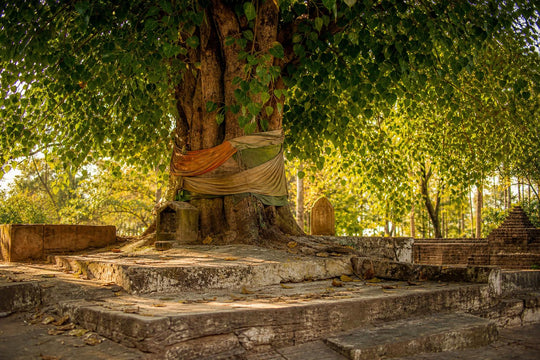
A fig tree stands in the Mahamewna Gardens at Anuradhapura, in the dry plains of Sri Lanka, fenced in gold and watched day and night. Pilgrims come with white flowers and stand for a long time saying nothing. It is not a replica and not a symbol planted for effect. By its own recorded history, it grew from a cutting of the tree under which Siddhartha Gautama is said to have sat until he reached what Buddhists call bodhi, awakening. The cutting travelled from India to Sri Lanka in the third century BC, carried by the Buddhist nun Sanghamitta Theri, sent by her father Emperor Ashoka, and presented to the Sri Lankan king Devanampiya Tissa. At more than 2,300 years old, it is recorded as the oldest living human-planted tree in the world with a known planting date. It has stood through storm damage to its branches in 1907 and in 1911, and an attack by a vandal in 1929, and it is still standing, still fenced, still visited. That continuity, more than any single date on a calendar, is what Bodhi Day is actually asking a person to notice.
What the day marks
Bodhi Day falls on 8 December and commemorates the day Siddhartha Gautama is said to have experienced bodhi, enlightenment, under a peepal tree (the same species as the fig at Anuradhapura, Ficus religiosa) on the bank of the Neranjana River at Bodh Gaya. Tradition holds that he had already spent years in ascetic practice and had set it aside, resolving instead to sit until he had found the root of suffering. The word bodhi itself comes from a Sanskrit and Pali verb meaning to awaken, and the tree itself is sometimes called the Bodhi tree for exactly this reason: it is named for what happened beneath it, not the other way round.
The fixed December date belongs mainly to the Zen traditions of Japan, where the day is called Rohatsu, meaning simply the eighth day of the twelfth month. It settled onto the Gregorian calendar as Japan adopted Western timekeeping during the Meiji era. Other Mahayana traditions across East Asia keep the observance at different points between the winter solstice and the lunar new year, and Theravada Buddhism, practised across much of Sri Lanka and South East Asia, does not mark it separately at all: there, the Buddha's enlightenment is folded into Vesak, which also commemorates his birth and death on a single day. There is no one fixed date that every Buddhist tradition shares, and that variation is worth holding onto rather than smoothing over. It says something true about how a single event can be kept differently by people who all take it seriously.
The week before the day
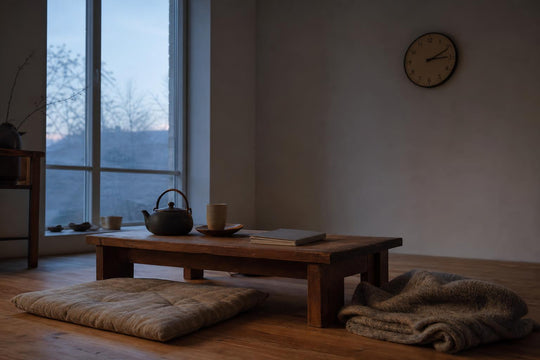
In Zen monasteries, the days leading up to Rohatsu are not quiet preparation. They are the hardest week of the practice year. Rohatsu sesshin typically begins around 1 December and runs for about a week, building towards an attempt, on the night before the 8th, to sit through until morning without sleep, much as Siddhartha is said to have done. The zendo is usually unheated. Meditation can run for most of the day and night, broken only briefly. Monks and lay practitioners who take part are not reenacting a story for its own sake; they are testing, in their own bodies, how long stillness can actually be held, and what happens to the mind somewhere past the point where it wants to stop.
Almost no one reading this keeps that kind of schedule, and the point of describing it is not to make a smaller effort feel inadequate by comparison. It is to show what the day is actually built from: not a story told about someone else's patience, but a specific, repeatable act of staying seated a while longer than is comfortable. Everything that follows in a Rohatsu week is really one instruction, repeated for seven days and one long night: stay.

Staying a little longer
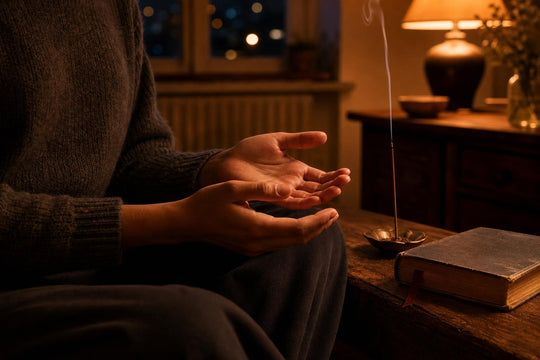
That is the part of Bodhi Day that travels. You do not need a zendo, a sesshin, or even a fixed tradition to take something real from it. The instruction scales down without losing its shape: when you sit to meditate, or simply to be still, stay for a few minutes past the point where you first think you are done. Not for hours. Not without sleep. Just longer than the habit that wants to end it early.
I keep my own japa practice for this reason more than any other. A mala held in the hand gives the mind somewhere specific to return to when it drifts, and the counting itself becomes a quiet argument against stopping too soon. If it helps to have a japa mala kept within reach, that is simply a tool for the same instruction the Rohatsu monks are keeping at far greater length: stay a little past where you meant to stop. Some evenings I light incense before sitting, not because the room needs to smell of anything in particular, but because the act of lighting it marks a clear edge between the day's business and the next few minutes of attention, and incense lit for a few minutes of stillness does that small, specific job well. You could read one line of a text slowly instead, or simply sit with your eyes open, watching one object in the room until the urge to check the time has passed. The form matters less than the staying.

What outlasts the one who sat there
The tree at Anuradhapura is useful here because it makes the staying visible across a much longer span than one night. A single afternoon of someone else's stillness, nearly twenty-five centuries old, still has a living descendant that people travel to stand near. Sanghamitta Theri did not carry a story to Sri Lanka. She carried an actual branch, which was planted, which grew into the tree inside the Sacred City of Anuradhapura, a UNESCO World Heritage Site where people continue to bring offerings on full moon days. And it has needed tending, not just reverence: storm damage to its branches in 1907 and again in 1911, an attack by a vandal in 1929, and through all of it the tree is still standing, still fenced, still visited. Nothing about that asks you to believe anything in particular. It simply keeps being there, the way the instruction to sit a little longer keeps being available, long after the person who first kept it has gone. You do not need December 8 specifically, nor a fig tree, nor a monastery, to take the one usable thing from the day: an evening, a few free minutes, and a willingness not to get up the moment the first urge to arrives.
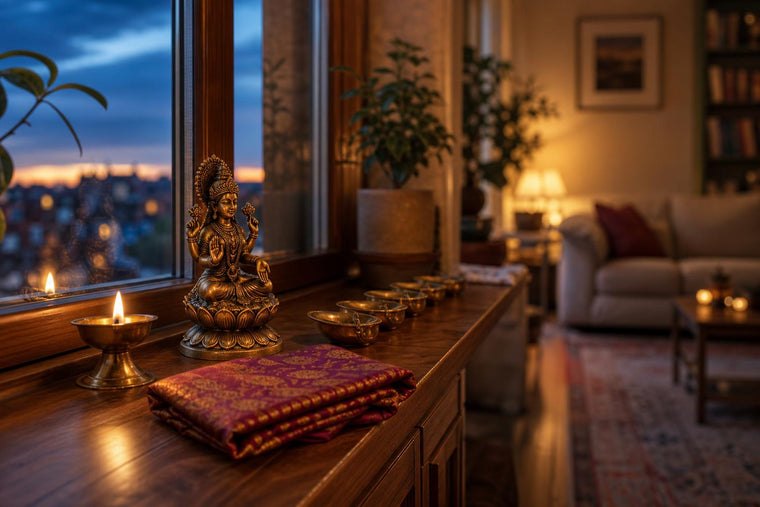
Sit, or stand, or kneel if that is more natural to you. Let the room settle into whatever the slower end to a December evening actually looks like in your own home, whether that is a lit candle, a cup of something warm, or simply the lamp turned down. If you keep a small shelf of crystals and quiet objects somewhere in the house, let it be exactly what it already is: a place your attention knows how to land, nothing more dramatic than that. Then stay a few minutes longer than you meant to. That is the whole practice, and it is, in its own small way, the same one the tree at Anuradhapura has been quietly marking for a very long time.

 India


 Nepal




 United Kingdom