Diwali carries its own instructions inside its name. The word comes from the Sanskrit dipavali: dipa, a lamp, and avali, a row or a series. A row of lamps. Not a mood, not a metaphor for light over darkness in the abstract, but a literal description of small clay or metal vessels set in a line, each one needing a dry surface, a clean wick and a steady hand. Before you can have a row of lamps, you need somewhere fit to put them. That practical requirement, more than any doctrine, is the seed of the cleaning that precedes Diwali in households across the subcontinent and beyond.
Diwali ki safai
In Hindi the custom has its own name: Diwali ki safai, the Diwali cleaning. It is distinct from ordinary housework in both scale and timing. Rather than a weekly tidy, it is usually spread over a couple of days to a few weeks beforehand, worked through room by room, cupboard by cupboard, in whatever order a household finds sensible. Tradition holds that anything not yet cleaned should certainly be done by Dhanteras, the day that opens the five-day Diwali period; in some regions, homes are whitewashed at this point as well as swept and wiped. The festival itself runs from the thirteenth day of the dark half of the lunar month Ashvina through to the second day of the following bright fortnight, in the lunar month Karttika, which usually lands somewhere in late October or November on the Gregorian calendar.
Why the puja room usually comes first
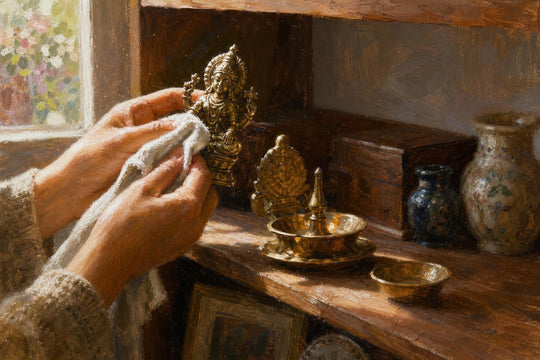
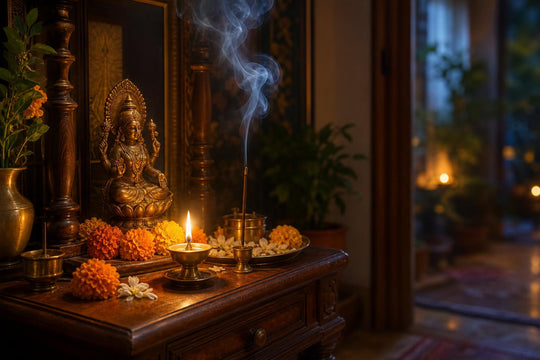
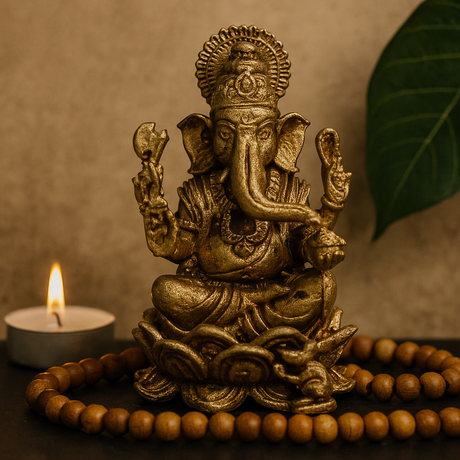
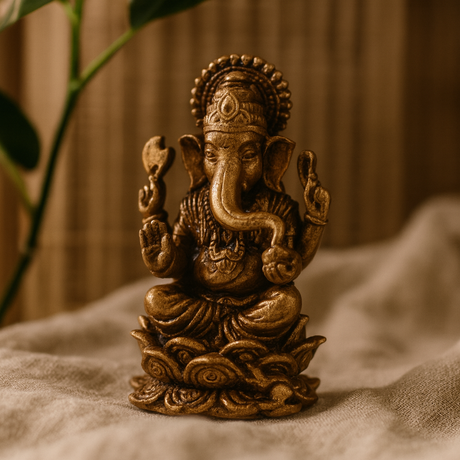
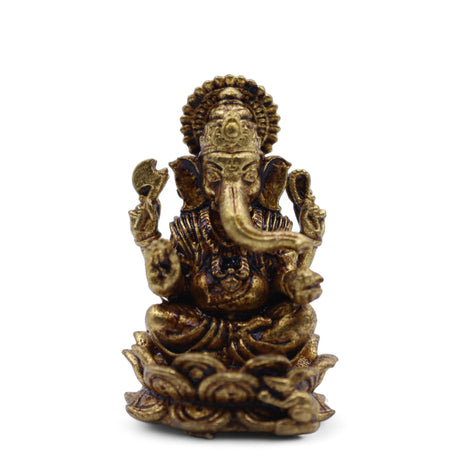
Ask most households which room gets attention first in this stretch of cleaning and the answer, more often than not, is the smallest one: the puja room, the mandir corner, sometimes no more than a shelf. Idols and framed images are wiped, lamps are polished, wicks are replaced, oil or ghee is topped up, and whatever has quietly accumulated there over the year, a stray coin, an old calendar, a dead flower left too long, gets noticed and cleared. This is a common pattern rather than a fixed rule; households vary in how much of the wider cleaning happens before or after the shrine itself is done, and some treat every room with equal care from the start. But the corner where lamps will actually be lit tends to draw the eye first, simply because it is about to be used. A few households use this moment to bring in sacred idols and figurines that have been waiting for a proper place, though most people are simply rediscovering what they already keep there.
Lakshmi Puja
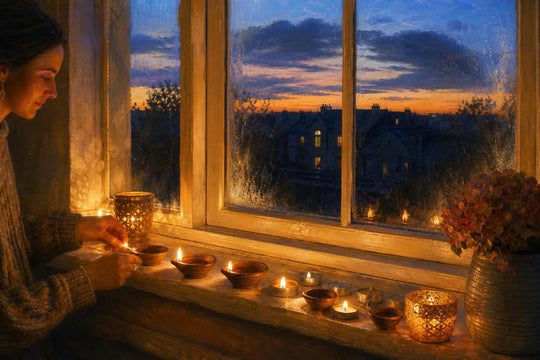
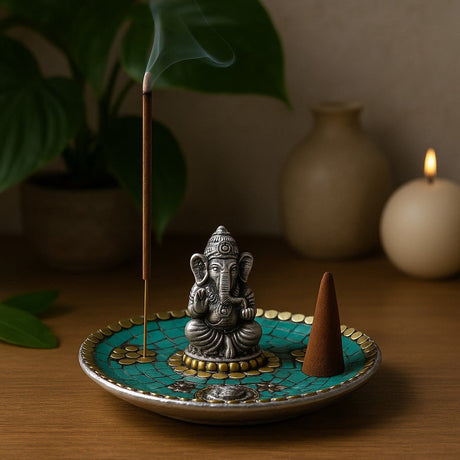
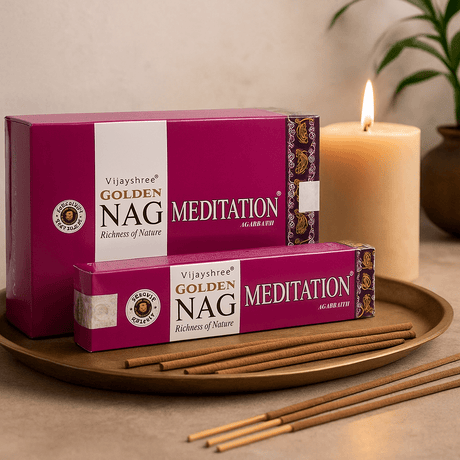
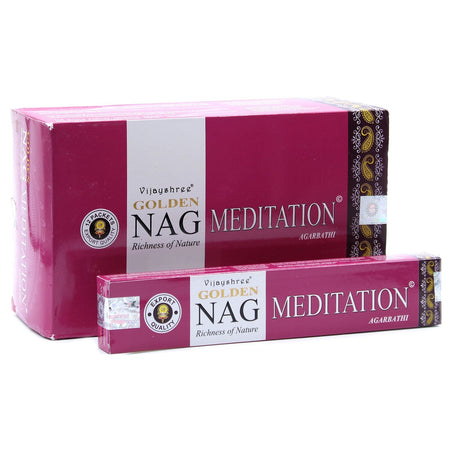
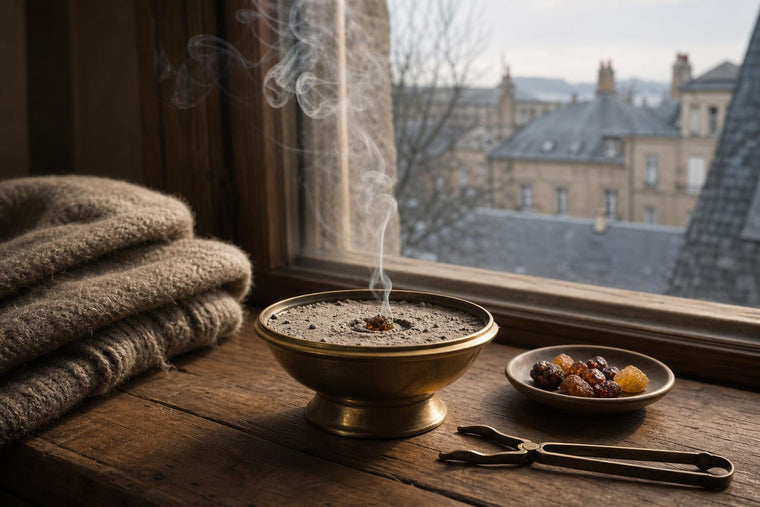
On the night of Lakshmi Puja, the belief held in many households is that Lakshmi, goddess of prosperity, moves through the world that night looking for homes to enter. Doors and windows are opened, diyas are set along sills and balcony ledges, and the house is lit from the inside out. This is a widely held belief rather than a claim this piece is making about how the world works, and it varies by family how literally it is taken and how elaborate the observance becomes. What does seem to hold across many households is a working assumption: a home that is orderly and lit is treated as more welcoming than one that is not, and the safai in the days before is understood, in many traditions, as preparing the ground for that welcome rather than as a separate chore. Once the room is cleared, a little incense for the freshly cleared room is one of the smaller, more ordinary ways people mark that a space has changed hands from storage to shrine.
Where the tradition branches
None of this is one script performed identically everywhere, and it is worth saying plainly where it branches. The festival itself carries two names depending on region: Diwali or Divali in the north, Deepavali more commonly in the south, a difference of language rather than of belief. In Bengal, the same new-moon night that elsewhere centres on Lakshmi is given over to Kali Puja instead. In many homes, Ganesha is honoured alongside Lakshmi rather than in her place. Among many trading and merchant communities, this period is when new account books are traditionally opened, tying the festival to commerce as much as to the home. Diwali is a major festival within Hinduism, Jainism and Sikhism, and some Buddhist communities mark it too, each carrying its own reasons and, often, its own version of the story behind the lights. Even the legend attached to the night differs by region, Rama's return to Ayodhya in one telling, the defeat of Narakasura in another, and neither should be presented as the single true account of a festival kept in genuinely different ways across a wide geography.
A corner kept, not just cleared
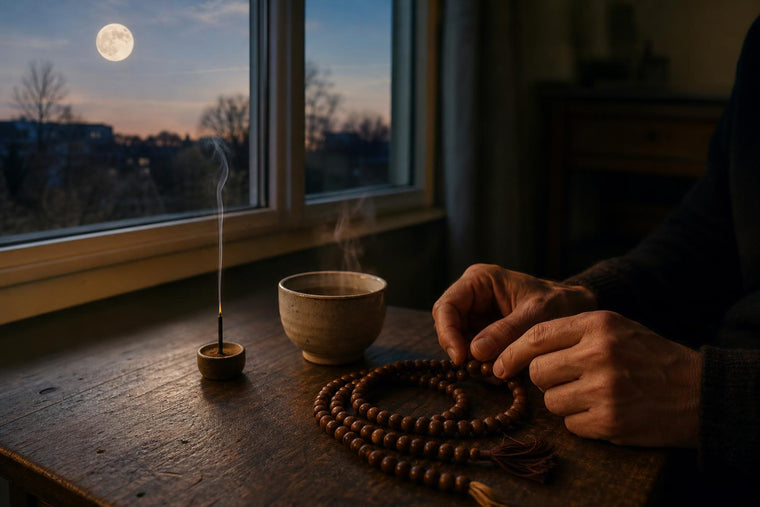
I keep a lamp lit most evenings on a small shelf in my home in Bengaluru, incense burning beside it, the same mala within reach that I use for japa. None of it is dramatic. Most days it takes a few minutes: wipe the shelf, check the wick, sit for a while. What Diwali does, in a household that already keeps some version of this habit, is make visible for one night what has been quietly ordinary all year. The row of lamps is not a performance staged from nothing; it is the daily attention turned up, briefly, to its fullest volume. A diya itself is nothing exotic, a clay, brass or silver lamp with a cotton wick set in oil or ghee, used across Hindu, Sikh, Jain and Buddhist practice well beyond this one festival. What makes the Diwali night different is not the object but the number of them lit at once, and the fact that a room has been prepared, over days, to be worthy of holding that light.
If there is a single thing worth carrying out of this, it is that the cleaning was never really about tidiness for its own sake. It is about making a space ready to receive attention, whether that attention comes from a guest, a goddess, or simply your own eye returning to a corner you have decided matters. Some households keep candle holders for the lit windowsill ready for exactly this one night a year; others use the same shelf, the same small lamp, every evening, and Diwali is simply the night it gets company. Either way, the row of lamps needs somewhere clean to stand, and that has always been the whole of the instruction.