Most advice on cosmetics labels asks you to go hunting: scan for villains, cross off a dirty dozen, feel briefly vindicated or briefly alarmed. There is a slower way to read the same words, and it starts with a single line of small print on the back of an ordinary bottle.
One line, read properly
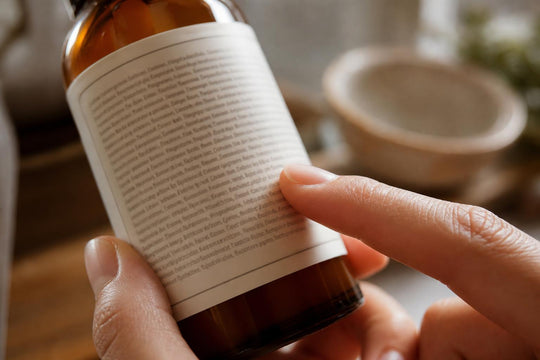
Turn over a bottle of tea tree oil, or any product that uses it, and somewhere in the ingredients list you will find this: Melaleuca Alternifolia (Tea Tree) Leaf Oil. Most people's eyes slide straight past it, the way eyes slide past small print generally. But it rewards a slower look, because it is not a password to decode or a chemical to fear. It is a sentence, built to a grammar, and once you know the grammar it tells you exactly what it says: the plant's Latin name, its common name, which part of the plant was used, and what form it takes. Nothing is hidden in it. The strangeness is only unfamiliarity. That single entry is a reasonable place to begin learning to read a label at all, because almost everything else on the list, however alarming the name, is built the same way.
Why the order is not decoration
The list itself follows a rule, not a design choice. Ingredients are set out in descending order of concentration, from the most present to the least, down to the point where a single ingredient drops to roughly one per cent of the formula; below that line order no longer reflects quantity, so the tail of a long list can sit in almost any sequence. This is not a gesture towards transparency, it is a requirement, written into cosmetics labelling rules on both sides of the Atlantic.
Read with that in mind, the first few names on any label are doing most of the practical work. If water, usually written as Aqua, sits at the top, the product is mostly water, which is ordinary and not remotely a flaw: a toner or a gel will often have water as its base and the ingredients further down as the reason you reached for it. A label does not disclose exact percentages, only identity and order, so if a brand wants to tell you precisely how much of a featured ingredient a facial serum actually contains, that number has to be stated separately, outside the list itself.
The grammar behind the name
The naming system on every bottle has a name of its own: INCI, the International Nomenclature of Cosmetic Ingredients. It assigns each cosmetic ingredient a single, consistent identifier, maintained by what is now the Personal Care Products Council, so that one name per ingredient works across markets and languages: a product made in one country says the same thing on a shelf in another. The pattern holds for almost any plant-derived ingredient you will meet. Olive oil becomes Olea Europaea (Olive) Fruit Oil. Shea butter becomes Butyrospermum Parkii (Shea) Butter. Each follows the same order: Latin genus and species first, common name in brackets, then the plant part, then the form the ingredient takes, whether that is an oil, a butter, an extract or a water. Once you have seen the pattern applied to tea tree, olive and shea, you have effectively learned to parse most of what a natural cosmetics label will show you, because the grammar does not change from product to product. Only the plant does.

Where things genuinely hide
There are a few places on a label where the detail thins out, and it is worth knowing where, rather than suspecting everywhere equally. Fragrance is the clearest case. On an EU label, named allergens above a set threshold have to be listed individually after the word Parfum, so some of what makes up a scent is disclosed by name. In the US system, by contrast, fragrance ingredients are typically bundled inside the single word Fragrance, with far less obligation to name the parts. The same word means a different amount of disclosure depending on which regulation governs the label in your hand.
Colour works the same way, by a different convention. On UK and EU cosmetic labels, colourants are usually given as CI, or Colour Index, numbers, something like CI 77891, rather than the FD&C and D&C names familiar from US packaging. Neither system is dishonest. They are simply two different conventions for saying the same kind of thing, and a label read with that in mind stops looking evasive and starts looking like what it is: a technical document written to a standard.

What the word "natural" actually promises
Here is the gap worth sitting with. In the United States, there is no formal regulatory definition of "natural" for cosmetics, so the word printed across the front of a bottle carries no standardised legal meaning at all. A brand can use it in good faith or loosely, and a shopper cannot tell which from the word alone. What can actually be verified is a certification mark from a body that has set its own defined criteria and checks products against them, among them Ecocert and the Soil Association, each working to its own published standard. The mark is the part of the claim that has been tested against a written rulebook. The word beside it, on its own, has not. This does not make "natural" a false promise so much as an open one: it describes an intention a brand is making, and the certification, where it exists, is the part you can actually check. A bottle carrying one of these marks, such as a certified organic rosehip oil, has had its whole formula measured against someone else's published standard, not just its own front label.
Reading as a practice
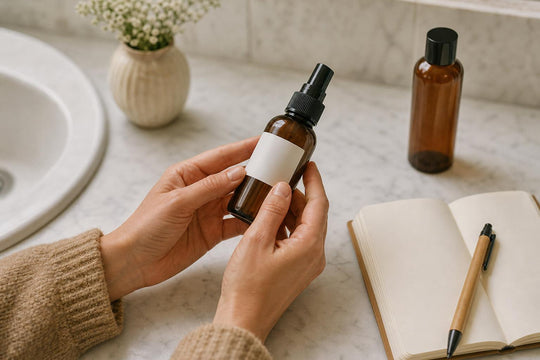
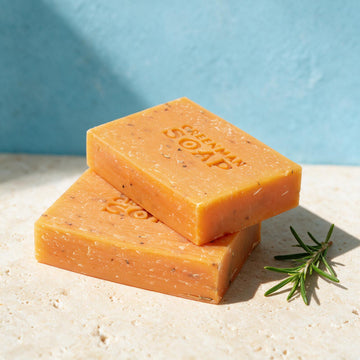
This is really the point of learning any of it. The common advice treats an ingredients list as a minefield to be swept for danger, scanning for a handful of feared names and feeling cleared once they are absent. That turns a short, well-structured piece of writing into a chore done out of worry. There is a quieter alternative: read the whole list, once, slowly, from the top down, before you buy. Notice what comes first, because that is what you are mostly purchasing. Notice the plant names and sound out their grammar rather than skimming past them. Notice where the list thins into percentages-below-one, and let that tail matter less than the opening lines. None of this requires expertise, only a few extra seconds and the willingness to read instead of scan. A label stops being intimidating the moment you have read one closely enough to see the pattern underneath it. Once the grammar is familiar, a label becomes something closer to a short biography of the bottle: where its ingredients sit by proportion, which plants were used and in what part and form, and how much of its "natural" claim has actually been checked by someone other than the brand itself. That habit travels with you past this one bottle, onto the next natural face mask you pick up, onto a bar of handmade soap whose ingredient list runs to six or seven lines, onto a box you reach for out of curiosity and put back having actually understood it.
 United Kingdom
 Morocco

 Argentina
 Australia