Light a stick of Indian incense and a whole landscape arrives in the room, sandalwood forests, a jasmine market before dawn, a copper still that has run for four centuries. India's aromatic heritage holds thousands of years of perfumery, incense-making, and sensory craft, and it has quietly shaped how much of the world thinks about scent and slow living. These aromatics offer more than fragrance. They offer pathways to mindfulness, restoration, and a living connection to place, a way to slow down and breathe.
The ancient foundations of India's aromatic legacy
India's relationship with fragrance stretches back thousands of years, woven through Ayurvedic medicine, spiritual practice, and the ordinary rhythm of daily life. Vedic texts name hundreds of aromatic substances used in worship, in ceremony, and in the care of the body.
Families in Karnataka and Tamil Nadu have kept their incense-rolling techniques for generations, treating each stick almost as a meditation in itself. Indian aromatics grew out of a long, careful tradition, Gandhayukti, India's ancient art and science of perfumery, classified scents into distinct families by their effect on mind and mood. (One of the surviving treatises in that tradition is the Gandhavada, a later commentary on the craft.) It was a sophisticated way of understanding how a fragrance could shift a room and settle the attention, long before the word aromatherapy existed.
How did traditional Indian incense-making evolve?
Traditional Indian incense follows the masala method, a paste of natural resins, essential oils, wood powders, and botanicals, blended without synthetic additives. Artisans spend years learning the proportions that give a stick its balance and its long, even burn.
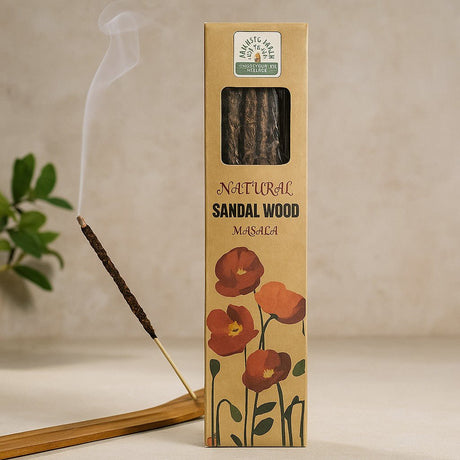
The work is done by hand: the paste is rolled onto a bamboo stick, dried slowly, then aged so the scent can deepen and settle. Long-standing houses such as Shrinivas Sugandhalaya have carried these methods into global markets, a quiet example of old craft reaching new hands without losing itself. Much of our own range of hand-rolled incense is made this way.
The sensory geography: India's aromatic regions
India's climates run from coast to mountain to desert, and each shapes its own aromatic character. The result is a country with very different scents in very different places.
Southern sanctuaries: sandalwood and sacred spaces
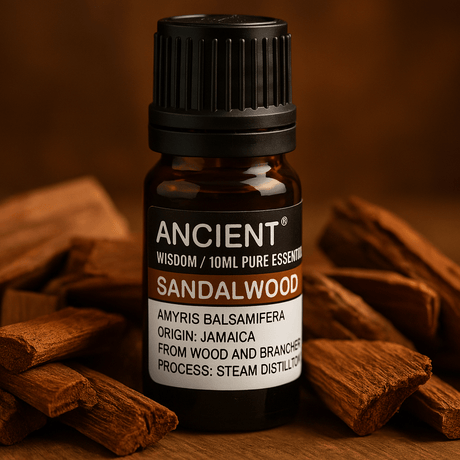
Karnataka's Mysore region produces Santalum album, the most prized sandalwood species of all. Mysore sandalwood is slow to give up its fragrance, the trees are typically left for decades, often thirty years or more, before the heartwood is mature enough to harvest. That patience is part of why the oil carries such depth and staying power.
Genuine Mysore sandalwood oil opens creamy and woody, with a faint honeyed warmth that keeps unfolding over hours. Sandalwood paste, ground fresh on a stone slab for ceremony, brings the same scent into something you can touch.
Northern nuances: rose and ritual
Kannauj, in Uttar Pradesh, holds the title of India's perfume capital, known above all for its attars, fragrances drawn out by traditional hydro-distillation. To make rose attar, master perfumers distil thousands of rose petals into a sandalwood-oil base, a process that rewards exact timing and a long-trained nose.
The city's copper stills, the deg and bhapka, have run for over four hundred years using methods little changed since Mughal times. That continuity is what keeps the attars rich, complex, and true to their traditional character.
Eastern essence: jasmine and joyful ceremonies
Tamil Nadu and Karnataka grow jasmine varieties that fill the evening markets with a heady sweetness. Jasminum sambac is picked before dawn, pickers in Tamil Nadu often start around three in the morning, when the fragrance is at its peak, then strung into garlands or sent on for oil.
The rhythm of stringing jasmine is its own quiet practice for the flower vendors who work through the night. The finished garlands dress hair, altars, and doorways, scenting a whole space with something living.
Essential Indian aromatics: profiles and character
| Aromatic | Primary notes | Traditional uses | Texture and feel |
|---|---|---|---|
| Sandalwood | Woody, creamy, slightly sweet | Meditation, skincare, ceremony | Smooth paste, rich oil |
| Jasmine | Floral, intense, sweet | Perfumes, hair oils, weddings | Delicate petals, soft garlands |
| Nag Champa | Earthy, floral, resinous | Incense, yoga and meditation spaces | Hand-rolled sticks, dense smoke |
| Vetiver | Earthy, grassy, cooling | Cooling oils, summer preparations | Fibrous roots, woven mats |
| Turmeric | Warm, peppery, earthy | Ayurvedic preparations, beauty masks | Fine powder, golden stain |
| Patchouli | Deep, earthy, warm | Textile scenting, attars, Ayurvedic preparations | Rich oil; low-grade product can read harsh |
What makes Nag Champa incense uniquely Indian?
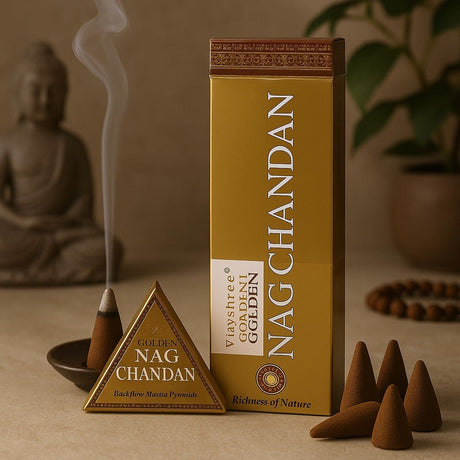
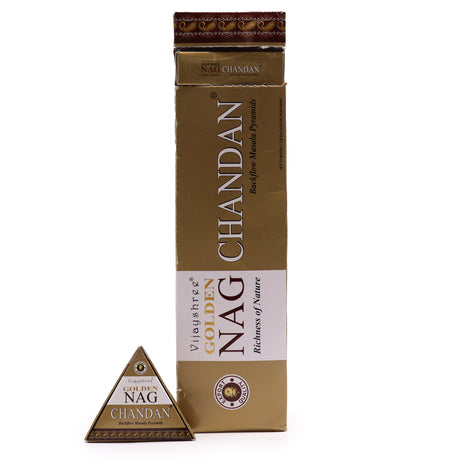
Nag Champa is India's most recognisable incense blend worldwide, champaka flower drawn together with sandalwood, resins, and a house spice mixture. The formula has its roots in temple recipes made to hold a contemplative atmosphere through long meditation.
The Satya Sai Baba Nag Champa blend, rooted in Bangalore manufacturing, is widely regarded as the world's best-selling incense, made by the masala method and prized for its consistency. For many people abroad, it is the first thread into India's wider aromatic traditions.

Ayurvedic aromatherapy: doshas and choosing a scent
In the Ayurvedic framework, people are understood through three constitutions, Vata, Pitta, and Kapha, and the tradition pairs each with certain qualities of scent.
Vata (air and space) is traditionally paired with warm, sweet, grounding scents such as sandalwood, vanilla, and cooling vetiver. Pitta (fire and water) is matched with cooling, sweet, softening fragrances, rose, jasmine, sandalwood. Kapha (earth and water) is paired with brighter, warming, spicier notes like ginger, cinnamon, and eucalyptus.
It is a thoughtful way of choosing with intention rather than a rule to follow. Think of it as a starting framework, the tradition's view, offered to you, with your own nose as the final word.
Can aromatic compounds tell us anything?
There is a genuine, if often misunderstood, curiosity about what gives these scents their character. Sandalwood has been studied for its aromatic compounds, and many people simply find its scent grounding before they sit to meditate. Jasmine, too, has long been valued in Indian tradition for its uplifting, sweet aroma.
We'd rather be honest than overclaim. These are aromatic materials with a long cultural life, not remedies, and not a substitute for rest or care. They work best as part of a wider practice: mindful breathing, a settled space, an unhurried moment.
Textural dimensions: touch and transformation
India's aromatic traditions reach beyond scent into touch, the part of a ritual you feel in your hands.
Sacred pastes and powders
Kumkuma (vermillion powder), vibhuti (sacred ash), and chandan (sandalwood paste) each carry their own texture, traditionally applied to the brow at the ajna point. Grinding sandalwood on wet stone, feeling the paste turn cool, and applying it with care turns a routine gesture into something more deliberate.
Traditional beauty preparations such as ubtan, chickpea flour worked with turmeric, rose water, and oils, bring a grainy, exfoliating texture alongside their scent.
Natural fabric infusions
Indian textiles take on and hold fragrance, layering scent over touch. Silk saris stored with dried jasmine or vetiver roots gather a soft perfume that lifts again with the warmth of the body.
Khus curtains, woven from vetiver root, are dampened through the hottest months to cool and scent a room. The coarse, earthy texture and the green aroma make a kind of multisensory comfort, practical and pleasurable at once.
Contemporary applications: slow living and Indian aromatics
The slow-living spirit that runs through modern mindful culture sits very naturally alongside these traditions, built as they are on presence, ritual, and attention.
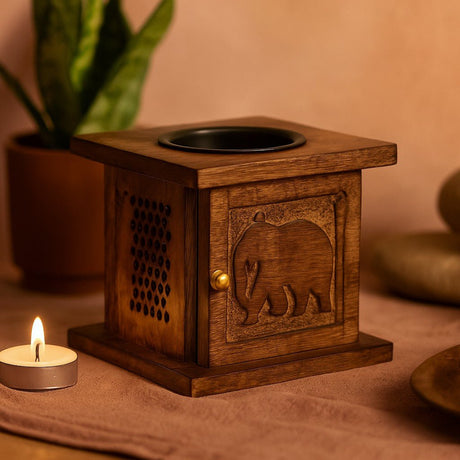
At SHAMTAM, we work with intentional-living objects, and Indian aromatics are close to the heart of that. Our range of hand-rolled incense sits here, alongside Ayurvedic oils, natural resins, and other objects from India, a bridge between an old cultural inheritance and a quieter, more considered way of living now.
Why do Indian aromatics suit mindfulness practice?
The multisensory nature of these aromatics gives the attention something to settle on. Lighting incense becomes a small threshold, a marker between the busy and the still, between the outside world and the inner one.
A sensory anchor of this kind can help a practice hold, particularly when you are starting out. The visible smoke, the scent that shifts as it burns, the small deliberate act of striking a match, each gives the mind a concrete place to rest while the quieter work goes on.
Traditional and commercial production, side by side
| Factor | Traditional Indian methods | Mass commercial production |
|---|---|---|
| Ingredients | Natural resins, essential oils, wood powders, botanicals | Synthetic fragrances, chemical binders, artificial colours |
| Production time | Days to weeks, including drying and ageing | Hours, by industrial machinery |
| Scent complexity | Layered, evolving, subtly varied | One-dimensional, uniform, sometimes sharp |
| Environmental footprint | More sustainable harvesting, biodegradable materials | Petroleum-based ingredients, plastic packaging |
| Cultural connection | Carries generational knowledge, supports artisan communities | Disconnected from its origin traditions |
| Price | Higher, labour and natural materials cost more | Lower, through economies of scale |
| Availability | Limited, artisan-dependent | Widely stocked in commercial retail |
The ritual architecture of scent
India's aromatic traditions live inside ritual frameworks that shape time and space around the senses.
The sandhya hours, the turning points of dawn and dusk, are traditionally favoured for incense and aromatics, bringing human rhythm into step with the day's own. Temple architecture shows a fine understanding of scent: enclosed spaces hold the smoke, while particular ventilation lets it drift and disperse slowly.
The home puja room repeats this in miniature, a small aromatic sanctuary set within ordinary domestic life. Regular incense settles a cumulative fragrance into the room, until the scent itself comes to mean quiet and reflection.
Building a personal aromatic ritual
A meaningful practice asks for consistency and care, not complexity. Begin with a single good incense or essential oil, one that genuinely draws you, and that suits what you want the moment to be.
Tie it to a fixed time: the first minutes of the morning, the threshold before you sit to meditate, the wind-down before sleep. Over time, many people find the scent becomes a quiet cue, a familiar signal that it's time to slow down and settle in. The consistency does the work, not the number of things you own.
In closing
India's aromatic and textural traditions offer far more than a pleasant scent, they open onto mindfulness, cultural connection, and a sharper sense of the present. From sandalwood forests to jasmine-scented evenings, they invite us to slow down, breathe deeply, and meet the moment as it is.
That these methods have survived industrialisation says something about the value of craft, of knowledge passed hand to hand, of making things slowly and well. Choosing an authentic Indian aromatic is a small way of keeping that heritage alive, and of enriching your own days while you do.