Close your eyes for a moment. Think back to the last time you felt truly calm, not distracted, not numb, but actually, quietly at ease. It can take a second to find that memory. Most of us are so used to running on empty that we half-forget what ease even feels like. And yet a small flower with a yellow centre and white petals has been helping people find their way back to it for thousands of years. This is the slow, unhurried story of chamomile, and a gentle invitation to let it back into your days.
A little flower with a yellow centre and white petals has been part of human life for over 5,000 years. Egyptian pharaohs were buried with it. The Romans valued it in their baths and remedies. Your grandmother may well have kept it in her kitchen cupboard. And somehow, in a modern world of meditation apps and a thousand solutions for stress, this humble flower still earns its place.
Let us tell you why.
The apple that isn't an apple
The ancient Greeks had a name for chamomile: khamaimelon. It joins two words, khamai, meaning on the ground, for the way the plant grows low and creeping, and melon, apple, for the sweet, apple-like scent the flowers give off when you crush them between your fingers. A flower named for both its habit and its smell.
That small surprise is rather the point of chamomile. It looks unremarkable, just another daisy-like flower in a field. Get close, though, and it offers something quieter and deeper. Something that asks you to slow down and pay attention.
Researchers have tried to pin down what chamomile does. They have named compounds like apigenin and bisabolol, and measured how the plant settles on skin and nerves. What stays harder to explain is the simpler thing: why a simple cup of chamomile tea can feel like a warm blanket settling over your shoulders.
Perhaps some things are less to be explained than experienced.
Tea that remembers you
Let's start with the most familiar way to meet chamomile: tea.
The traditional method is simple. Dried flowers, hot water, five minutes of steeping, and you are there. Some people like to blend chamomile with other calming herbs, lavender for softness, a little lemon for brightness, yarrow or a woody herb like lapacho for quiet depth. (St John's wort is sometimes mentioned in this company, but we'd leave it out of a casual evening blend: it interacts with a long list of common medicines, from contraceptives to anticoagulants and antidepressants. Lovely herb, wrong cup.)

Pour hot water over chamomile and watch the steam rise, and something shifts. The scent reaches you first, floral but not perfumed, sweet but not sugary. Just welcoming, like walking into a home where someone has been waiting for you.
The first sip is smooth. It doesn't demand anything of you. It slides in gently and leaves a warm finish that makes you want another. And another. Before long, ten minutes have passed, the cup is still warm in your hands, your shoulders have dropped, and you are breathing more deeply without having tried to.
That is chamomile doing what it does best: not forcing you to relax, but inviting you to remember how.
If you'd rather be the maker of your own tea ritual, whole dried chamomile flowers give you that freedom. Not crushed tea dust, but whole flowers, each golden centre, each pale petal, each thin stem visible. They are so light they almost float in the hand, and they smell like a meadow in summer.
With whole flowers, you can experiment. A few in the morning cup. Some in the bath at night. A handful in a cloth bag under the pillow. Mixed with rose petals for when the heart feels heavy, or with mint after a large meal. You become the maker of your own comfort, which feels quietly powerful in a world that usually decides for us.

The oil that whispers
If tea is chamomile in conversation with you, essential oil is chamomile lowering its voice to a whisper.
Chamomile essential oil is the flower's whole character distilled to its essence. Blended with grounding scents, clean, herbal sage and earthy vetiver, it unfolds in layers. First the sweet, apple-ish top note. Then something herbal that seems to clear the air. Finally a deep, woody base that settles everything, as though you had quietly grown roots into the floor.
There are a few easy ways to use a chamomile oil blend. Add a few drops to a diffuser and let your whole room start smelling like peace. Drop one or two onto a ceramic stone by the bed. Or, blended well into a carrier oil, add it to a bath or dab a little on your wrists like a scent.
One firm rule: never put essential oil straight onto skin. It is highly concentrated, and undiluted it can irritate. Dilute it in a carrier oil or milk first, and it becomes gentle.
What's lovely about using chamomile this way is that, over time, you start to associate the scent with calm. The mind learns patterns. After a few weeks of meeting chamomile in your quiet moments, the nervous system begins to soften the instant the scent arrives. You have, in effect, set yourself a small cue for rest.


Water that knows how to be gentle
Some days you don't need the concentrated form. Some days you want something light and cooling, like a breeze on a warm afternoon.
That is where chamomile hydrosol comes in, chamomile-scented water that carries the flower's spirit without any intensity. It is the floral water left behind when chamomile essential oil is made, and it usually comes in a spray bottle.
Keep it in the fridge so it stays cool. Then, on the days when you feel stretched or warm or your face feels tight, close your eyes and mist it over your face and neck. The cool of it. The faint apple-honey scent. The way it sits on the skin a moment before sinking in. A gentle restart.
Use it as a toner after washing, a light mist over your sheets before bed, a spritz in the air before meditation, or a small reset on the desk at three in the afternoon when everything feels like a little too much. A small thing, but small things, done regularly, change how you feel in your own skin.

When your whole body needs in
Sometimes you want chamomile not on your face or in your cup, but all around you.
That is what chamomile bath products are for.
Picture one of those days. The kind where everything that could be difficult was. You are tired in your bones, your mind won't quieten, your body feels like it has been clenching muscles you didn't know you had.
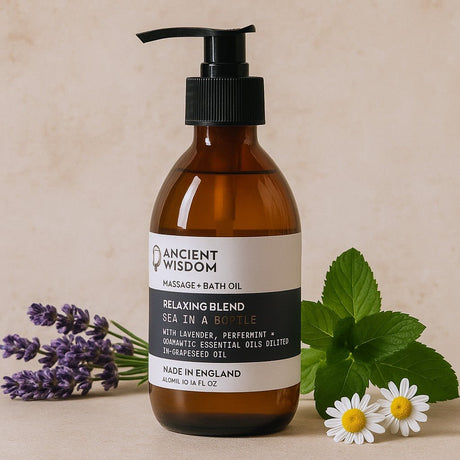
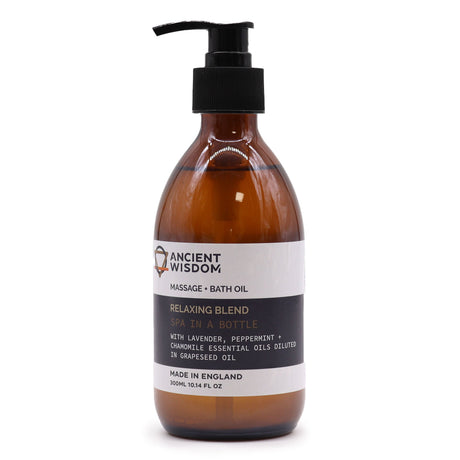
So you run a bath, as warm as you like it, and add chamomile, perhaps as an essential oil bath bomb that fizzes and dissolves, or as chamomile oil blended into milk or a carrier so it disperses in the water. The scent rises in the steam: chamomile's honeyed sweetness, lifted by something bright like grapefruit.
You get in. The water feels silky. The scent wraps around you. And slowly, so slowly you almost miss it, the body begins to let go. The jaw unclenches. The shoulders drop. The breath deepens. The racing thoughts ease, like a song winding down to its close.
You are not doing anything. You are simply being, in warm water that smells good and feels soft. And somehow that is enough. Stay in until your fingers wrinkle. Stay in until the water cools. Stay in until you remember that you are more than your stress.

Hair that gets a gentle friend
Then there is your hair, which puts up with so much, heat styling, pollution, products full of ingredients you can't pronounce, and the everyday stress that even reaches the scalp.
Chamomile has been used in hair care for centuries. It has long been valued for bringing out natural warmth in lighter hair and for being gentle on sensitive scalps.
If you'd like a chamomile-friendly option, solid shampoo bars are worth trying. They are concentrated, so a single bar lasts as long as several bottles. They travel well, no liquid limits, no spills. Look for bars with nourishing oils and SLS-free formulas, the sort that lather into a soft, creamy foam without stripping the hair dry.
Chamomile won't dramatically change your hair colour, but over time it may coax out a little natural warmth. And even if it doesn't, it tends to leave hair soft and the scalp calm. Sometimes the best things really are the simplest.
What chamomile actually does (the honest part)
Let's be honest for a moment.
Chamomile isn't magic. It won't fix your life or solve all your problems or transform you overnight, and anyone who promises that is selling you something. But here is what it can do.
For sleep. Chamomile carries a compound called apigenin that is traditionally associated with gently nudging the mind towards rest, not like a sleeping tablet that switches you off, more like a friend saying it's all right to stop now. A cup an hour before bed, a little oil diffusing in the room, or a warm bath can all help create conditions where sleep becomes easier.
For anxious moments. Chamomile won't cure an anxiety disorder, and we'd never claim it could. But it can take the edge off, the difference between feeling unable to cope and feeling that you can. Keep a hydrosol nearby and mist it when you need a sensory reset. Sip tea slowly when the mind is racing. Let the scent be an anchor back to the present.
For skin. Chamomile has long been valued for soothing skin that feels red, tight or easily upset. A hydrosol makes a gentle mist for sensitive skin; a chamomile bath soaks the whole body; a gentle shampoo can ease a touchy scalp.
For digestion. Chamomile is traditionally taken to help the body settle after a heavy meal or when stress has unsettled the stomach. It isn't a remedy for serious digestive trouble, but it can ease everyday discomfort.
For simply feeling better. This one is hardest to measure and perhaps matters most. A regular chamomile ritual makes you feel more cared for. It builds small pockets of calm into busy days and reminds you that you deserve gentleness. That quiet shift matters more than any single compound in any flower.


Building your own chamomile life
The best thing about chamomile is that it asks nothing of you. No routine to perfect. No lifestyle to reinvent. You simply begin, wherever you are.
Maybe it is a quiet cup in the evening, made slowly and held with both hands. Maybe a cool mist in the morning, a brief pause before the day starts. Maybe a warm bath once a week, a candle lit, the world left outside the door. Maybe a familiar scent that gently tells the body it is safe to soften.
The point isn't to do everything. It is to choose one small moment and let it become an anchor, a ritual that belongs to you, and a moment of warmth that quietly says: I matter enough to pause. And if that is all it ever is, that is more than enough.
The things worth knowing
Chamomile is generally very gentle, but no plant suits everyone.
If you react to ragweed, daisies or related plants, test chamomile carefully and start with a little. Some people find it makes them itchy or sneezy, if that is you, chamomile may not be your flower, and that's perfectly all right.
If you take blood thinners or sedatives, have a word with your doctor before drinking chamomile tea regularly. It is gentle, but it does have real effects, and those can interact with medicines.
If you are pregnant or nursing, chamomile tea in normal amounts is usually fine, but skip the essential oils unless your doctor says otherwise. Concentrated plant extracts call for extra care.
With essential oils, always dilute. If you are adding chamomile oil to a bath or to skin, mix it into a carrier oil or milk first. Undiluted, essential oils can irritate.
With hydrosol, close your eyes as you spray. It is gentle, but not meant for the eyes.
And if something doesn't feel right, if your skin reacts or you feel off after chamomile, simply stop and listen to your body. None of this is medical advice; it is gentle guidance, and there are plenty of other plants in the world.
Why this matters
Here is the thing few people say about wellbeing: it isn't about finding the perfect product, the perfect routine, the perfect anything. It is about finding small ways to be gentler with yourself, in a world that keeps asking you to be harder, faster, more productive.
Chamomile asks you to be nothing other than what you are. It doesn't judge you for being tired or stressed or anxious. It offers what it has, a soft scent, a calming sip, a moment of warmth, and trusts that, often, that is enough.
And often, it is. Not because chamomile fixes everything, but because the act of choosing comfort, of taking five minutes, of saying I deserve something gentle, quietly matters in a culture that tells us to push through and keep going no matter what.
Every time you make yourself a cup, you say: this pause is worth it. Every time you mist your face, you say: this small freshness is worth it. Every time you run a chamomile bath, you say: this hour of doing nothing but feeling good is worth it. Those small choices add up. They remind you that you are not a productivity machine, but a person who deserves comfort, beauty, and moments that feel like home.
Your next five minutes
You don't need to map out your whole chamomile journey today. You just need one small step.
Maybe that step is finding some chamomile tea and actually drinking it tonight, rather than just thinking about it. Maybe it is finally trying the bath you have been curious about. Maybe it is keeping a hydrosol on your desk and actually using it. Maybe it is letting yourself feel, just for a moment, that you deserve small things that feel good.
Because you do.
Chamomile has been here for thousands of years. It will still be here tomorrow if today isn't the day. But when you are ready, when you decide you want a little more gentleness in your life, it will be waiting. As it always has been.
From the quiet corner where tea steams and shoulders drop,
may you find your own small moment of ease.