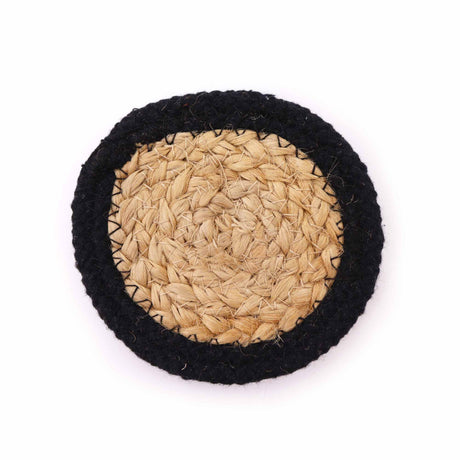
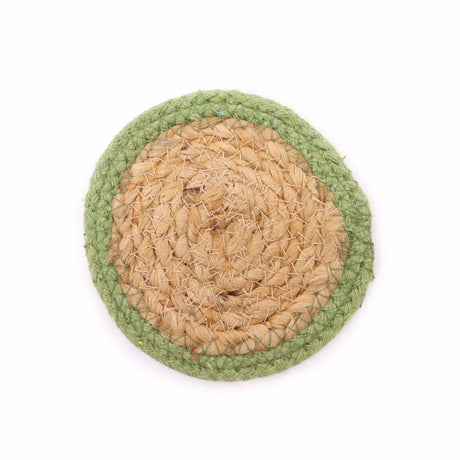
Natural coasters bring together the honest texture of plant fibres and the quiet geometry of handcrafted tile — a small thing, but the kind that makes a kitchen feel considered. This collection gathers woven seagrass and jute coasters alongside Mediterranean mosaic tile sets, each designed to protect your surfaces and soften the look of a room at the same time.
What's inside the collection
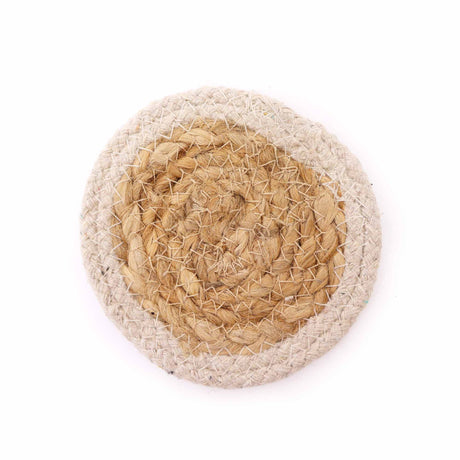
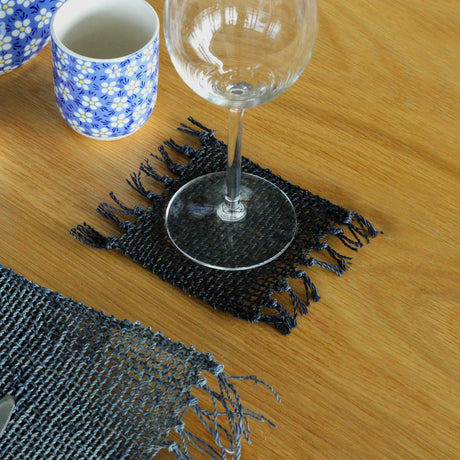
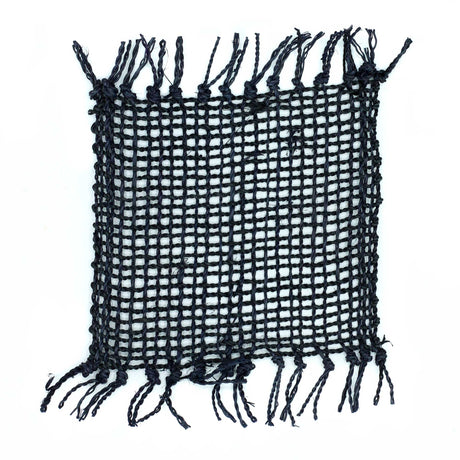
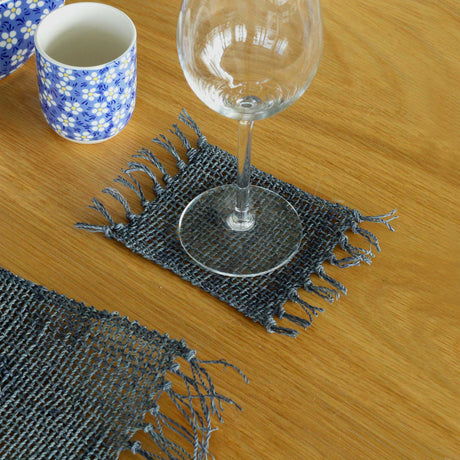
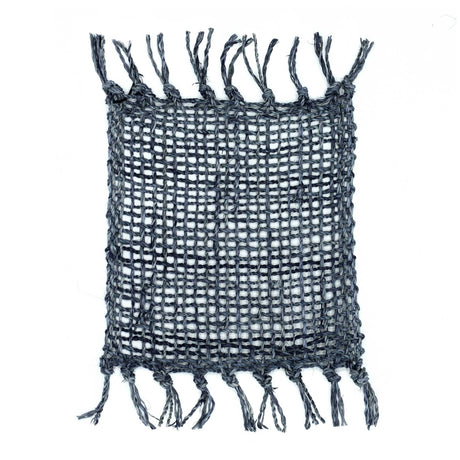
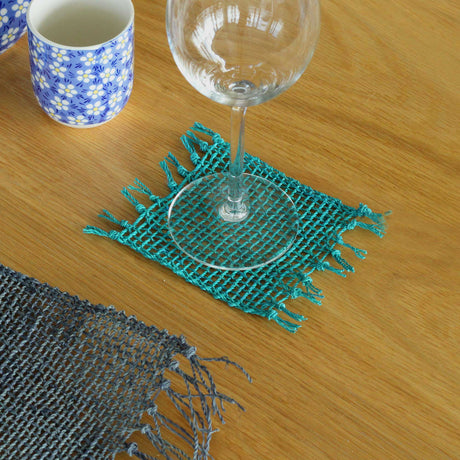
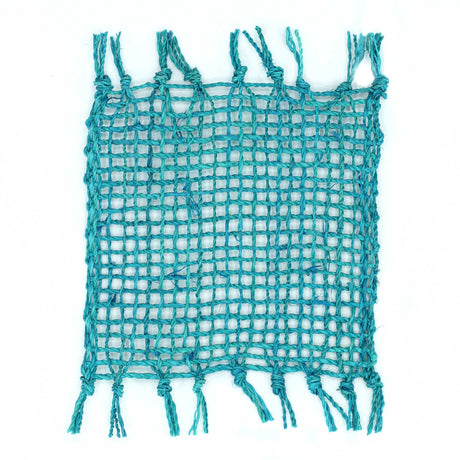
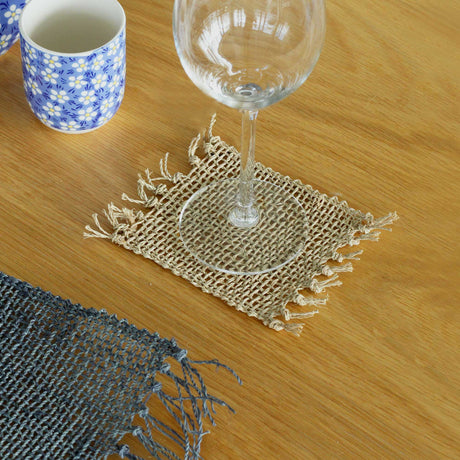
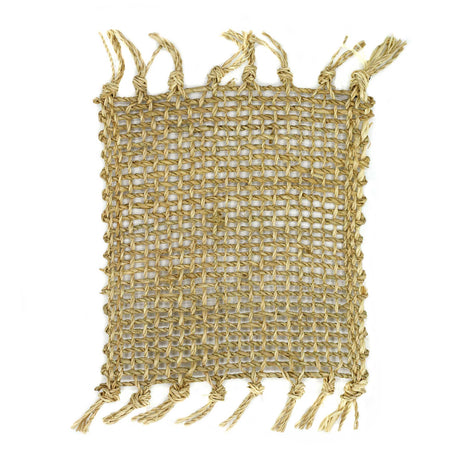
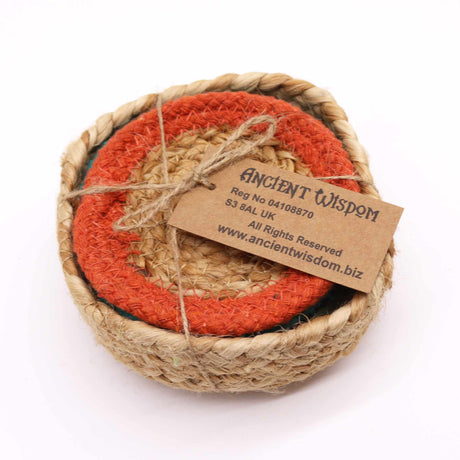
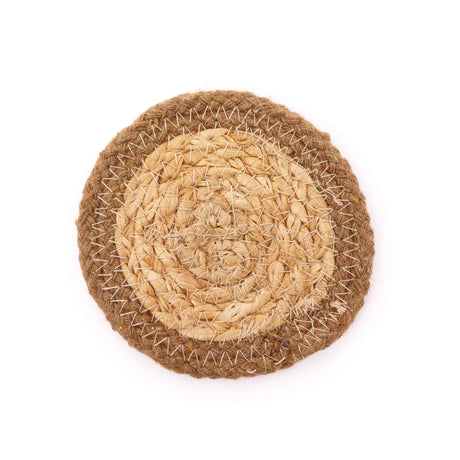
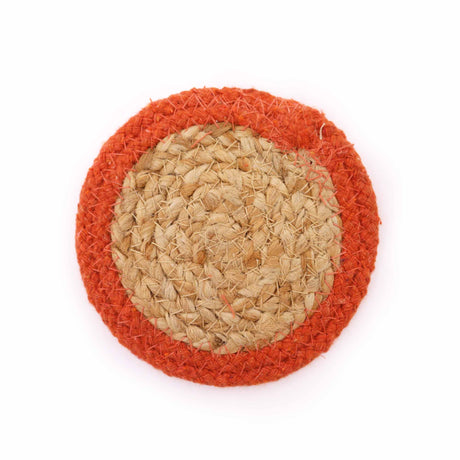
The range spans two main textures. Seagrass coasters are tightly woven and finished with a short fringe trim — they have a warm, slightly rough feel that reads well against wooden dining tables and reclaimed surfaces. Jute coasters tend toward a softer, more flexible drape and come in a variety of border colours — clay, ivory, teal, olive, black — so they slot into most colour schemes without effort. Also in the mix are mosaic tile coasters, each made from small fragments of coloured glass set in a grout base, giving a bolder, more decorative feel than the woven options.
How to choose the right natural coaster
Think first about what you're setting down most often. If it's hot mugs and cups, a woven seagrass or jute coaster will absorb and breathe naturally. If you want something more decorative — for a sideboard or a mantelpiece — a mosaic tile coaster works well as a display piece between uses. Most sets in the collection are coaster sets of 4, though jute options are available in sets of 6 for larger tables. Sizes hover around 10 cm, which suits standard mugs and glasses without overwhelming a place setting.
Ways to use and style them
Natural coasters work across the home, not just at the dining table. Keep a set on a bedside table for evening drinks, or use them on a bathroom windowsill alongside a small plant. Woven seagrass and jute pieces age well — a little moisture won't harm them, and they'll soften slightly with use. Mosaic tile coasters are equally at home as part of a natural placemat layering scheme on a dining table, or paired with a himalayan salt block as part of a serveware moment. For the kitchen itself, consider grouping them alongside teak chopping boards and kitchen essentials for a cohesive, natural aesthetic.
Frequently asked questions
What are seagrass and jute coasters made from?
Seagrass coasters are woven from seagrass fibre — a natural, fast-growing material with a slightly waxy surface that resists moisture. Jute coasters use a cotton-jute blend, giving them a softer hand feel while retaining the durability of jute. Both are handmade home accessories, so minor variations in weave and colour are normal and part of their character.
Do the coaster sets include a holder or tray?
The seagrass and jute coasters typically arrive as individual woven pieces within the set — no tray or holder is included. The mosaic tile coasters are individual tiles sold as a set. A decorative tray can be a nice addition if you'd like to contain the set when it's not in use.
How do I clean natural fibre coasters?
Wipe seagrass and jute coasters with a barely damp cloth — avoid soaking them, as prolonged moisture can weaken the fibres and cause discolouration. Allow them to air dry flat. For the mosaic tile coasters, a gentle wipe with a damp cloth is usually sufficient. Do not machine wash any of these pieces.
Are these coasters heat resistant?
Seagrass and jute coasters offer moderate heat resistance — they'll protect a surface from a warm mug, but you should avoid placing very hot pans or dishes directly on them. Mosaic tile coasters handle heat a little better, though it's still advisable to use a cloth or trivet for anything straight from a high heat source.
Can I use these coasters outdoors?
They can be used outdoors occasionally, but natural fibre coasters are best kept for indoor use. Prolonged exposure to sun, rain, and temperature fluctuations will accelerate wear. Mosaic tile coasters are more tolerant of outdoor conditions but are still best suited to covered outdoor spaces.