The rangers who patrol North Etiwanda Preserve, in the foothills above San Bernardino County, keep a rough tally of what disappears from the hillsides each season. By 2022 their estimate ran past 20,000lb of white sage taken from that single reserve in five years: cut in the dark, in truckloads, from a plant that grows wild nowhere else on Earth. This is not the story most pages tell about sage and Palo Santo. It is the one worth telling.
A shrub with nowhere else to grow
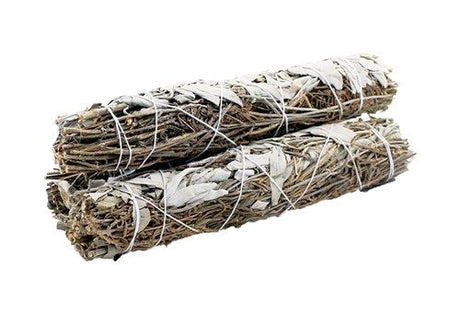
Salvia apiana, white sage, is native to a narrow strip of coastal sage scrub running through Southern California and into northern Baja California. That range is its whole world. A smudge stick is cut from the living stem of a growing shrub, not gathered from the ground, so every wild harvest draws the population down directly rather than borrowing from what has already fallen. The California Native Plant Society estimates that roughly half of the plant's original habitat is already gone to development, which leaves less ground for the wild population to recover into even where poaching stops. Much of today's illegal harvest has little to do with the traditional gathering still practised by Southern Californian and northern Baja communities, including the Kumeyaay, and everything to do with sacks of it sold on for profit. Advocates such as Rose Ramirez and Deborah Small, through the campaign Saging the World, have spent years trying to make that distinction visible to buyers who assume any bundle on a shelf is harmless.
The wood that shares its shelf
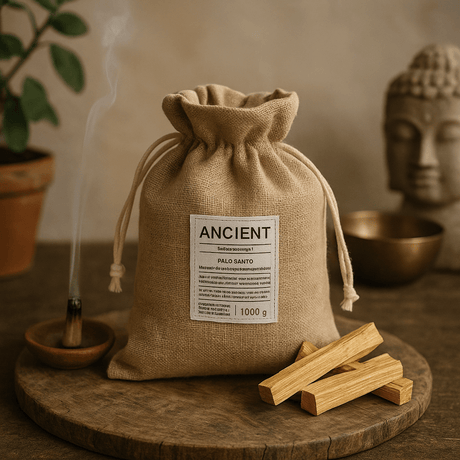
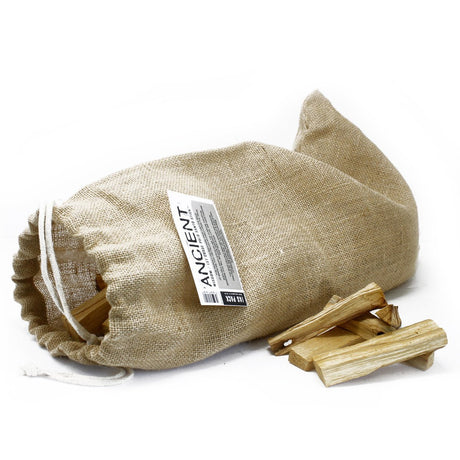
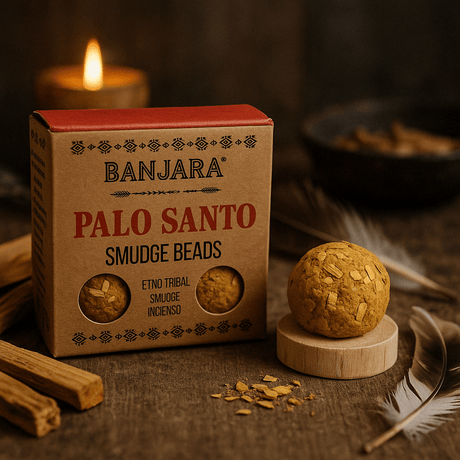
Palo Santo ends up beside white sage in most shops for reasons that have nothing to do with where either plant actually comes from. Bursera graveolens is a wild tree of the tropical dry forests along coastal Ecuador and northern Peru, a very different landscape from a Californian ridge, and it is never cut alive for the incense trade. What is sold as Palo Santo is deadfall: branches and trunks that have already died and dropped, then left on the forest floor to season. Suppliers vary on exactly how long that seasoning takes, some citing a minimum of three years and others as many as seven or nine, but all describe years, not weeks, before the wood is fit to burn. Peru's forestry authority, SERFOR, certifies this harvest under the country's Forest and Wildlife Law, tracking wood back to permitted, naturally fallen material rather than living stock. The same certified deadfall, aged and permit-tracked, is what turns up here as a Palo Santo Sticks 1 kg Sack, several forests and one law away from the hillside above San Bernardino.
The region around Zapotillo, in Ecuador's Loja province, is where that permit system has visible weight behind it. In 2014, UNESCO declared roughly 1.25 million acres of dry forest there a Biosphere Reserve, and that same year the Bolívar Tello Community Association, formed by local growers to manage the area's Palo Santo, won the United Nations Development Programme's Equator Prize for turning conservation into a livelihood rather than a restriction. It is a genuinely working model: a forest managed by the people who live in it, rewarded for the trees they leave standing.
The confusion worth clearing up
Bursera graveolens itself is not currently listed as internationally endangered. The confusion many buyers carry usually traces to a different tree entirely, Bulnesia sarmientoi, which is also called "palo santo" in parts of Argentina and Paraguay and is genuinely at risk from overharvest there. Ecuador has discussed proposing an international trade listing for its own Bursera graveolens, and Peru has separately flagged the species as critically endangered under national assessment criteria, though neither move currently restricts the certified export trade. The tree is not in the clear by accident; it is in the clear because deadwood, by definition, leaves the living population untouched, which is precisely the distinction that sage cannot claim.
What the difference asks of the person burning it
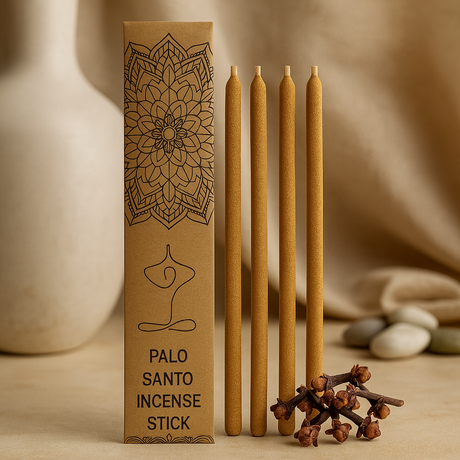
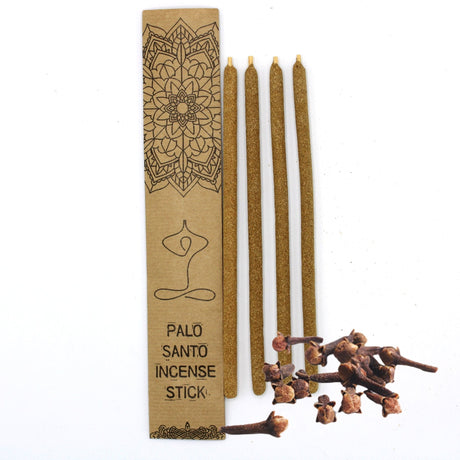
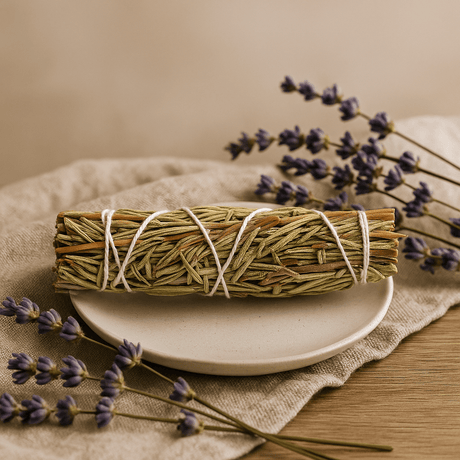
I keep a japa practice most mornings and light incense as part of it most days, so this is not an abstract question for me: which stick I reach for has a forest attached to it either way. Palo Santo's resin-dense wood tends to catch, glow and go out again, which is why many people burn it over charcoal tablets rather than expecting it to hold a flame on its own; a bundle of dried leaves such as a White Sage Smudge Stick With Lavender smoulders differently, needing space to breathe rather than relighting. Knowing that much changes nothing about what either plant is said to do for a room or a state of mind, which the tradition around each has always described in its own terms. What it changes is quieter than that: it means the stick in your hand is either a piece of wood that waited years on a forest floor before anyone was permitted to collect it, or a handful of leaves taken from the only hillside on the planet where that particular shrub still grows wild.
Two different kinds of patience
A piece of Palo Santo asks for years of patience before it ever reaches a shop, most of it spent lying on a forest floor in Ecuador or Peru under a system built to reward exactly that waiting. A stem of white sage asks for a different kind of patience, one that has nothing to do with ageing and everything to do with restraint: leaving the plant standing on the hillside where it grows, rather than cutting it because it is there. Striking a match to either is a small act. Knowing which kind of patience it drew on, before it reached your hand, is not nothing.