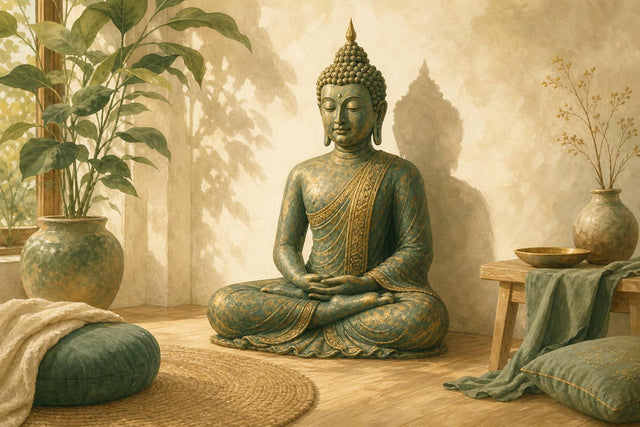
Buddha
A Buddha figure portrays Siddhartha Gautama, the teacher who lived in northern India around the fifth century BCE and whose teaching became Buddhism. Each pose and hand gesture recalls a moment of his life: meditation, teaching, the night of his awakening. For Buddhists the figure is an object of respect and a reminder of the path he showed.
- Tradition
- Buddhism, from northern India
- First figures
- around the 1st century CE
- Traditional place
- raised and clean, never on the floor

In the library
Aromas

Shop Buddha
- Laughing Buddha Budai Hands Up, Whitewash 40cm 40 cm · Suar Wood £124.95Members: +£8.10 backLow stock
- Standing Buddha Statue, 3m Tall Antique Gold Indoor 300 cm · Fibre cement £1,600.00Members: +£94.40 backLow stock
- Buddha Statue in Vitarka Mudra in Stupa 1.5m Stone Bronze Finish 150 cm · Fibre cement £830.00Members: +£48.85 backLow stock


 China


 India

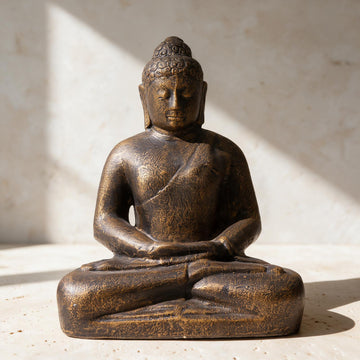
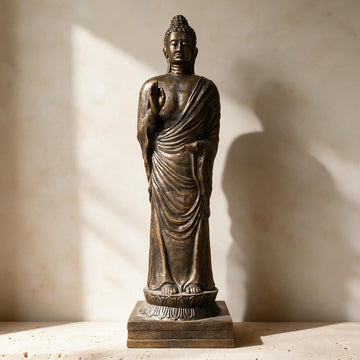
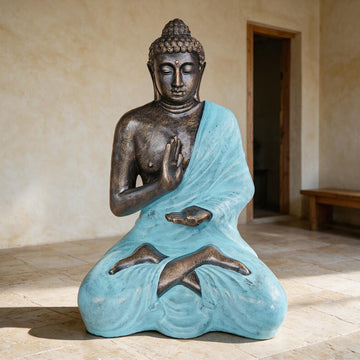
A small practice
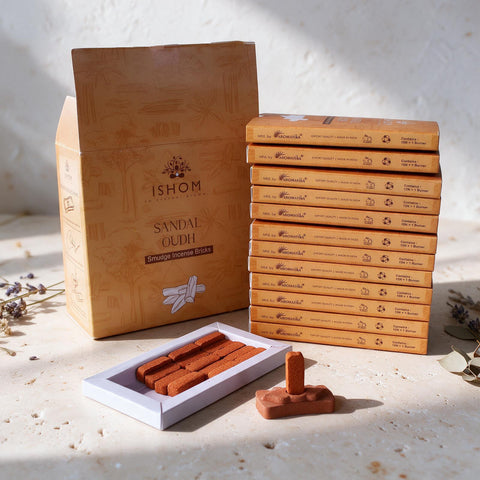
- Light a candle or a stick of incense in front of the figure.
- Sit for three minutes and follow your breath, as the seated Buddha does.
- Before you stand, name one thing you will meet with more patience today.
In the library


Frequently asked questions
Is it disrespectful to have a Buddha statue if I am not Buddhist?
Most Buddhist teachers welcome it when the figure is kept with respect: raised, clean, and away from the floor and the bathroom. Avoid using it as a doorstop, a lamp base or a garden joke.
Which way should a Buddha statue face?
Custom varies from country to country. A common choice is facing into the room or towards the main door, at or above eye level when you sit. A clean, calm place matters more than the direction.
What does a reclining Buddha mean?
It shows the Buddha at the end of his life, lying on his right side as he passed into final nirvana. In Buddhist art it is a peaceful image of completion, not a sad one.
Is the laughing Buddha the same as the Buddha?
No. The laughing figure is Budai, a Chinese monk of folklore later linked with Maitreya, the Buddha to come. Siddhartha Gautama is usually shown slender and calm.
Sources: Britannica, Mudra; Wikipedia, Buddha in art