


 £11.25 off
Natural Riverstone Decorative Pestle & Mortar- Large (approx 15x12cm)
In stockSale price £3195 Regular price £4320Unit price


 £7.61 off
Natural Riverstone Decorative Pestle & Mortar -Medium (approx 12x8cm)
In stockSale price £2299 Regular price £3060Unit price


 £2.05 off
Natural Riverstone Decorative Pestle & Mortar- Small
In stockSale price £1595 Regular price £1800Unit price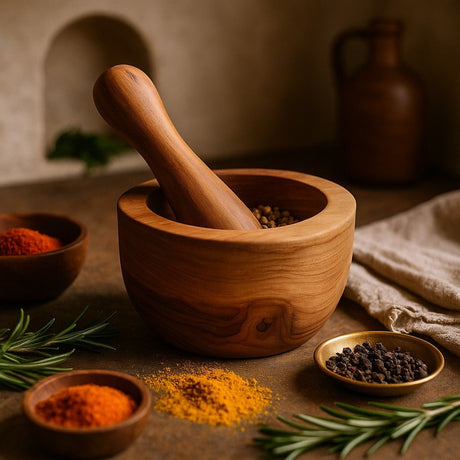


 £10.40 off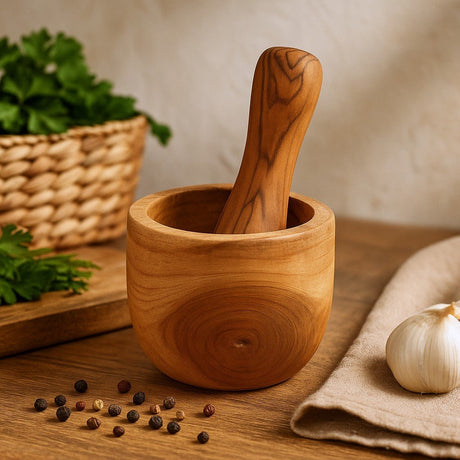


 £8.04 off
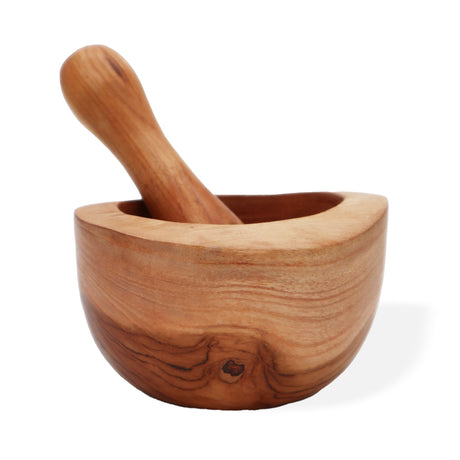
Mortar and Pestle Teak Wood Small 2-Piece Set
In stockSale price £2595 Regular price £3399Unit price


 £9.22 off
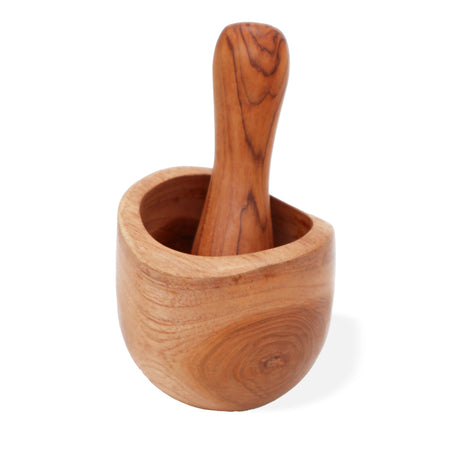
Mortar and Pestle Teak Wood Medium 2-Piece Set
In stockSale price £2795 Regular price £3717Unit price


Few kitchen tools carry quite the same quiet authority as a mortar and pestle. Long before processors and blenders, these handcrafted grinding tools were the original kitchen mortar — passed through generations as both practical implement and quiet ritual object. In this collection you'll find stone mortar and pestle pieces alongside teak wood sets, each chosen for its material honesty and everyday usefulness.
What's inside the collection
This collection holds two distinct materials, each with its own character. Natural riverstone mortars and pestles are substantial, grounding pieces — each one shaped by hand, with a surface that grows more tactile with use. Their weight makes them ideal for crushing spices, seeds and dried herbs with control and precision. Teak wood mortar and pestle sets bring warmth and a softer tone to the work; the wood absorbs resonance differently, making it particularly suited to pastes, nut butters and wetter preparations. Both options are handmade mortar and pestle pieces, crafted to last rather than to be replaced.
How to choose: size and material
Size is the first practical consideration. Small and medium mortars work well for spices and smaller quantities — enough for a weekday evening or a single serving. A large stone mortar and pestle handles bigger batches, whole spices and more demanding work without shifting on the worktop. If your practice leans toward pastes, chutneys or the grinding of nuts, a teak wood set offers a slightly forgiving surface and a depth that contains splashes more readily. Think about what you'll actually make most often, and let that guide the size.
Ways to use and style it
A mortar and pestle is equally at home on a kitchen worktop or displayed as a considered piece of décor. In the kitchen, it brings a slowness that processors and blenders don't — the kind of uneven, hand-worked crush that releases oils and builds flavour in ways mechanical grinding cannot replicate. Beyond the practical, a natural stone pestle or teak wood set on open shelving adds a quiet material richness to a room. It's a tool that earns its place by being used daily.
To complete the kitchen picture, consider pairing your mortar and pestle with a teak chopping board for prep work, or natural placemats to protect the surface beneath. Himalayan salt blocks can sit alongside as a complementary material in a kitchen that values natural, honest objects. For smaller quantities, natural coasters keep surfaces protected without competing for attention.
Frequently asked questions
What can I use a mortar and pestle for?
A mortar and pestle is suited to grinding spices, crushing garlic, making pastes, pestos and chutneys, and breaking down dried herbs and seeds. Stone mortars handle harder, drier materials well; teak wood sets are better for wetter pastes and softer ingredients. Both are everyday kitchen tools rather than specialist equipment.
How do I care for a stone mortar and pestle?
Natural stone mortars should be seasoned before first use — typically with a little rice or salt ground to absorb any stone dust. After that, a rinse with warm water and a gentle scrub is sufficient. Avoid dish soap in the early uses, as the stone can absorb it. Teak wood sets benefit from an occasional wipe with a damp cloth and should be allowed to dry fully between uses. Neither should be left soaking in water.
What's the difference between stone and teak wood mortars?
Stone mortars are heavier, harder and better suited to dry grinding — spices, seeds, dried herbs. They have a rough interior surface that grips and crushes rather than slices. Teak wood mortars are lighter, warmer in tone, and better for wet pastes and softer ingredients. The wood has a slightly oily quality that helps resist moisture. Both are handmade and will develop patina with use.
Do the mortars need seasoning before first use?
Stone mortars particularly benefit from an initial seasoning — a simple process of grinding rice or salt to remove any stone dust and smooth the surface. Teak wood sets generally arrive ready to use, though a light rinse and dry is sensible. Once seasoned, both require minimal maintenance beyond sensible day-to-day care.
What size should I choose?
A small mortar works for spices and single servings. A medium mortar handles most everyday tasks — a handful of spices, a small paste. A large stone mortar and pestle is suited to bigger batches, whole spices and heavier work. If in doubt, size up — a larger mortar can accommodate small quantities, but a small mortar cannot comfortably handle more than it was designed for.