
Hamsa Whitewash Long Tray – 30x20.5x2.5 cm
 Ships from the UK
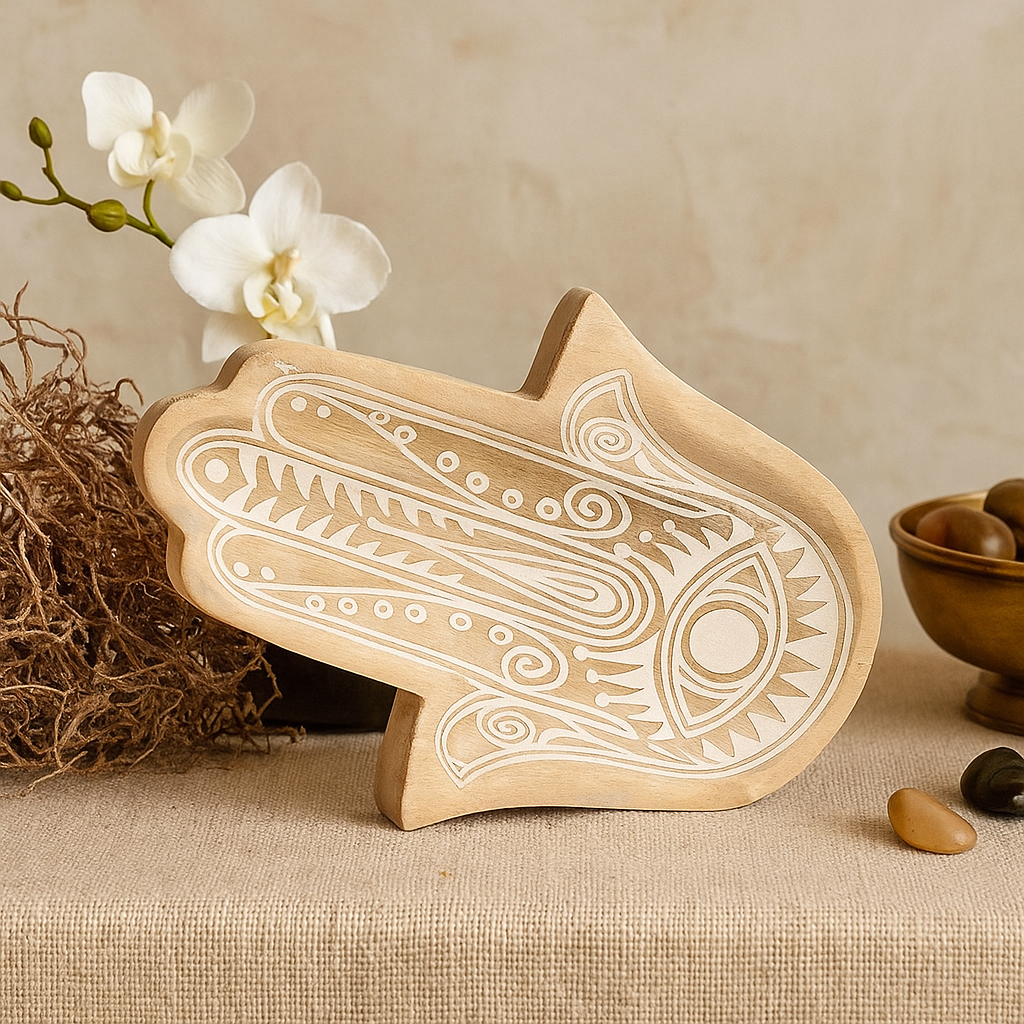
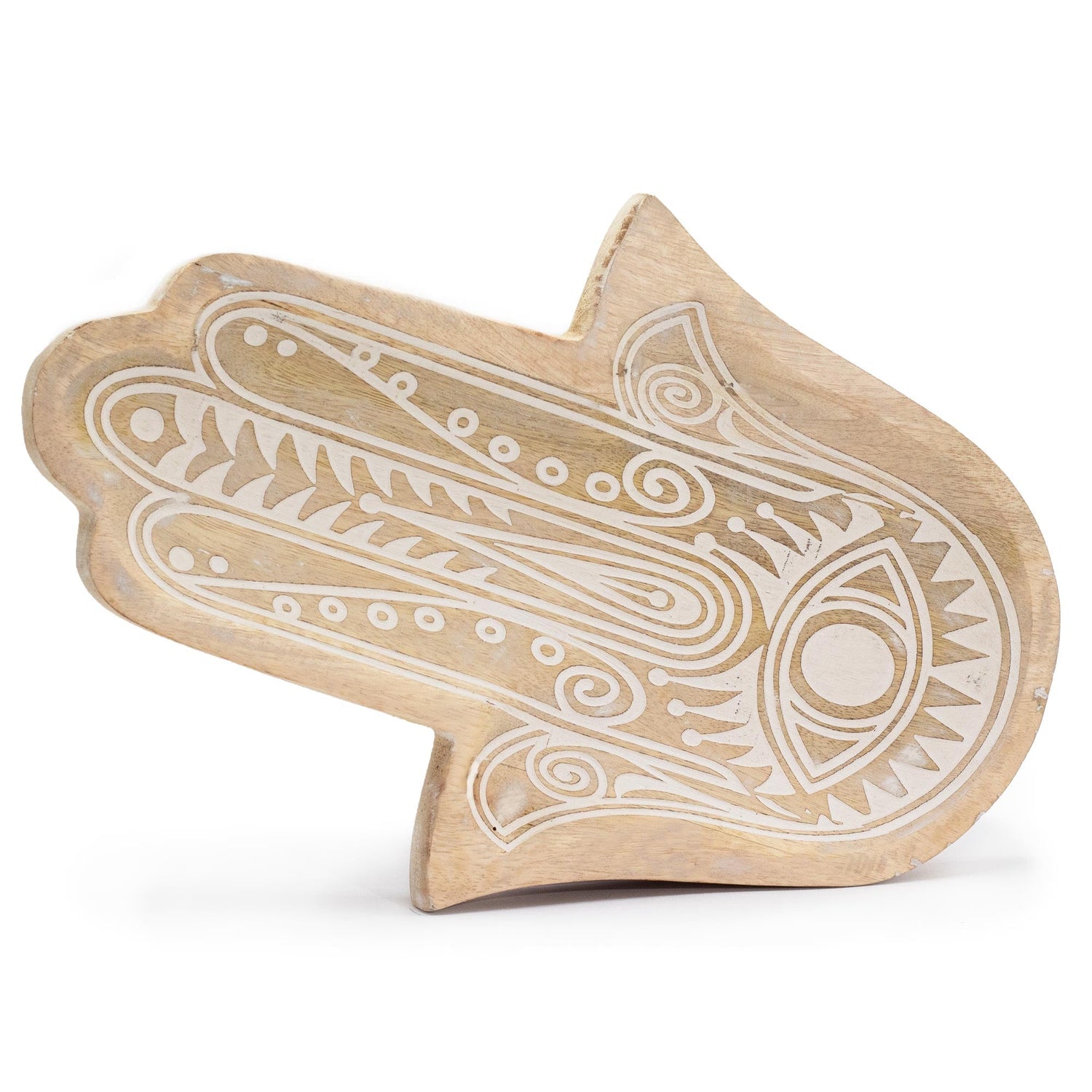
A shallow mango wood tray with a whitewashed finish, 30 cm long and just over 20 cm wide, roughly the footprint of an A4 sheet of paper. At its centre, a Hamsa hand is carved into the surface, the pale wash settling into the relief so the symbol reads quietly against the grain rather than shouting for attention.
Hamsa Whitewash Long Tray – 30x20.5x2.5 cm is backordered and will ship as soon as it is back in stock.
Email me when it's back in stock
One email when this piece returns — no marketing, unsubscribe anytime.
A shallow mango wood tray with a whitewashed finish, 30 cm long and just over 20 cm wide, roughly the footprint of an A4 sheet of paper. At its centre, a Hamsa hand is carved into the surface, the pale wash settling into the relief so the symbol reads quietly against the grain rather than shouting for attention.

Hamsa Whitewash Long Tray – 30x20.5x2.5 cm

Hamsa Whitewash Long Tray – 30x20.5x2.5 cm is backordered and will ship as soon as it is back in stock.
About this product
Form and what it holds
- The low 2.5 cm lip keeps objects gathered without obscuring them, keys, a candle, a few stones, a watch.
- The whitewash is chalky and matte, so the wood's natural grain ghosts through underneath, giving each tray its own quiet pattern.
- At 474 g, it has enough weight to sit without shifting, but lifts easily with one hand.
- The open form means nothing is hidden, whatever you place here becomes part of the arrangement.
- The carved Hamsa sits flush with the base, so it doesn't interrupt the tray's function but remains visible beneath whatever rests there.
Mango wood and whitewash
Mango wood is a dense, close-grained hardwood, often sourced from orchard trees that have passed their fruiting years, a practical second life for timber that would otherwise go to waste. The whitewash finish is applied over the raw wood, allowing the grain to show through as a faint shadow beneath the pale surface. It gives the tray a Mediterranean or Scandinavian quality: simple, light, and slightly chalky to the touch.
The carving is machine-routed, with the whitewash pooling in the recessed lines to define the Hamsa's outline. The base is bare wood.
The Hamsa
The Hamsa is one of the oldest protective symbols in the Mediterranean and Middle Eastern world, appearing across Jewish, Islamic, and North African traditions for centuries before any single faith claimed it. Its name comes from the Arabic for 'five', referring to the five fingers of the open hand. In Jewish tradition it is sometimes called the Hand of Miriam; in Islamic tradition, the Hand of Fatima. Across all these lineages, the open hand has been associated with warding off harm and with blessing, a symbol that has travelled widely precisely because it belongs to no single culture exclusively. Here it functions as a decorative motif with genuine cultural depth, not a religious object.
Living with it
The tray works on a hallway console as a key-and-coin drop, on a bedside table to hold a few small objects, or on a coffee table as a centrepiece for candles and stones. The whitewash finish is porous, so keep it away from damp surfaces and wipe it with a dry cloth rather than a wet one. It is not suitable as a coaster or for holding wet items directly. Dust settles visibly on the pale surface, so a light wipe every few days keeps it looking clean.
Size and details
30 cm long, 20.5 cm wide, 2.5 cm deep, close to A4 in footprint. Weight: 474 g. Made from mango wood with a whitewash finish, origin India. The base is unfinished wood.
A considered gift
It suits anyone who likes to keep a surface intentional, a thoughtful housewarming gift, or something for a person who collects small meaningful objects and wants a quiet place to rest them.
Material
Mango Wood
Object No.
Common questions
Can I use it in a bathroom?
Is the base felt-lined or bare wood?
Complete your ritual
A few things often kept alongside this piece.