There is a particular kind of quiet that settles over a home when a scent you love is in the air. You come in from a long day, and before you have even put your bag down, something in you softens. That small shift — from busy to still — is where aromatherapy begins. Not a cure, not a fix; a practice for the senses, and a gentle way to mark the line between the noise of the day and the calm of the evening.
This is a slow look at essential oils: where they come from, how people have used them for centuries, and how to fold them into your own days with care. The work, as always, is shared. The oil sets the scene; your attention and your ritual do the rest.
What is aromatherapy, and how does it work?
Imagine walking into your home to the warm, rosy scent of rose geranium after a busy day. That single moment of ease is what aromatherapy is really about. It is not fancy treatments or complex theory — it is the simple use of plant scents to help you slow down and feel more at home in yourself. Aromatherapy draws on essential oils from plants as a quiet support for mood and a sense of wellbeing.
These oils are the concentrated essence of a plant, capturing its fragrance in a tiny bottle. Most are drawn out by steam distillation, which is why a single 10 ml bottle holds the scent of a great many flowers or leaves. You meet them in two main ways: breathing the scent in, through a diffuser or an aromatic spray, or blending a drop or two into a carrier oil for a grounding massage.
The reason a scent can shift how we feel sits in how the body responds to it. When we breathe an oil in, the smell reaches the part of the brain tied to memory and emotion, and the mood of a room can change in a moment — calmer, or a little brighter. Applied to the skin in a carrier oil, the same oil becomes part of a grounding massage or a self-care ritual, something to return to rather than something that acts upon you.
In short, aromatherapy borrows the scents of plants to help quiet the mind — a simple, sensory way to build small moments of calm into a day.
Aromatherapy uses plant-based essential oils as a supportive practice for the senses. Different oils are traditionally reached for in different moments — to wind down, to feel a little lifted, to ease into sleep. For the truest scent, choose pure oils listed by their plant name, and steer clear of bottles that say only ‘fragrance’ or ‘additives’.
Where did aromatherapy come from?
The roots of aromatherapy reach back to ancient civilisations — notably the Egyptians and the Greeks, who used aromatic oils in embalming, in early medicine, and in spiritual practice. The word ‘aromatherapy’ itself is much newer: it was coined in 1937 by the French chemist René-Maurice Gattefossé, after he became fascinated by the properties of lavender.
The practice took on a more clinical life in the twentieth century. It is often associated with World War II, when the French physician Dr Jean Valnet used essential oils on soldiers’ wounds and later wrote them up in his book Aromathérapie. Today its uses span from spas and wellness studios to the quiet home rituals most of us know it by.

Calming essential oils for stress and a busy mind
Aromatherapy is best known as a way to slow down. Small studies suggest some scents may be linked to feeling calmer, and many people simply find that pausing to breathe one in is steadying in itself. None of these oils switches the mind off for you — they set a quieter scene, and the act of stopping does much of the work.
A few scents are long valued for their soothing character:
| Essential oil | Why people reach for it |
|---|---|
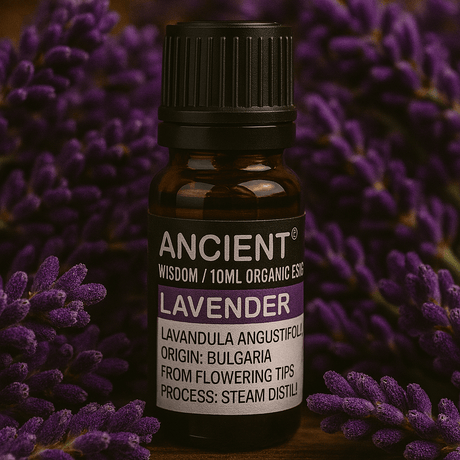
| Lavender | The familiar, easy-to-live-with classic — quiet and grounding, and the place most people begin. Try the soothing lavender collection. |
| Chamomile | A soft, apple-sweet scent traditionally folded into calming evening rituals. |
| Bergamot | The bright, balancing note of uplifting bergamot — a citrus many find lifts the mood. |
| Rose | A warm, heartening floral; rose essential oil is often chosen for moments that ask for a little comfort. |
Can essential oils help with sleep?
Many people fold scent into a bedtime routine to mark the shift towards rest. Oils such as cedarwood, ylang-ylang and clary sage are traditionally reached for in the evening, not because they send you to sleep, but because the ritual of breathing one in can settle a restless mind and signal that the day is done.
| Essential oil | Its evening character |
|---|---|
| Cedarwood | An earthy, woody note. Grounding cedarwood is a warm anchor for a winding-down blend. |
| Ylang-ylang | A sweet, full floral. Ylang-ylang is traditionally used to ease tension and invite rest. |
| Clary sage | A calming, herbaceous scent — clary sage suits a slow, unhurried evening practice. |
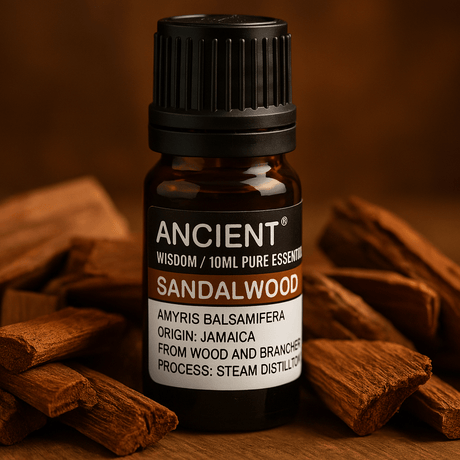
| Sandalwood | The rich, woody aroma of sandalwood is long associated with deep relaxation and meditation. |
| Marjoram | Warm, comforting and herbaceous — a gentle note for a bedtime blend. |

A few well-loved oils and their character
Aromatherapy is a gentle, sensory part of a self-care routine — a way to build small moments of calm into the day. Below are a handful of oils people return to, described by their scent and the moments they tend to suit rather than by anything they treat.
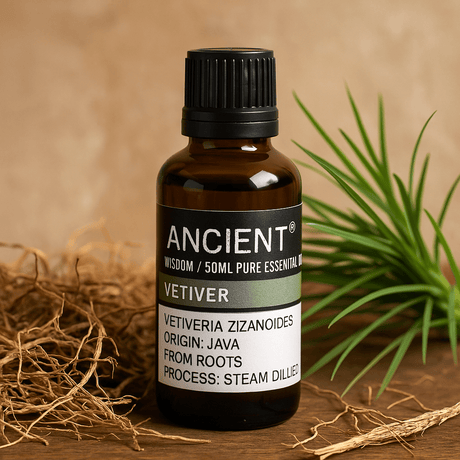
- Vetiver. Sweet, smoky and deeply grounding — an earthy scent often reached for in moments of overwhelm.
- Rose. A warm, comforting floral traditionally chosen when a day asks for tenderness.
- Lavender. The quiet all-rounder — soft, familiar, and a steadying note for an evening wind-down.
- Ylang-ylang. A sweet, heady floral many find calming and a little indulgent.
- Tea tree. Traditionally valued for its fresh, antiseptic scent, and a common ingredient in natural skincare.
- Peppermint. A bright, cooling aroma that many people find refreshing.
- Lemon. A clean, sunny citrus often reached for to lift the atmosphere of a room.
- Jasmine. A rich floral traditionally associated with comfort and warmth.
Choosing an oil is really about choosing a scent you want to live with. If you are unsure where to begin, a qualified aromatherapist can help you find a good match, and it is always worth speaking to a doctor about any health concern.
How to use essential oils safely at home
There are two gentle routes into aromatherapy at home:
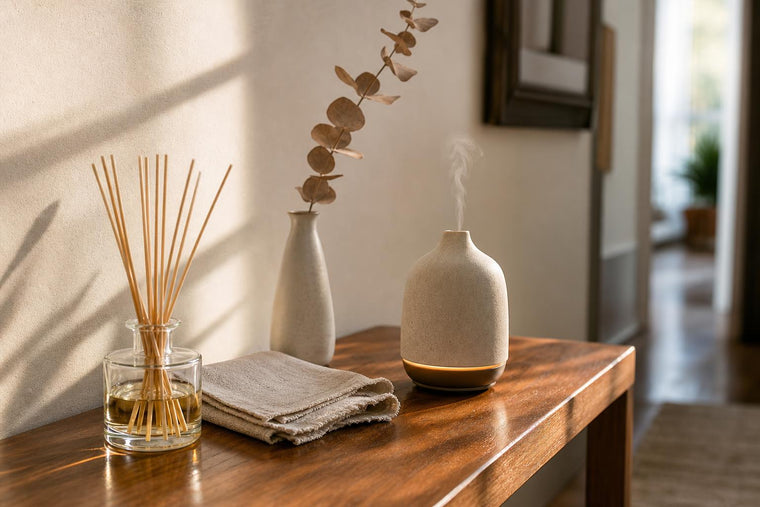
- Inhalation. Reach for an essential oil-infused candle or spray, or let a diffuser carry the scent through a room. Use it sparingly — a little goes a long way, and the aim is a soft presence, not a heavy cloud.
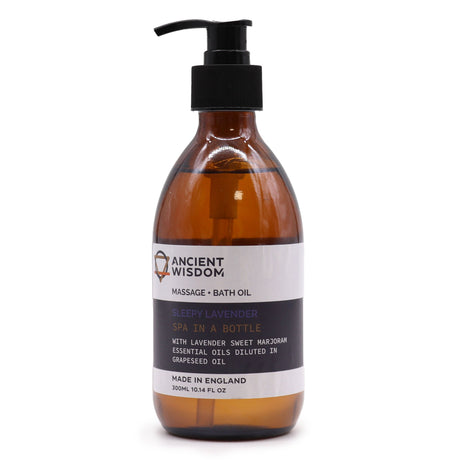
- Topical application. Always dilute first. Blend a drop or two into a fragrance-free carrier oil before it touches skin — never apply a neat essential oil directly. Read the bottle before you start, since a few oils (citrus among them) ask for extra care.
One simple rule keeps everything kind and comfortable: never take essential oils internally. Aromatherapy lives in scent and in carefully diluted skincare, not in anything you swallow.

Weaving aromatherapy into daily life
Aromatherapy asks very little of you, and gives back most when it becomes a small, repeated ritual. A few easy ways to begin:
- Diffuse essential oils in your living space to freshen the air and set a gentle mood.
- Add a few drops to your bathwater for a warm, aromatic soak at the end of the day.
- Create a personalised facial or body oil by blending an essential oil into a carrier oil.
- Light an oil-infused candle to mark the start of an evening, or to bring a little calm to a working afternoon.
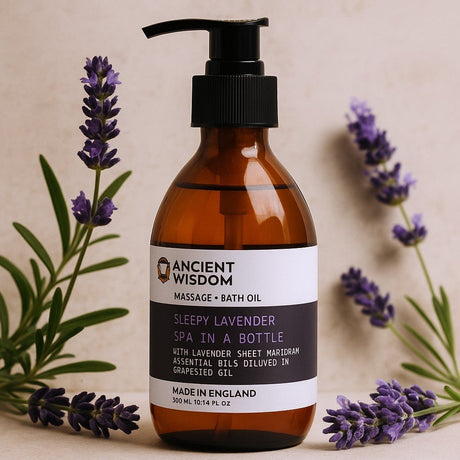
- Apply well-diluted oils to the skin as part of a slow massage — a few drops of frankincense across the shoulders, or lavender at the temples, as a moment of pause rather than a remedy.
None of these is a grand gesture. They are small, repeatable acts that build a sense of calm into ordinary days.
What does the research say?
Aromatherapy is drawing genuine scientific curiosity. In one study by Rebecca Braden, Susan Reichow and Margo A. Halm, patients given a calming oil before surgery reported feeling less anxious than those who were not — a hint that scent may have a small part to play in patient comfort.
The study followed 150 patients, split into three groups: standard care, standard care plus lavandin (a lavender hybrid) essential oil, and a sham group given jojoba carrier oil. The lavandin group reported significantly lower anxiety than the others.
Other small studies have looked at tea tree oil in skincare, blends of herbs for the scalp, and the antibacterial character of citrus oils. It is genuinely interesting work — and it is also early. Most of these findings are preliminary, and they call for fuller studies before anything firm can be said. We share them as signposts, not as settled fact.
The quiet of aromatherapy at SHAMTAM
In the rush of an ordinary week, aromatherapy offers a small retreat — a way to draw on the scents of plants and pause for a moment. Much-loved oils, from soothing lavender to energising peppermint, have long been valued in this practice for the way they shape the mood of a room and the rhythm of a day.
Explore SHAMTAM’s range of essential oils and the simple tools that go with them. Begin with one scent you love, build a small ritual around it, and let the practice be yours.