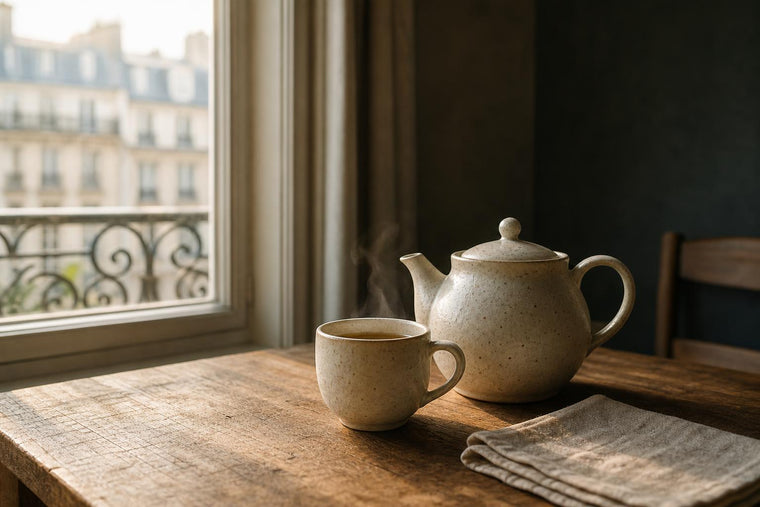
A short guide to a much-argued question, answered not with a bigger bottle collection but with a single word, a single place name, and a much older way of counting.
A city, a word, and neither is a brand
Multani mitti is a clay, pale grey-brown, sold in small paper packets in most Indian grocers. Its name is not a marketing invention. It means, roughly, "the mud of Multan", after Multan, a city in what is now Punjab, Pakistan, where the clay was historically associated with washing and cleansing. In English it is usually called fuller's earth, a name with its own working history in cloth-fulling rather than skincare, but the Indian name keeps the place attached to the substance.
The paste it is often mixed into has its own name too: ubtan. The word comes from the Sanskrit udvartana, meaning to anoint or cleanse. Neither word describes a product line. Both describe a practice old enough that its vocabulary predates the idea of a skincare aisle altogether.
The question everyone is actually typing
Search for gentle face care and the answer, almost without exception, arrives as a number. Three steps. Five. Sometimes ten, borrowed loosely from a routine associated with Korean beauty regimens. Each answer is really a stack of bottles in disguise: a cleanser, a toner, a serum, a moisturiser, a sun protection product, argued over as though the argument were about skin and were actually about how many stages a shelf should hold.
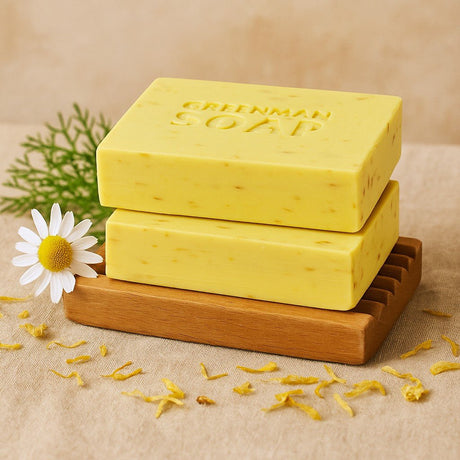
There is nothing wrong with a cleanser. Many households still reach for something as simple as a bar of soap and water and call the face clean, which it is. But counting bottles was never really the same question as asking what the face needs, and a tradition that predates the bottle altogether answers it rather differently.
A different unit than the step
In Ayurveda, the personal daily routine is called dinacharya: dina, day; charya, conduct. Classical texts describe bodily care, including facial and oil-based practice, as part of this daily conduct. One part of it is abhyanga, self-massage with oil; the facial version is called mukha abhyanga.
That is a lot of unfamiliar vocabulary arriving at once, and it is worth pausing on plainly: none of these words describe stages on a shelf. They describe one gesture, oil worked into the face with the hands, done attentively, repeated as part of the day rather than counted as one step among many. A face roller and a bottle of plain rosehip oil, warmed briefly between the palms before use, echo the same gesture without needing to claim its full lineage.
What is actually in the paste
There is no single fixed ubtan formula, and that is not a gap in the record so much as the point of it. Ingredients and binding liquids traditionally vary by skin type, season and whatever concern is at hand. Gram flour is common as a base. Turmeric appears often, valued for the warmth it is said to bring to the skin. Sandalwood, dried flowers and multani mitti itself show up depending on the household and the occasion; ubtan is traditionally applied to the bride and groom in the days before an Indian wedding, alongside its everyday use. The binding liquid is whatever is at hand: milk, water, yoghurt, rosewater.
Turmeric is worth a specific word of caution rather than a blanket promise. It can stain the skin temporarily yellow, and in some people it causes irritation or an allergic reaction on contact. A small patch test on the inside of the wrist, left for a day before it goes anywhere near the face, is a sensible habit rather than an over-caution, and it is worth avoiding harsh add-ins such as undiluted lemon juice in any home-mixed paste. None of this means turmeric is unsuitable for most people; it means the same attention that makes the ritual worthwhile is the attention worth giving before it touches your skin.
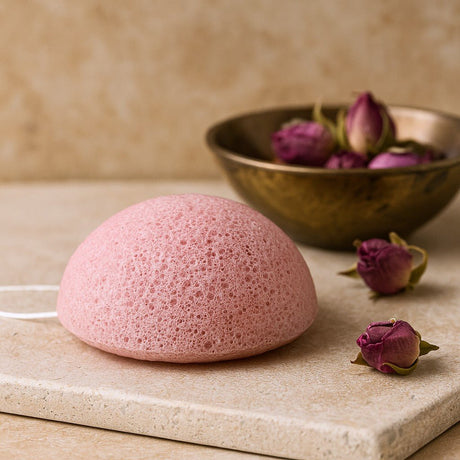
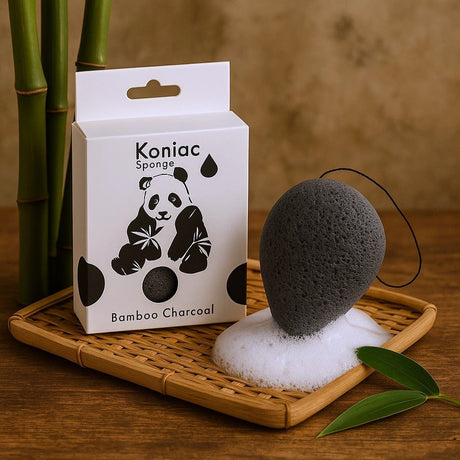
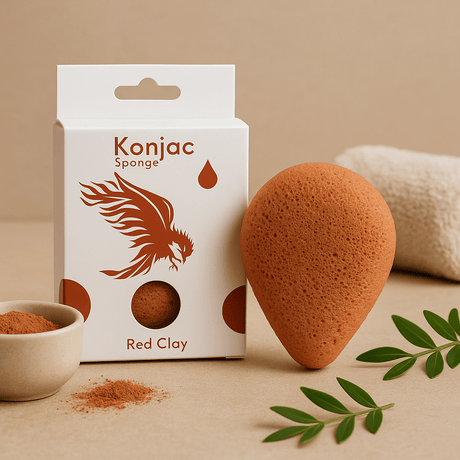
Once the paste has dried and done its work, most households simply rinse it off with water and the hands. A soft konjac sponge does the same job a little more gently, useful for anyone whose skin runs sensitive or dry.
Modern minimalism is not a new discovery
A number of dermatology-facing sources have, in recent years, converged on something close to a minimal baseline: a gentle cleanser, a moisturiser suited to skin type, and daytime sun protection. That three-part answer is often framed as a corrective, a return to sense after the ten-step routine's popularity. It is worth noticing how close it sits to the older frame, not because dinacharya was arguing against extra steps, but because it was never counting steps in the first place. Simplicity here is not a discovery. It is closer to a return.
What actually changes when you stop counting
The honest answer to "how many steps" is that the number matters less than whether each one is noticed while it happens. A three-step routine done at speed, eyes on a phone, teaches the skin nothing about attention. A single paste, mixed with care and washed off slowly, teaches quite a lot, not because the clay or the turmeric performs some hidden work, but because the person doing it has, for those few minutes, actually stopped to do it. That is the real difference between a routine and a ritual, and it has very little to do with how many bottles are involved.
Choose five steps if five genuinely suit your skin and your morning. Choose one paste, or one oiled massage with a plain rosehip oil, if that is what you will actually return to tomorrow. The count was never the measure. Attention was.