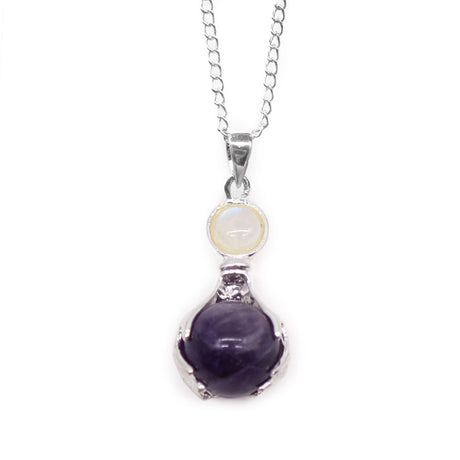
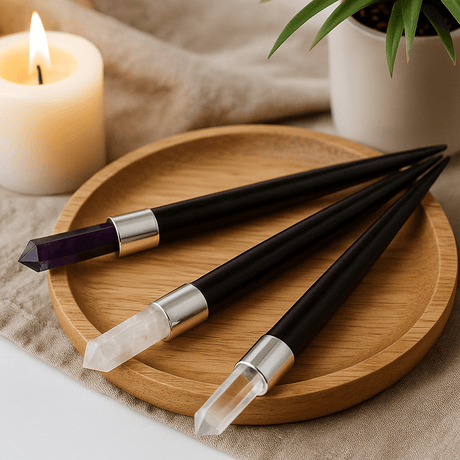
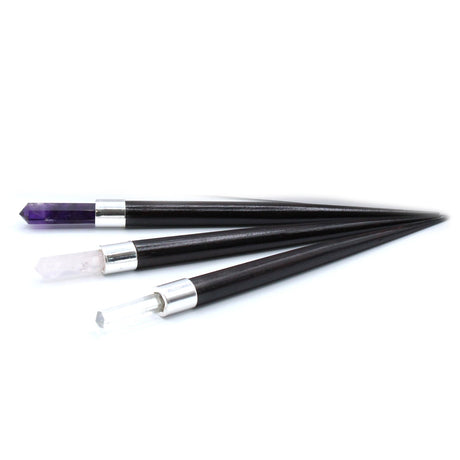
A birthstone is a small, quiet act of knowing someone. Before you choose the stone, you have to remember the month, and that, in a world of algorithmic gift suggestions, is already something.
The List and Where It Came From
In 1912, the National Association of Jewelers met in Kansas City, Missouri, and agreed on something that had never quite been agreed on before: a single, standardised list of twelve stones, one for each month of the Gregorian calendar. The list most English-language retailers use today traces directly to that meeting. It has been revised twice since, in 1952, when alexandrite, citrine and pink tourmaline were added to give jewellers more affordable options, and in 2002, when tanzanite joined December. The Kansas City decision remains the foundation.
What the meeting standardised, it did not invent. The idea that certain stones carry meaning specific to a person's moment of birth is considerably older. Medieval European lapidary texts linked gems to the twelve apostles and the twelve tribes of Israel, drawing on the Breastplate of Aaron described in Exodus 28. Further east, the Indian navaratna tradition, nine gems assigned to planetary bodies rather than birth months, had been in active use in Vedic astrology and jewellery for centuries before any Western standardisation. Ruby, blue sapphire, pearl, emerald, diamond: the stones overlap, though the logic differs entirely. The 1912 list is a commercial codification of a much older human instinct, not its origin.
That distinction matters. When a tradition is described as invented by a trade association, it loses something it does not deserve to lose. The Kansas City meeting gave the list a fixed shape; it did not give it meaning. Meaning had been accumulating for a long time.
The Geography of the Stones

A birthstone list printed on a greeting card looks flat. The stones themselves are not. They come from specific places, extracted by specific labour, and the distance between the card and the mine is worth holding in mind.
July's ruby is the clearest example. The Mogok Valley in Myanmar has been mined for rubies for at least six centuries, and the term "pigeon's blood," used for the finest deep-red Burmese stones, appears in both historical Burmese and European gem trade records. Mogok rubies command significant price premiums, and the supply chain around Burmese stones carries documented sanctions complexity that any honest jeweller will acknowledge. A July ruby is not simply a red stone; it is an object with a political and geographical history that the colour swatch does not show.
September's blue sapphire has its own geography. Sri Lanka, historically known in the gem trade as Ceylon, has supplied sapphires for centuries. Kashmir sapphires, mined at high altitude in northern India, are considered among the finest in the world and are now extremely rare. Montana produces sapphires too, quieter in reputation but genuine. The stone on a September gift tag may have come from any of these places, or from a laboratory. In gemmology, "synthetic" means laboratory-created, not fake; the distinction is origin, not composition.
Peridot, August's stone, offers a different kind of depth. One of the few gems formed in the Earth's mantle rather than the crust, it has been mined on Zabargad Island in the Red Sea since antiquity. The ancient Egyptians worked those deposits, and some scholars believe the "emeralds" associated with Cleopatra were in fact peridot. The island was historically called Topazios, which is where the word "topaz" may have entered European languages, attached, confusingly, to the wrong stone. August's gem carries a case of mistaken identity stretching back millennia.
Tanzanite, the most recent addition to the list, is found only near Merelani in Tanzania, at the foot of Mount Kilimanjaro. Its entire known supply comes from a single small mining area. That concentration is worth knowing when you hold one. It is also worth noting that tanzanite's long-term supply is genuinely uncertain, geologists estimate the deposits could be exhausted within decades, which gives a stone already rare a different kind of weight.
The Calendar as a Practice of Attention

The retail convention of giving a birthstone is largely a twentieth-century Western habit, shaped in part by the same trade associations that standardised the list. But the underlying gesture, choosing something for a person based on when they arrived in the world, reaches toward something older and more considered than a purchase decision.
To give a birthstone well, you have to know someone's birth month. That sounds trivial. It is not, quite. In a gift culture increasingly driven by wishlists, algorithms and same-day delivery, the act of remembering a specific date and then doing something deliberate with that knowledge is a form of attention that most transactions skip entirely. The stone becomes a record of that attention as much as an object in itself.
This is where the slow-living frame earns its keep. A Blood Garnet bracelet chosen for a January birthday is not a more meaningful object than any other garnet bracelet in a material sense. What changes is the intention carried into the choosing. The navaratna tradition understood this: the gem is not magic on its own; it is a focus for something the person brings to it. The Kansas City list, for all its commercial origins, can be used the same way.
How to Give One Well

The difference between a birthstone chosen with knowledge and one chosen by colour swatch is mostly a matter of asking a few questions before you buy.
Origin is the first. A jeweller who can tell you where a stone was sourced, country, sometimes region, is a jeweller who knows their stock. This is not a demand for a certificate on every piece; it is a reasonable question that separates considered curation from bulk inventory. For stones with complex supply chains, like Burmese ruby, the question is also an ethical one.
Treatment is the second. Most commercial gemstones are heat-treated to improve colour or clarity; this is standard practice and not inherently a problem, but it should be disclosed. An untreated stone of fine quality is rarer and priced accordingly. Knowing which you are buying is simply being informed.
The third is fit. The birthstone list is a starting point, not a prescription. An Amethyst bracelet given to a February person who loves purple is a straightforward pleasure. But if the person dislikes their stone, the tradition is flexible enough to accommodate that. Several months carry more than one option; the 1952 revisions exist partly for this reason. The list serves the person, not the other way around.
What the stone cannot do on its own is worth saying plainly: it cannot substitute for knowing the person. A Rose Quartz pendant chosen because it was on offer is a different object from one chosen because someone remembered a birthday and thought carefully about what to carry into that choice. The stone is the same. The giving is not.
Texture, Not Diminishment
The 1912 list drawn up by the National Association of Jewelers is a commercial document. The Mogok Valley is a complicated place. Lab-grown sapphires are real sapphires. These facts do not diminish the tradition; they give it texture. A birthstone understood in its full context, where it comes from, how the list was made, what older systems it echoes, is a more interesting object than a colour-coded month on a chart.
The older traditions, from the Breastplate of Aaron to the navaratna, shared one assumption: that a gem chosen for a person carries something of that person's moment into the world. Whether you hold that literally or lightly, the act of choosing with knowledge rather than convenience is its own form of care. The stone waits; the attention is yours to bring.