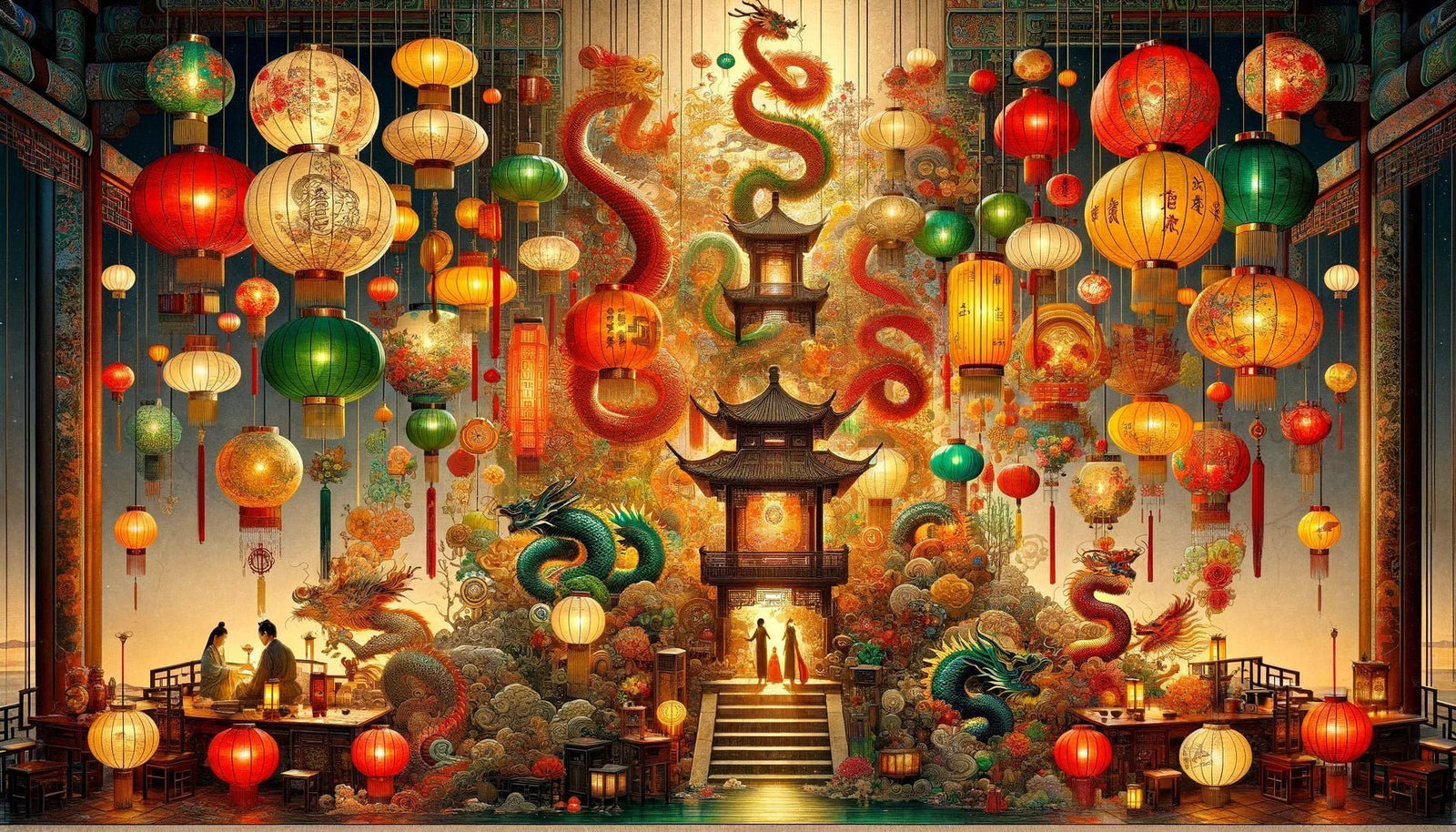
There is a particular hour, on the last night of the Lantern Festival, when a whole street turns the colour of warm honey. Red paper glows from every doorway, the air smells faintly of smoke and sugar, and the light feels less like decoration than company. A Chinese lantern carries some of that feeling indoors — a soft, low glow that quietly draws a room together.
In this article we look at where Chinese lanterns come from, what their colours and shapes have meant across centuries of tradition, and how to bring their warm, unhurried light into a modern home.
The rich tapestry of history and culture
Chinese lanterns trace their origins to the Eastern Han dynasty (25 to 220 AD), giving them a long and storied past. Crafted from bamboo, wood, or wheat-straw frames and covered with silk or paper, they served not only as light sources but as bearers of tradition and celebration.
Han dynasty roots
In the Eastern Han dynasty, making a lantern was a blend of the practical and the artistic. Frames built to hold a candle were wrapped in silk or paper to shield the flame from the wind, working a little like a hot-air balloon. Many were decorated with traditional Chinese characters, and some even carried notices for nearby businesses, so lanterns sat at the centre of both daily life and festivity.
Monks adopted lanterns to honour the Buddha, lighting them in rituals on the fifteenth day of the first lunar month — the night that would become the Lantern Festival. The practice was later endorsed by a devout emperor, and the custom spread widely, with believers carrying lit lanterns to the palace in Luoyang.
The Tang dynasty to modern-day China
The tradition of lantern lighting expanded greatly during the Tang dynasty (618 to 907 AD), a period of peace and prosperity. Lanterns released into the sky came to stand for the country's strength and the good fortune of its people, and the custom settled into a recognised cultural event — the groundwork for the modern Lantern Festival.
Held on the 15th day of the first month of the Chinese lunar calendar, the first full moon of the new lunar year, the festival marks the close of the Chinese New Year. Cities across mainland China fill with large, intricately shaped lanterns, and the night turns warm with light and colour. One much-loved part of the festival is the tradition of writing riddles on the lanterns for others to solve.
This long history shows how Chinese lanterns grew from simple light sources into symbols of joy, hope, and shared celebration. From their Han dynasty roots, through the Tang dynasty's festivities, to their place in celebrations today, they remain a quiet thread of cultural continuity.

Symbolism and beauty: the colours and forms of Chinese lanterns
Chinese lanterns are steeped in symbolism, with each colour and shape carrying its own meaning. Together they express a collective hope for a better, brighter future, deeply rooted in Chinese tradition.
The meaning of colours
-
Red lanterns. Red, tied to wealth, fame, and prosperity, is by far the most common colour. Used at festivals such as the Chinese New Year and the Lantern Festival, red lanterns are read as a sign of a thriving business and a flourishing life. They are a familiar sight in Chinatowns the world over, standing for good fortune and joy.
-
Yellow lanterns. Yellow, once the imperial colour, is linked with good luck, neutrality, and freedom from worldly concerns. It is especially favoured in Buddhism and is thought to bring good fortune to students and young people, a nod to the wisdom of the ancient emperors.
-
Green lanterns. Standing for health, prosperity, and harmony, green lanterns speak of growth and a balance with nature — the spirit of renewal and the natural world.
Diversity in shapes
Beyond colour, the shape of a lantern carries meaning too. Traditional lanterns are often round, a quiet echo of the full moon that stands for wholeness and togetherness. The round form is especially present at the Lantern Festival and the Mid-Autumn Festival, both celebrations of unity and abundance.
Artistic decorations
The artwork on a lantern adds another layer of meaning:
-
Chinese dragon designs stand for strength.
-
Flowers and butterflies symbolise happiness.
-
Bamboo designs convey resilience.
-
Plants represent growth.
These motifs are more than ornament; they carry wishes for longevity, prosperity, and wellbeing.
Types of Chinese lanterns
| Type |
Description |
Use |
| Hanging lanterns |
The most common type, used for decoration and light. |
Widely seen in Chinese restaurants, businesses, and at festivals for good luck. |
| Flying lanterns |
Lifted by hot air, resembling miniature hot-air balloons. |
Released at special occasions such as the Mid-Autumn Festival, said to carry away one's worries. |
| Floating lanterns |
Designed to float on water, casting soft reflections. |
Set adrift at water-side festivals such as the Mid-Autumn Festival and the Zhongyuan (Ghost) Festival, drifting between sky and water. |
In recent years, giant lanterns depicting all manner of motifs have become popular, weaving together traditional and contemporary themes.
The blend of colour, shape, and design in Chinese lanterns goes well beyond decoration, holding cultural values and hopes for the future. They act as a bridge between past and present, an invitation to reflect on the richness of Chinese tradition and the shared wish for prosperity, harmony, and growth.

Feng shui and paper lanterns
In the feng shui tradition, paper lanterns are more than decoration. This long-standing Chinese practice concerns the flow of chi, or life force, and how to keep it moving gently through a home. In feng shui, light and warm colour are used to lift the feel of a room, and practitioners place lanterns to invite a softer, gentler flow. Think of it as a framework for paying attention to your space, rather than a guaranteed effect.
Warm light in the bedroom
-
Placing for balance. In feng shui, paper lanterns on either side of the bed are read as a way to lift the yang, the active and bright quality, in the bedroom. Practitioners arrange them for a sense of balance that feels restful. Keep the light soft and warm, and the room stays calm and conducive to sleep.
-
The note of colour. In feng shui it is said that a brightly coloured red lantern brings a lively, creative yang quality to a room. Red, a symbol of good fortune and joy in Chinese culture, is chosen to warm the mood of a space — a tradition to enjoy, not a promise.
A symbol of partnership
-
Lanterns in pairs. In feng shui, a pair is read as a symbol of partnership and unity. Many people like to place two red paper lanterns either side of the bed and light them together, as a small shared ritual that marks a committed, loving relationship. Lighting and putting them out at the same time becomes a quiet act the two of you share.
-
Keeping things even. Traditionally, a single lantern is thought less balanced than a pair, which is why couples often choose two. Read it as a gentle prompt towards symmetry and shared participation, rather than a rule that decides anything for you.
Feng shui practices with lanterns
-
Where to place them. In the feng shui tradition, placement matters. It is suggested you avoid hanging a lantern in the direct line of sight from a doorway, where energy is thought to rush through too quickly. Instead, set it in a corner or along a side wall, where the light can settle and the glow can diffuse softly.
-
Setting an intention. Place your lantern with something in mind — whether that is a wish to feel more settled, more at ease, or more connected to the people you live with. The conscious act of naming your intention is what gives the gesture meaning; the lantern simply holds the note for you, a partner to your own practice.
Approached with mindfulness and a clear intention, and guided by the principles of feng shui, paper lanterns invite light and a sense of balance into a home. The practice is a reminder that beauty and function can sit together, turning a room into somewhere calmer to return to.

A lantern is more versatile than it first appears. A few ideas for creating a serene atmosphere around the home:
-
Reading nooks. A small lantern brings a tranquil pool of light to a corner set aside for reading.
-
Kitchen accents. Above an island or a sink, a lantern adds a little warmth to the work of the day.
-
Living-room statements. A larger lantern can hold a room as a centrepiece.
-
Gentle nightlights. In a child's room, a lantern offers a soft, friendly glow.
-
Outdoor evenings. Lanterns warm a garden or patio for evening gatherings.
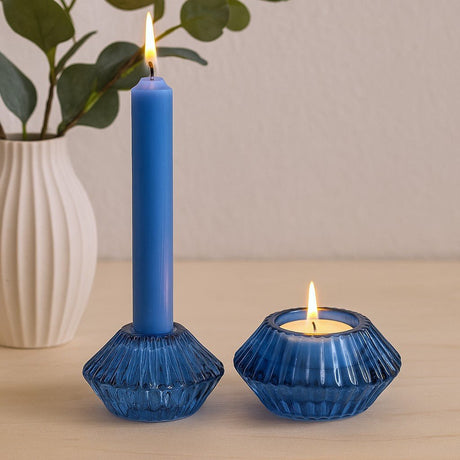
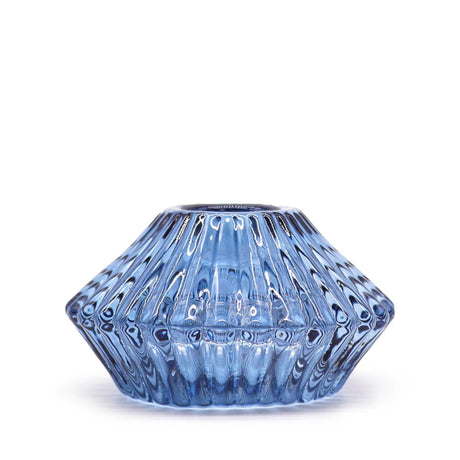
The trick is to let each lantern do one clear job in a space, rather than scattering them everywhere — one well-placed glow reads as intention, not clutter. For that same soft light indoors without an open flame near delicate paper, candle holders and tea lights pair naturally with this kind of lighting.

Maintenance and care
Chinese lanterns are mostly made from delicate materials like paper, so a little thoughtful care keeps them looking their best — and keeps them safe to use over time. A few practical tips.
Regular dusting
-
Gentle cleaning. Use a soft, dry cloth or a feather duster to lift dust from the surface. For more intricate lanterns, a small, soft-bristled paintbrush reaches into the folds without damaging the paper.
-
Avoid water. Since most lanterns are paper, keep water and liquid cleaners well away, as they warp and tear the material.
Inspecting and replacing worn parts
-
Check for damage. Look your lanterns over now and then for tears, fading, or fraying edges. Catching wear early prevents further damage.
-
Replacing parts. For lanterns with replaceable parts, such as the paper covering or the frame, source matching materials to keep the original look. Craft shops and online suppliers often carry components for traditional lanterns.
Proper storage
-
Collapse if you can. If your lanterns fold flat, store them that way, or in their original packaging, so they aren't crushed or bent.
-
Keep dry. Store lanterns somewhere dry and cool, so humidity can't damage the paper or bring on mould.
Handling with care
-
A light touch. Handle lanterns gently to avoid creasing or tearing the paper. When hanging or placing them, make sure they are secure but never under tension, which can cause a tear.
Safety precautions
-
Fire safety. For lanterns made to hold a candle, always take care. Consider using LED candles as a safer alternative that carries no fire risk and gives off no heat to scorch the paper.
-
Electrical safety. For electrically lit lanterns, check that the wiring is intact and free from fraying, and use bulbs that run cool to avoid any fire hazard or damage to the paper.
With this small amount of care, you can enjoy the warm glow of your Chinese lanterns for years. Regular attention keeps them safe as well as beautiful, a gentle feature of your home.

A lantern-lit path to harmony
Chinese lanterns offer a quiet blend of cultural history, beauty, and gentle function. Whether you are drawn to the feng shui tradition, want to add a touch of elegance, or simply wish to bring a warm glow to your spaces, soft, low light has a way of settling a room.
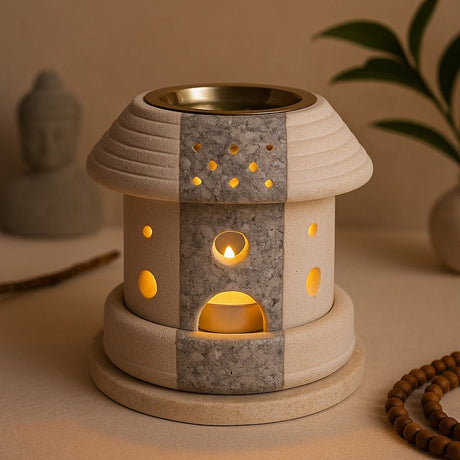
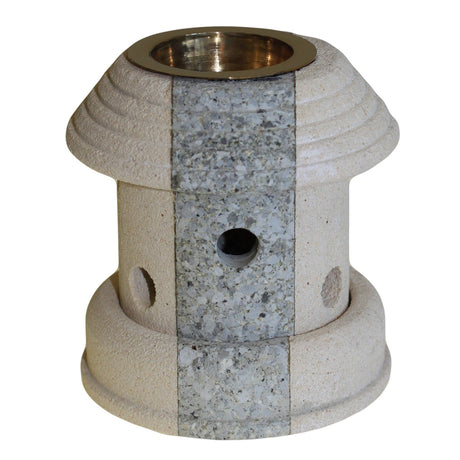
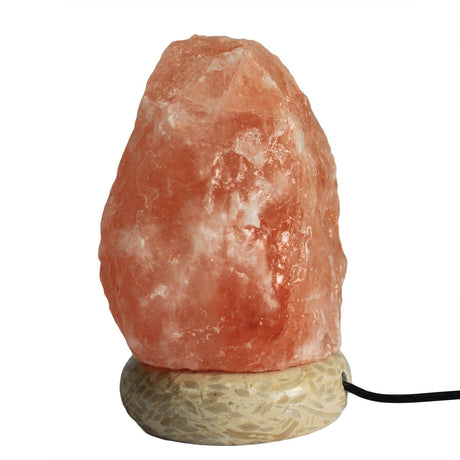
SHAMTAM doesn't currently carry traditional paper lanterns, but if it is that warm, diffused glow you are after, there are honest ways to find it. Candles in a holder bring a warm glow to a reading nook or a sideboard; a Himalayan salt lamp gives the same amber light with no open flame; reed diffusers add scent and atmosphere to a calm room; and an oil burner is a small, sculptural way of enhancing the ambiance. Light a candle, set an intention, and let the evening soften.